
Thai rubber peaks at 97.90 baht/kg as ministry seeks stability
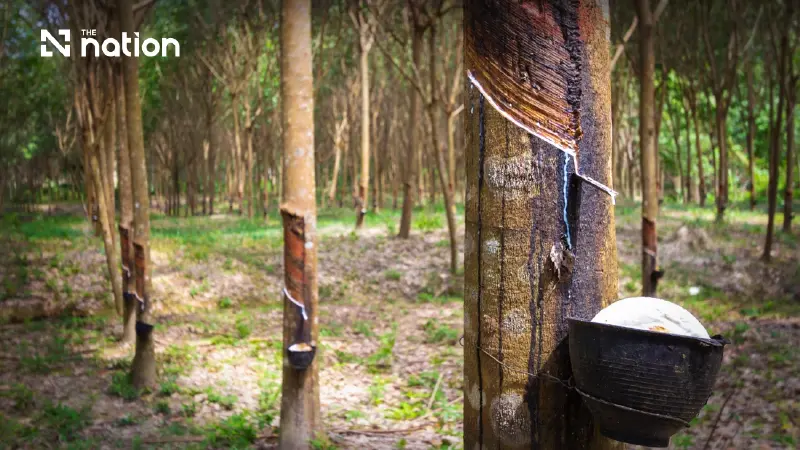


Tight global supply is expected to support fourth-quarter rubber prices, while Thailand plans closer shipment tracking for fiscal 2027.
- Thai ribbed smoked sheet rubber grade 3 has reached a decade-high peak price of 97.90 baht per kilogram.
- In response to the price peak, Thailand's Agriculture Ministry is implementing measures to maintain price stability, including monitoring supply, managing production, and improving quality.
- The high prices are attributed to tight global supplies, and officials expect them to remain elevated through the fourth quarter of 2026.
- A key stability measure involves using GPS technology to track rubber shipments and prevent unregulated supply from depressing prices for Thai growers.
Thailand’s domestic rubber prices have reached their highest levels in a decade, according to the Rubber Authority of Thailand (RAOT), with ribbed smoked sheet rubber grade 3 peaking at 97.90 baht per kilogramme as the Agriculture Ministry steps up efforts to maintain price stability.
Agriculture and Cooperatives Minister Suriya Jungrungreangkit has ordered closer monitoring of supply, trading and product quality, while the authority expects tight global supplies to help keep prices elevated in the fourth quarter of 2026.
Recorded peaks across four rubber products
Figures from RAOT’s Rubber Economics Department, covering 2026 up to October 27, show the following peak domestic buying prices:
- Ribbed smoked sheet rubber grade 3: 97.90 baht per kilogramme
- Unsmoked rubber sheets: 93.50 baht per kilogramme
- Fresh latex: 89.95 baht per kilogramme
- 100% cup lump rubber: 82.17 baht per kilogramme
These are the highest recorded prices during the period, rather than a quotation of prevailing daily prices.

Suriya credited the ministry’s management measures with helping support the increases. He said RAOT had been tasked with managing production volumes, maintaining market balance, improving trading transparency and strengthening product quality and competitiveness.
The stated objectives are to help farmers secure appropriate prices, improve their incomes and livelihoods, and reduce their exposure to global market volatility.
Tight global supplies underpin fourth-quarter outlook
Sansana Suriyothin, acting governor of RAOT, expects rubber prices to remain high in the fourth quarter of 2026, with the possibility of further increases in some periods.

He cited tight global supply alongside measures being implemented by the ministry and RAOT, including supply and market management, controls on rubber outside the regulated system, quality standards and the management of government rubber stocks.
RAOT will continue monitoring demand and production entering the market, while comparing Thai rubber prices with international prices each month to guide its management decisions.
Suriya has also instructed the authority to keep a close watch on weather conditions, the economic outlook and developments in international rubber markets.
Shipment tracking planned for fiscal 2027
Suriya said the ministry was turning to technology to strengthen supply management and prevent rubber outside the regulated system from adding to supply and putting downward pressure on the prices paid to Thai growers.

Relevant agencies are coordinating inspections of rubber types, quantities and transportation routes.
RAOT has been instructed to prepare the development of Smart CESS in fiscal 2027. The project would use Global Positioning System (GPS) technology to improve the tracking of rubber movements and verify information relating to rubber export fees.
The Phra Phirun Operations Centre is also carrying out prevention, monitoring, inspection and law enforcement measures throughout the supply chain.

Meanwhile, the Department of Agriculture has opened a channel for reporting suspected irregularities. Other ministry agencies have been asked to provide information to farmers and rubber collectors to encourage their participation in monitoring the sector.
Quality controls and stable incomes remain priorities
RAOT is encouraging farmers to use standardised coagulating agents and avoid unsuitable chemicals and contaminants that could undermine rubber quality and buyer confidence.
The measures aim to maintain Thailand’s reputation as a supplier of quality rubber to global industries while creating economic opportunities for growers under the ministry’s “Innovative Agriculture for the Sustainability of Thai Farmers” policy.
“Although rubber prices have risen, the government’s greater priority is ensuring that farmers receive fair prices, have stable incomes and can sustain their livelihoods,” Suriya said.
“RAOT has therefore been tasked with monitoring prices alongside proactive management of the entire rubber sector. Maintaining price stability requires action on supply volumes, quality and markets at the same time.
“We must prevent rubber outside the regulated system from distorting competition, while raising the quality and standards of Thai rubber to meet global demand. Long-term increases in farmers’ incomes must be sustainable.”
Sansana said the authority was working to translate those policies into practical measures covering both supply and access to trading channels.
“RAOT is moving quickly to turn the Agriculture Minister’s policies into concrete results, both in managing rubber supply and in developing market systems that are more accessible to buyers and sellers,” he said.
“These efforts play an important part in strengthening Thailand’s rubber market, reducing factors that could weigh on prices and giving farmers more opportunities to benefit from improving market conditions.”
