
Energy Ministry to weigh fuel reform after 60-day ultimatum
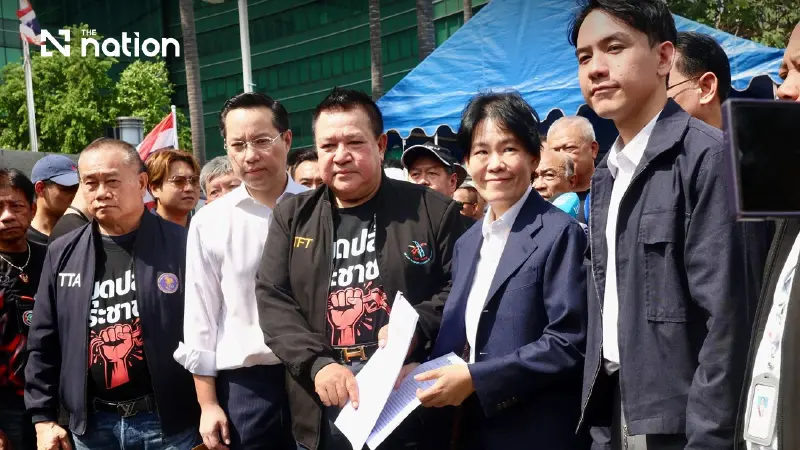


Thai hauliers demand a one-year diesel cap of THB35 per litre, threatening a convoy of up to 1,000 lorries into Bangkok if fuel reform stalls.
- Thailand's Land Transport Federation has given the Energy Ministry a 60-day ultimatum to reform the country's fuel pricing structure and reduce prices.
- The federation's key demand is to cap the price of diesel at THB35 per litre for one year, among other proposals for a systemic overhaul.
- In response, ministry officials have pledged to submit the proposals to the Energy Minister for consideration, with a meeting planned with the transport operators.
- If the government fails to act within the 60-day period, the federation has threatened to escalate protests by mobilizing up to 1,000 lorries into Bangkok.
Thailand’s Ministry of Energy has pledged to consider proposals to reduce fuel prices and reform the country’s oil pricing structure following demands from transport and logistics operators. Officials received the demands at a protest outside the ministry in Bangkok on November 4, 2026.
The Land Transport Federation of Thailand has given the government about 60 days to address its demands, centred on a one-year diesel price cap of THB35 per litre. The federation could mobilise up to 1,000 lorries into Bangkok if there is no progress.
Thitiphas Chotidechachainant, secretary to the energy minister, and ministry spokesperson Pongpol Yodmuangcharoen received the petition from federation president Thongyu Kongkhan and representatives of the transport and logistics sector.

Thitiphas said the proposals would be submitted promptly to Energy Minister Akanat Promphan for consideration. A meeting between operators and the minister was expected in the week beginning November 2 or November 9.
Hauliers give government 60 days to address fuel costs
Thongyu said the government had approximately 60 days during November and December to address the federation’s demands. If there was no progress, the federation would consider coordinating with other protest groups or bringing between 500 and 1,000 lorries into Bangkok.
Although the federation did not want to disrupt traffic, Thongyu insisted that it would escalate its campaign if the government failed to act.

Thongyu stressed that assistance must benefit people across the country, not just transport and logistics operators. The federation would reject measures confined to its own sector because it wanted relief that reached the wider public.
The federation and 13 affiliated associations joined the November 4 demonstration after diesel prices had risen by more than THB8 per litre, increasing costs for transport operators and consumers, according to the organisers.
Thongyu described the protest as an escalation of the earlier Truck Power campaign in Chon Buri, arguing that previous demands had received no clear government response. Higher diesel prices were adding to the difficulties facing people already struggling with flooding, he added.
Protesters outside the Energy Ministry displayed placards criticising major energy businesses and placed a coffin and sandalwood flowers at the site under the slogan “Stop robbing the public”. Energy specialists and affected transport operators addressed the gathering.
Speakers also included Atavit Suwanpakdee, a party-list MP and deputy leader of the United Thai Nation Party, and ML Kornkasiwat Kasemsri, deputy leader of the Palang Pracharath Party and an energy academic.
Federation presses for tax cuts and energy pricing overhaul
The federation’s 10 demands include holding diesel prices at THB35 per litre for one year, restructuring oil and energy pricing across the system, removing notional costs from the pricing formula, reducing fuel excise duty to 5% and reviewing refining margins.

The federation also proposed making fuel a price-controlled commodity, abolishing the Energy Regulatory Commission and establishing a national oil reserve to strengthen energy security.
Another demand was for an investigation into the alleged disappearance of more than 700 million litres of oil and for those responsible to be identified.
Thongyu argued that excise-duty cuts for B20 biodiesel and E20 gasohol, together with the removal of notional pricing costs, did not address the underlying problems and might not deliver tangible benefits to the public.
Thongyu called for closer scrutiny of major energy businesses and those suspected of oil hoarding. He also pressed Akanat to show greater resolve in dealing with powerful energy interests, maintaining that all 10 demands were realistic and within the government’s ability to implement.
Ministry cites THB10.8 billion in annual savings
Pongpol said removing so-called “phantom costs”, which had been included in fuel pricing for more than 22 years, had reduced the burden on consumers by THB10.8 billion a year.
Pongpol also put the value of excess refinery gains used to lower ex-refinery prices at almost THB32 billion. The Energy Ministry would continue monitoring those gains so they could be used to reduce fuel costs for consumers, he added.
The Energy Ministry has also promoted B20 biodiesel and E20 gasohol to reduce crude oil imports, according to Pongpol. However, further excise-duty reductions would require careful consideration of their implications for future financial commitments.
Pongpol emphasised that Akanat understood the financial pressure on transport operators and maintained that the ministry had already acted on some of the federation’s demands, including removing phantom costs and pursuing suspected oil hoarders.
“The Ministry of Energy will tackle the lack of transparency to make the pricing structure as fair as possible,” Pongpol said, pledging to consider the concerns raised and find solutions that would help all sectors through the crisis.
Thitiphas acknowledged the heavy burden on transport operators, attributing the pressure to fighting overseas that had continued for more than eight months. She stated that global oil prices had risen to two to three times the levels recorded in 2022 during the Russia–Ukraine war.
Ministry plans DSI talks over alleged oil hoarding
The Energy Ministry plans to invite the Department of Special Investigation (DSI) to meet the Department of Energy Business in the week beginning November 9 to review proceedings involving alleged oil hoarding in March, Thitiphas said.
Thitiphas cited legal action involving 24 suspects, including oil traders operating under Section 7, over alleged hoarding and price speculation. She also reported that six suspects had been formally charged.
Thitiphas said the discussions would establish whether additional information or documents were needed to accelerate proceedings and pursue those responsible. The Energy Ministry would continue monitoring the cases through to their conclusion, she added.
