
Thailand flags 1,932 companies for checks over nominee risks
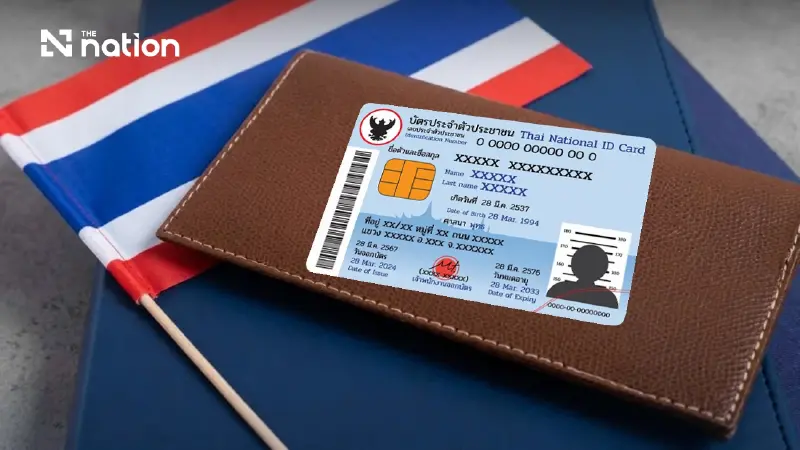


The Commerce Ministry is examining firms involving foreigners who have acquired Thai citizenship and preparing joint inspections with law enforcement agencies.
- Thailand's Department of Business Development has identified 1,932 companies as being at high risk of using illegal "nominee" arrangements to bypass foreign ownership laws.
- The checks specifically target a complex scheme where foreign nationals who have acquired Thai citizenship are used as shareholders or directors for foreign-run businesses.
- The high-risk companies are concentrated in sectors like real estate, construction, and restaurants, with the majority located in Bangkok and major tourist provinces like Chonburi and Phuket.
- Authorities are preparing in-depth investigations, and naturalized Thai citizens found guilty of acting as nominees could face legal penalties and the revocation of their citizenship.
Kittiwat Patchimnan, director-general of the Department of Business Development at the Ministry of Commerce, said Deputy Prime Minister and Commerce Minister Suphajee Suthumpun had ordered the department to tighten checks on businesses at risk of using nominee arrangements.
The checks will focus particularly on legal entities in which foreign nationals who have acquired Thai citizenship hold shares alongside foreign investors operating businesses in Thailand, to prevent Thai citizens from being used as nominees for illegal business activities.
Nominee arrangements have become more complex, with a trend towards using foreign nationals who have acquired Thai citizenship as shareholders or company directors to evade government scrutiny.
The department is therefore speeding up checks of records in its corporate database and coordinating with law enforcement agencies on in-depth investigations covering all nationalities, as nominee arrangements affect national security in both economic and social terms.
Analysis using the Intelligence Business Analytics System (IBAS) identified 12,421 foreign nationals who have acquired Thai citizenship and whose national identification numbers begin with 8 as shareholders or directors in 16,504 active limited companies.
The department identified 1,932 of these companies as being at high risk of using nominees.

The breakdown by shareholding structure was as follows:
- There were 10,296 companies with 100% Thai shareholding, including 164 identified as being at risk of nominee arrangements.
- There were 6,208 companies with foreign investment. Of these, 6,007 had foreign shareholdings of 0.01–49.99%, including 1,768 identified as being at risk of nominee arrangements. The remaining 201 had foreign shareholdings of 50–99.99%.
Among the 1,932 companies identified as high risk, the 10 leading business categories included buying and selling non-residential property, with 161 companies accounting for 8.33%, and construction of non-residential buildings, with 83 companies accounting for 4.30%.
Buying and selling residential property accounted for 67 companies, or 3.47%; restaurant food services for 63, or 3.26%; and real estate agency and brokerage services for 61, or 3.16%.
The other categories in the top 10 were wholesale trade in timepieces and jewellery, with 55 companies; management consultancy, with 47; renting and operating residential property, with 44; wholesale trade in machinery and equipment, with 42; and wholesale trade in general goods on a fee or contract basis, with 40.
Other business categories accounted for 1,269 companies, or 65.68%.
By location, 1,186 of the companies identified as being at risk were concentrated in Bangkok and surrounding provinces.
Bangkok had the largest number, with 849, followed by Samut Prakan with 192, Samut Sakhon with 76, Pathum Thani with 35, Nonthaburi with 21 and Nakhon Pathom with 13.
A further 637 were located in tourism provinces and other areas, led by Chonburi with 347, Phuket with 77, Chiang Mai with 75, Rayong with 73, Surat Thani with 40, Chiang Rai and Prachuap Khiri Khan with 10 each, Mae Hong Son with three, and Krabi and Phang Nga with one each.
Another 109 were located in other provinces.
Kittiwat said the department had discussed the company findings with relevant law enforcement agencies to establish measures and inspection procedures, and was preparing to conduct in-depth on-site inspections of business operations.
Personnel from all inspection and law enforcement agencies would be brought together to expand the investigations and bring offenders to justice.
If investigations establish that foreign nationals who have acquired Thai citizenship have committed offences, they will face penalties under the laws enforced by the respective agencies.
Their offences could also lead to the revocation of their Thai citizenship.
“I would like to warn foreign businesspeople who have acquired Thai citizenship and wish to invest and conduct business in Thailand to comply strictly with Thai law. In particular, shareholding structures and business management must reflect the actual arrangements. Holding shares as a nominee for foreigners is illegal and affects the country’s economic security,” Kittiwat said.
Members of the public can report suspected nominee businesses through the nominee tip-off section of the Department of Business Development website at www.dbd.go.th.
Further information is available from the Protection and Suppression Illegal Business Division on 0 2547 4419 or the call centre on 1570.
