
Six arrest warrants issued in VGI share ownership concealment case
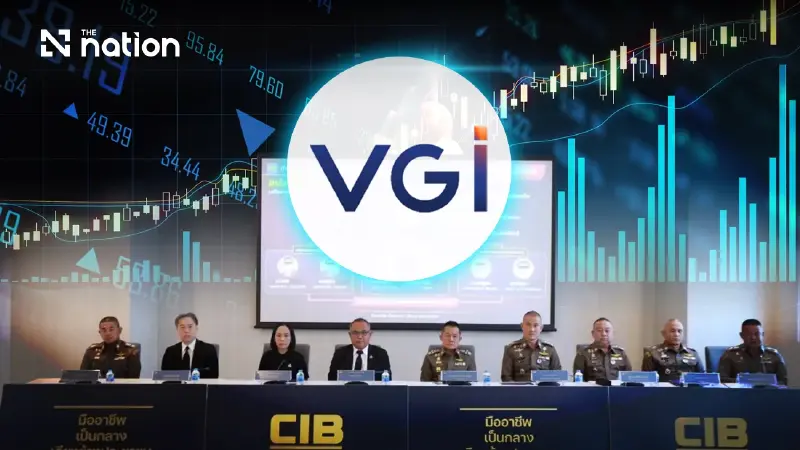


Three linked investors allegedly held over 25% of VGI’s voting rights without reporting their combined holdings or making a tender offer for all securities.
- Arrest warrants have been issued for six individuals accused of using offshore entities and nominee shareholders to conceal the true owners of newly issued shares in VGI Public Company Limited.
- The suspects allegedly acted in concert to acquire over 25% of VGI's voting rights, but failed to report the acquisition or make a mandatory tender offer as required by securities law.
- The six suspects are currently in hiding abroad, while a seventh suspect has been summoned in Thailand and has denied the allegations.
- The charges include violations of the Securities and Exchange Act, membership of a secret society, and conspiracy to launder money.
The Economic Crime Suppression Division (ECD) and the Securities and Exchange Commission (SEC) are pursuing legal action against a network of Thai and foreign individuals accused of using offshore legal entities and funds as nominee shareholders to conceal the ultimate beneficial owners (UBOs) of newly issued shares in VGI Public Company Limited (VGI).
The agencies searched four locations on Tuesday (October 27, 2026) to gather further evidence.
The ECD investigated the network’s activities in Thailand, while the SEC requested information from overseas regulators through the International Organization of Securities Commissions (IOSCO) Enhanced Multilateral Memorandum of Understanding Concerning Consultation and Cooperation and the Exchange of Information (EMMoU).
The information was combined with evidence gathered by the ECD to trace cross-border money flows, analyse complex, multilayered shareholding structures and identify the ultimate beneficial owners behind the registered shareholders.
The SEC regarded the combined material as key evidence establishing that the individuals had acted in concert and submitted its assessment of offences under the Securities and Exchange Act 1992 to the ECD.

Its main findings were:
(1) Acting in concert to take control of the company: The three investors who subscribed for VGI’s newly issued shares through a private placement shared funding sources, and their ultimate beneficial owners were connected.
These relationships were considered to constitute acting in concert under Capital Market Supervisory Board rules.
(2) Inaccurate and false reporting, and failure to make a tender offer for all the company’s securities: Based on the facts available at this stage, the three investors’ combined holdings appear to represent more than 25% of VGI’s total voting rights.
However, the investors and their ultimate beneficial owners did not report the acquisitions as persons acting in concert, did not make a tender offer for all the company’s securities, and submitted inaccurate and false information.
The conduct may constitute offences punishable under the Securities and Exchange Act.

Arrest warrants have been issued for the following six suspects, who are currently in hiding abroad:
- Ben (surname withheld)
- Cattaliya (surname withheld)
- Suparat (surname withheld)
- Yim (surname withheld)
- Eugene (surname withheld)
- Kaiping (surname withheld)
A seventh suspect, Natthakorn (surname withheld), has been summoned to acknowledge the charges and has denied all allegations.
The ECD’s charges cover the alleged securities offences described above, membership of a secret society under the Criminal Code, and conspiracy to launder money under anti-money laundering legislation.
The SEC is also examining the roles of other people involved and will strictly enforce the law against all those concerned.
The ECD is responsible for the criminal proceedings, while the SEC provides information, evidence and opinions on offences under the Securities and Exchange Act.
This arrangement allows action against the entire network to be taken within a single process, covering offences under both securities legislation and other relevant laws, while enabling investigators to exercise their full investigative powers.
The duties to report securities acquisitions and make tender offers are important safeguards for minority shareholders.
They enable those shareholders to identify the true shareholders and people controlling the company, and give them a fair opportunity to sell their shares when control changes.
Using individuals or funds to hold shares with the intention of concealing their true owners therefore directly affects confidence in the capital market.
The SEC will work to prevent such concealment structures from being used again and cooperate closely with domestic law enforcement agencies and overseas regulators to ensure that those who break the law cannot evade it through cross-border structures.
The proceedings are only the first stage of the legal process.
The suspects are presumed innocent unless and until a final court judgment establishes their guilt.
The SEC will monitor progress in the case.
