
Anutin warns Thai exports could face tariffs of up to 50% if US trade talks fail
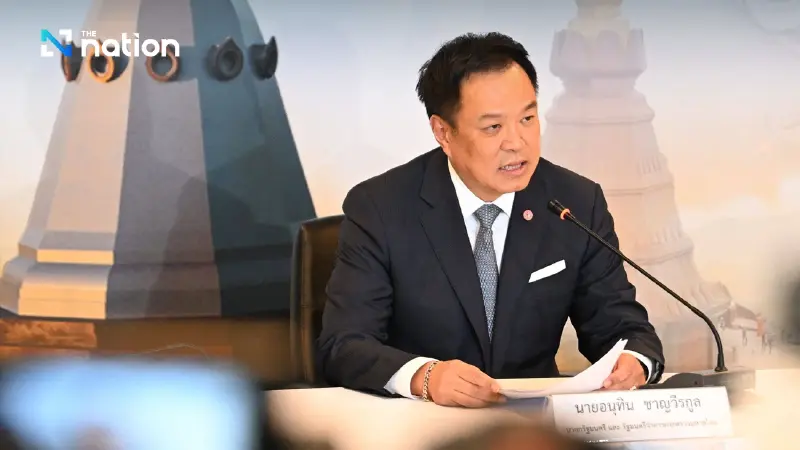


Thai PM Anutin Charnvirakul defends US trade negotiations, warning that failure to reach an agreement could expose Thai exports to tariffs of up to 50%.
Prime Minister Anutin Charnvirakul has defended Thailand's trade negotiations with the United States, insisting that the government is protecting national interests while warning that failure to reach an agreement could expose Thai exports to tariffs as high as 50%.
Speaking on his programme, "Talk with PM Anutin", on Saturday (November 21), Anutin said Thailand had maintained a substantial trade surplus with the US, its largest export market, making adjustments to bilateral trade arrangements necessary to ease tensions.
He rejected criticism that Thailand was making excessive concessions to Washington, saying negotiations with a major trading partner required flexibility without compromising the country's interests.

US trade surplus puts pressure on negotiations
Anutin said Thailand continued to enjoy a significant trade surplus with the United States despite purchasing American products, citing Boeing aircraft for Thai Airways as an example.
He acknowledged that Washington had grounds to seek adjustments to trade arrangements because of the imbalance.
However, he insisted that making concessions on selected products did not necessarily mean Thailand would be disadvantaged.
The US has asked Thailand to consider importing certain agricultural products, even though Thailand is a major producer of food and agricultural goods.
Anutin argued that allowing some American products into the Thai market under carefully controlled conditions could create opportunities for Thai agricultural exports to gain greater access to US consumers.
He said some agricultural imports could be permitted duty-free but would remain subject to strict conditions, including requirements to use domestic agricultural output before allowing imports.
The Ministry of Commerce will provide further explanations of the conditions and their implications for Thai producers.
Anutin warns of tariffs as high as 50%
Anutin said he had instructed Deputy Prime Minister and Commerce Minister Suphajee Suthumpun, who heads Thailand's negotiating team, to pursue the maximum possible benefit for the country.
He acknowledged that Thailand had limited bargaining power compared with the United States, but said experienced trade negotiators were working to secure the most favourable terms.
The prime minister warned that failure to conclude an agreement could lead Washington to impose higher tariffs on Thai products.
He suggested that tariffs could rise from 10% to 30–40%, or potentially reach 50%, citing trade tensions between the US and Canada as an example of the risks involved.
Such increases, he argued, would weaken the competitiveness of Thai exports against those of other countries and could reduce export earnings.
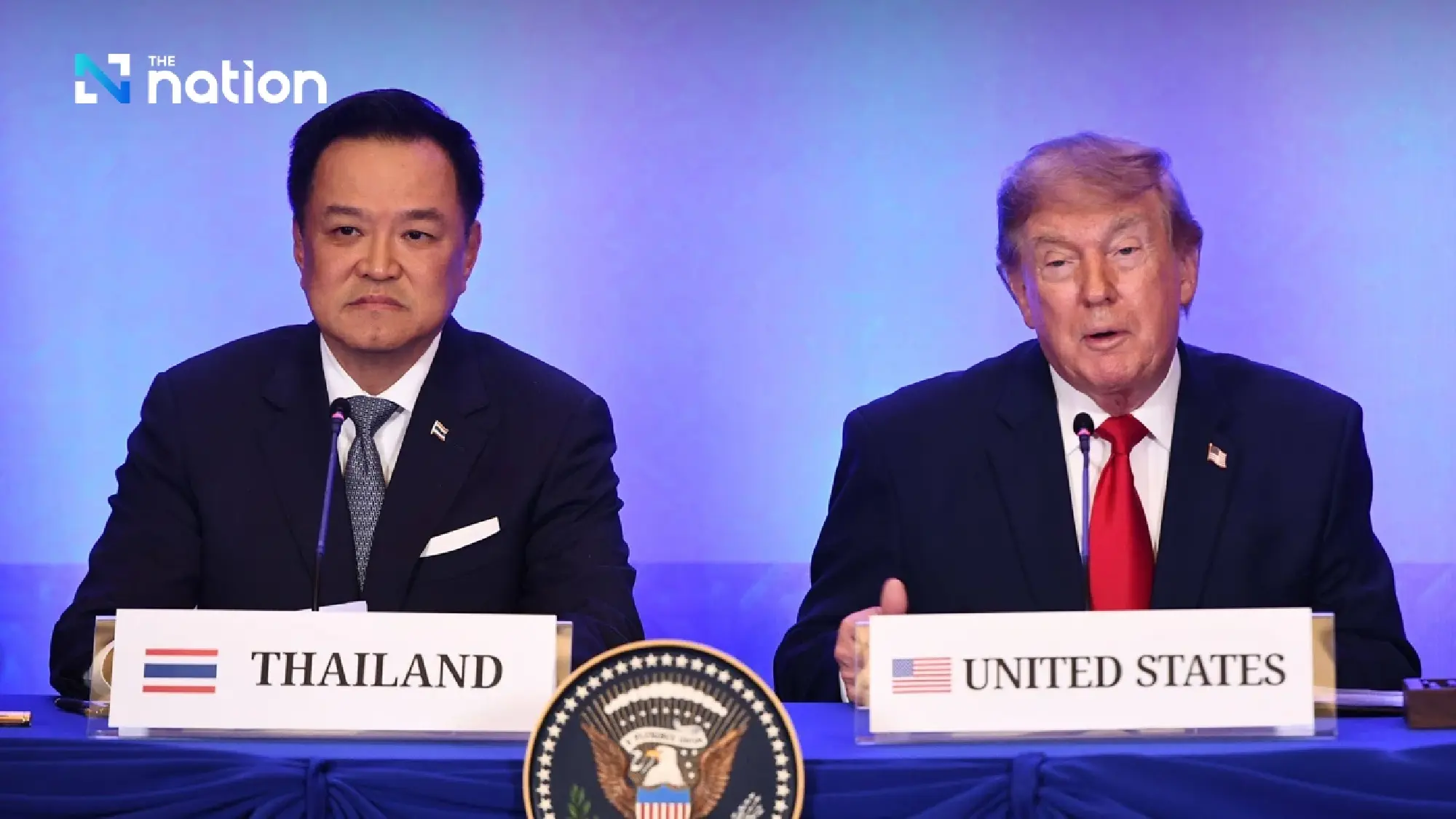
Thailand and the United States signed a joint statement on November 17 confirming that negotiations on the main elements of an Agreement on Reciprocal Trade had been substantially concluded. The full agreement remains subject to legal review and domestic procedures before it can enter into force.
Thailand maintains position on Cambodia border dispute
Turning to relations with Cambodia, Anutin reaffirmed Thailand's position on territorial and maritime boundary disputes following the termination of the 2001 memorandum of understanding, commonly known as MOU 44.
He said he had discussed the issue with Cambodian Prime Minister Hun Manet, particularly Cambodia's decision to pursue compulsory conciliation under the United Nations Convention on the Law of the Sea (UNCLOS).
Anutin maintained that bilateral negotiations should remain the first step in resolving boundary disputes, with compulsory mechanisms considered only if direct discussions failed.
He said Thailand's position was to halt land and maritime boundary demarcation negotiations if Cambodia insisted on proceeding through compulsory conciliation.
The prime minister stressed that Thailand would continue to defend its national interests while supporting efforts to clarify border boundaries and strengthen cooperation on landmine clearance.
Such cooperation, he said, was essential to protecting border communities and Thai military personnel conducting patrols.
Thailand pushes ASEAN digital trade framework
Anutin also highlighted Thailand's role in promoting the ASEAN Digital Economy Framework Agreement (DEFA), which aims to establish common standards for digital commerce across Southeast Asia.
The framework seeks to strengthen confidence in online transactions by addressing scams, hacking, fraudulent telephone calls, secure payment systems and product quality standards.
It also covers consumer protection measures, including product returns, refunds and penalties for businesses that violate relevant regulations.
Anutin said Thailand had become more active in shaping the region's digital economic agenda.
He also pointed to government efforts to combat transnational crime, including drug trafficking, online scams, money laundering and technology-related criminal networks.
Government stability boosts investor confidence
The prime minister said Thailand's political circumstances had changed significantly over the past year.
He noted that his government had previously operated with a parliamentary minority, limiting its ability to advance major policies.
With a parliamentary majority and a more stable Cabinet, Anutin said the government was now better positioned to implement legislation and economic measures.
He claimed that political stability had strengthened foreign investor confidence, with major international businesses indicating that they had no plans to relocate their manufacturing operations outside Thailand.
The government has also adjusted tax structures to promote fairer competition between conventional internal combustion engine vehicles and electric vehicles, he added.
China agrees to cooperate on river pollution
Anutin also discussed his recent meetings with Chinese leaders, including concerns over toxic contamination affecting rivers in northern Thailand, particularly Chiang Rai.
He said he had raised the issue directly with China's premier and president, highlighting concerns linked to overseas investment projects involving Chinese and Myanmar interests.
The prime minister warned that prolonged environmental contamination could eventually affect Chinese businesses and investment in Thailand.
According to Anutin, the discussions produced preliminary agreement on cooperation to establish joint water-quality monitoring stations using Chinese technology.
He said direct engagement with foreign leaders had strengthened Thailand's international standing and helped the country play a more active role in regional economic and diplomatic affairs.
