
Thailand maps farm response to US trade and EU deforestation rules
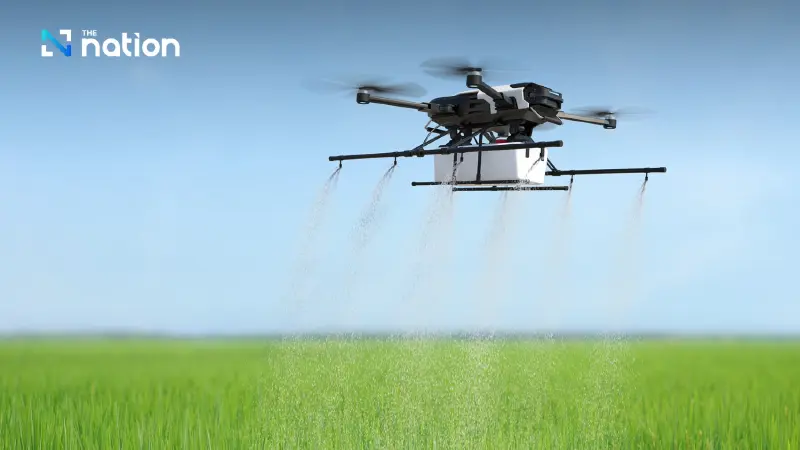


Thailand’s Agriculture Ministry plans farm import safeguards for the US trade agreement and a national traceability system to meet EU deforestation rules.
- Thailand is preparing for a trade agreement with the US, vowing to protect its farmers by ensuring any agricultural imports meet strict domestic health and safety standards.
- In response to the EU's new deforestation regulation (EUDR), a centralised digital platform is being developed to help nearly two million farmers prove their products are traceable and deforestation-free.
- The government's strategy prioritises supporting smallholder farmers with training, financial aid, and access to modern technology to help them adapt to the new international requirements.
Thailand’s Ministry of Agriculture and Cooperatives has outlined plans to respond to changing international trade and environmental requirements, with a focus on protecting domestic farmers as the country moves towards a trade agreement with the United States and prepares for the European Union’s deforestation rules.
Praiya Savetjinda, director of the Bureau of Foreign Agricultural Affairs under the Office of the Permanent Secretary at the Ministry of Agriculture and Cooperatives, presented the strategy at Post Today's Thailand Agri Future 2027: The Big Reset From Agriculture to Future Industry seminar on Thursday (November 19).
Speaking at a session titled “Global Changes: New Global Rules”, she emphasised the importance of protecting farmers' interests, adopting new technologies and ensuring that smallholders are not left behind as Thailand adjusts to changing international requirements.

Thailand outlines safeguards for US trade agreement
Addressing the proposed Agreement on Reciprocal Trade (ART) between Thailand and the United States, Praiya explained that the ministry had yet to receive a detailed list of agricultural products that could be imported under special arrangements.
Nevertheless, she stressed that the ministry's position remained firm: imports of agricultural products, particularly meat, must not adversely affect Thai farmers.
All imported products would have to comply with Thailand's domestic regulations, especially sanitary and phytosanitary (SPS) requirements covering animal and plant diseases, chemical residues and other substances associated with farming and production.
These measures would be based on scientific evidence and international standards, while prioritising public health and the interests of Thai consumers and farmers.
The remarks followed the signing of a joint statement on November 17 by Prime Minister Anutin Charnvirakul and US President Donald Trump, confirming that the two countries had reached agreement on the main terms of ART. However, the final agreement has not yet been signed and is not in force.
Praiya noted that the agreement would still have to undergo the required domestic legal procedures, including Cabinet consideration, public consultation and parliamentary scrutiny, before it could take effect.
EUDR preparations target nearly two million farmers
Another major challenge is the European Union Deforestation Regulation (EUDR), which could affect nearly two million Thai farmers.
The regulation requires businesses trading in covered agricultural commodities and related products to demonstrate that the products are deforestation-free and traceable to their origins.
Praiya explained that the Agriculture Ministry had taken a leading role in coordinating Thailand's preparations with relevant agencies, including the establishment of a national policy committee.
A key initiative is the National EUDR Single Window (NESW), a centralised platform designed to help farmers and exporters meet the regulation's requirements.
The system brings together information on agricultural land, regulatory requirements and product traceability, allowing businesses to access evidence that their products meet EU deforestation requirements.
By providing a one-stop service, the platform is intended to make it easier for farmers and exporters to prepare the documentation needed to maintain access to the EU market.
Praiya reported that the ministry had not identified any cases of Thai agricultural shipments being rejected on EUDR grounds so far.
International cooperation supports agricultural technology
Beyond domestic preparations, the ministry is strengthening cooperation with foreign governments and international organisations, including the Food and Agriculture Organization of the United Nations (FAO) and the World Health Organization (WHO).
One example is Thailand's bilateral cooperation with Germany on agricultural technology, particularly knowledge transfer for low-carbon rice cultivation.
The cooperation also involves introducing laser land-levelling technology in partnership with Thailand's Land Development Department.
The technology produces more level fields, helping soil retain moisture while reducing water consumption and the use of agricultural chemicals.
Thailand is also pursuing a greater role in developing agricultural standards at regional and international levels.
Praiya highlighted efforts to promote Thai agricultural standards for wider adoption within ASEAN and internationally, including maximum residue limits (MRLs) for agricultural products.
The approach is intended to align Thai agricultural standards more closely with international requirements and strengthen the competitiveness of Thai products in overseas markets.

Smallholder support remains a priority
Praiya emphasised that strengthening farmers' skills and capabilities would be essential to helping Thailand's agricultural sector adjust to changing global conditions.
Smallholder farmers are often among the first to experience the effects of new regulations and rising compliance costs, making access to knowledge, technology and financial support particularly important.
To address these challenges, the ministry plans to support farmers through training, access to modern agricultural technology and funding.
These efforts involve cooperation with domestic financing partners and international financial institutions to help farmers obtain the resources needed to adapt.
Praiya reaffirmed the ministry's commitment to ensuring that smallholder farmers would not be left behind or forced to confront changes in international trade and agricultural regulations without government support.
