
Thai pig farmers propose US feed purchases over pork imports
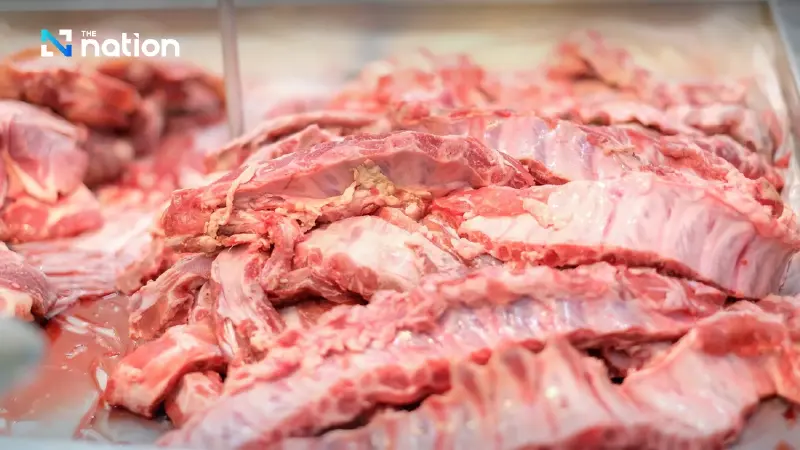


Thai pig farmers cite three years of losses and a risk of further losses in 2026 as they oppose US pork access in bilateral trade talks.
- Thailand's Swine Raisers Association has proposed buying more US animal feed ingredients, such as maize and soybeans, as an alternative to allowing US pork imports in trade negotiations.
- This proposal is intended to protect domestic pig farmers who have suffered years of financial losses due to high feed costs and would be vulnerable to competition from imported pork.
- The association argues that Thailand is already self-sufficient in pork production, and redirecting some of its existing feed import purchases from other countries to the US is a better concession.
- As part of the trade dispute, farmers are also urging the government to maintain its ban on the growth promoter ractopamine, which is used in US pork production.
The Swine Raisers Association of Thailand has proposed sourcing more animal-feed ingredients from the US as an alternative to opening Thailand’s pork market in bilateral trade negotiations, citing high production costs and accumulated losses among domestic farmers.
In a statement opposing pork concessions under the Agreement on Reciprocal Trade (ART), the association urged the government to focus on agricultural products that Thailand needs to import, rather than expose domestic pig producers to additional competition.
The association was responding to published outlines of the trade negotiations covering market opening, tariff reductions and the easing of non-tariff barriers for agricultural and livestock products.
Feed imports proposed as alternative concession
Livestock representatives had written to Thailand’s chief negotiator during the early stages of the talks to propose alternative agricultural imports, the association said.
These included feed maize, for which domestic production falls short of demand, as well as soybeans and soybean meal, which Thailand relies almost entirely on imports to supply.
The association said Brazil accounts for more than 90% of Thailand’s soybean and soybean meal imports, suggesting that some purchases could be redirected to US suppliers.
It argued that adjusting the sources of these imports would provide an alternative negotiating concession without undermining the stability of domestic production.
Farmers face prospect of fourth year of losses
Thai pig farmers suffered accumulated losses for three consecutive years from 2023 to 2025 and face the prospect of a fourth loss-making year in 2026, according to the association.

The association attributed the financial pressure to persistently high feed costs and government requests for farmers to keep selling prices close to production costs.
It said domestic feed maize prices were the highest in the world. The association also linked high soybean meal prices charged by domestic oil-extraction plants to government controls on bottled soybean oil prices intended to ease consumers’ living costs.
These pressures had left farmers vulnerable to further disruption from imported pork, the association argued.
Domestic pork production meets demand
Thailand already produces enough pork to meet domestic consumption, while the industry is working to expand exports to neighbouring countries, the association said.
The association said pig farms had been upgraded to comply with mandatory standards, raising product quality to internationally comparable levels.
Opening the market to imported pork could therefore disturb the domestic balance between supply and demand, it argued, urging the government to consider the consequences for farmers before offering market access as a trade concession.
Association presses for Codex reservation
The association also called on the government to lodge a reservation over international residue limits for ractopamine, a lean-meat growth promoter, to preserve Thailand’s domestic restrictions.

Thai farmers must comply strictly with domestic prohibitions on the use of lean-meat growth promoters and their residues in food, the association said.
However, the Codex Alimentarius Commission adopted maximum residue limits for ractopamine in 2012, in a decision the association said followed a US proposal.
The association said it had repeatedly asked authorities to lodge a reservation to maintain Thailand’s domestic standards, but that the requested action had not been taken. It argued that the issue had consequently continued to be used to exert trade pressure on Thailand.
The association urged the government to review the 2012 decision and lodge a reservation to preserve Thai law without conditions, describing this as a legitimate right of member countries.
It also reiterated its call for negotiators not to offer US pork access as a bargaining concession, saying trade policy should take account of the potential economic and social consequences for domestic farmers and consumers.
