
Anutin says national interest will guide Thailand’s Myanmar ties
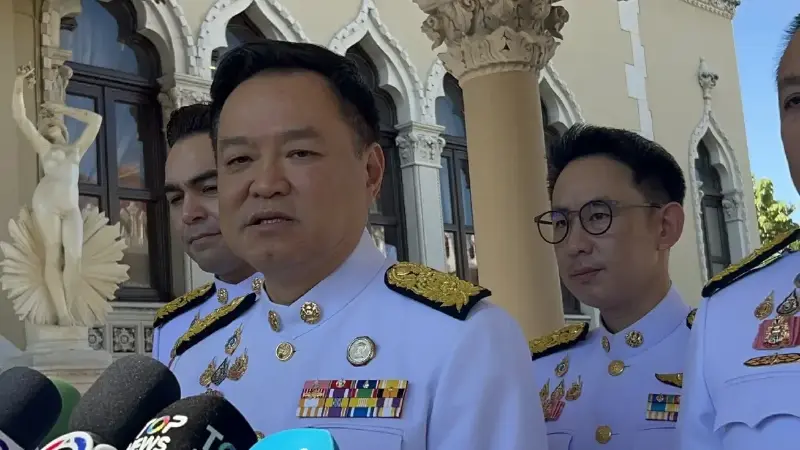


Anutin says Thailand’s national interest will guide its response after the UN’s top court found Myanmar committed genocide against the Rohingya in 2017.
- Thai Prime Minister Anutin Charnvirakul has stated that Thailand will maintain its relationship with Myanmar despite an International Court of Justice (ICJ) ruling that Myanmar committed genocide against the Rohingya.
- The Prime Minister justified the decision by stating that Thailand must adopt a position that best serves its own national interests, regardless of the court's verdict.
- According to Thailand's Foreign Minister, the goals of continued engagement with Myanmar are to reduce violence, encourage dialogue, and help deliver humanitarian aid.
Thailand will maintain relations with Myanmar following the International Court of Justice’s ruling that Myanmar committed genocide against the Rohingya, Prime Minister Anutin Charnvirakul said on 21 November 2026.
Speaking to reporters at Government House in Bangkok at 9.50am, Anutin, who is also interior minister, was asked whether the judgment called for a change in Thailand’s stance towards its neighbour. He said Thailand had to preserve the relationship whatever the court decided. Other countries would take their own approach, he added.
“Thailand must take the position that best serves the country,” Anutin said.
Foreign Minister Sihasak Phuangketkeow had set out the reasons for continued engagement a day earlier. He said Thailand wanted to reduce violence in Myanmar, encourage dialogue and help humanitarian aid reach people who needed it.
What the court ordered Myanmar to do
On 19 November, the International Court of Justice ruled by nine votes to six that Myanmar committed genocide against the Rohingya during its military operations in northern Rakhine State in 2017. The Gambia brought the case in 2019 under the Genocide Convention.
The court ordered Myanmar to investigate suspected perpetrators and prosecute them where the evidence warrants it. It also ordered Myanmar to allow displaced Rohingya to return home voluntarily, safely and with dignity, and to help reunite families. The court will decide the amount and form of compensation in a later phase of the case.
Myanmar’s Foreign Ministry disputed the finding on 20 November. It maintained that the military had been responding to armed attacks and denied that the operations were carried out with genocidal intent.
