
Myanmar denies Rohingya genocide, cites counter-terrorism operation
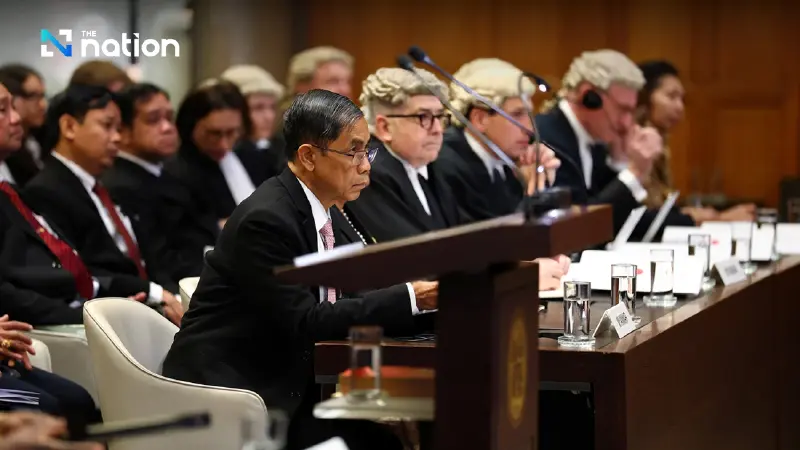


Myanmar denies genocide charges at the International Court of Justice, asserting the 2017 military operation was a counter-terrorism measure.
On Friday (January 16), Myanmar’s representatives addressed the International Court of Justice (ICJ) in The Hague, Netherlands, denying accusations of genocide against the Rohingya Muslims. Myanmar’s government argued that The Gambia, the claimant, failed to provide sufficient evidence to prove the alleged genocidal intent.
According to Nation TV, Ko Ko Hlaing, Myanmar's representative, stated that The Gambia had failed to present substantial proof and that the case should be judged on facts, not baseless accusations.
The Myanmar government further emphasised that the violence in 2017, which led to over 730,000 Rohingya fleeing to Bangladesh, was merely a legitimate military operation aimed at combating extremist Muslim terrorist groups that had attacked officials beforehand.
Efforts to repatriate refugees: External factors halt plans
Myanmar also countered the Gambian claim that the actions of its military were deliberately aimed at destroying an ethnic group.
Ko Ko Hlaing reiterated that Myanmar has been committed to repatriating refugees since 2017, but these efforts were hindered by uncontrollable external factors, such as the COVID-19 pandemic, natural disasters like cyclones, and internal political unrest.
This, he argued, contradicted the Gambian accusations that Myanmar sought to destroy or expel the Rohingya population.

A historic case: Victims to testify for the first time
This case has attracted significant attention as it marks the first full-scale genocide trial at the ICJ in over a decade, with proceedings set to last for three weeks. Next week, the court will hold a closed session to hear direct testimony from Rohingya victims, a historic first where victims will be able to testify before an international court.
However, it is expected that the ICJ will issue its final ruling by the end of 2026. This decision could have far-reaching consequences, including influencing the case filed by South Africa against Israel for alleged genocide in Gaza.
Myanmar continues to face internal conflict following the 2021 coup, with widespread international criticism of its human rights record.
