
Myanmar Rohingya genocide case begins hearings at ICJ
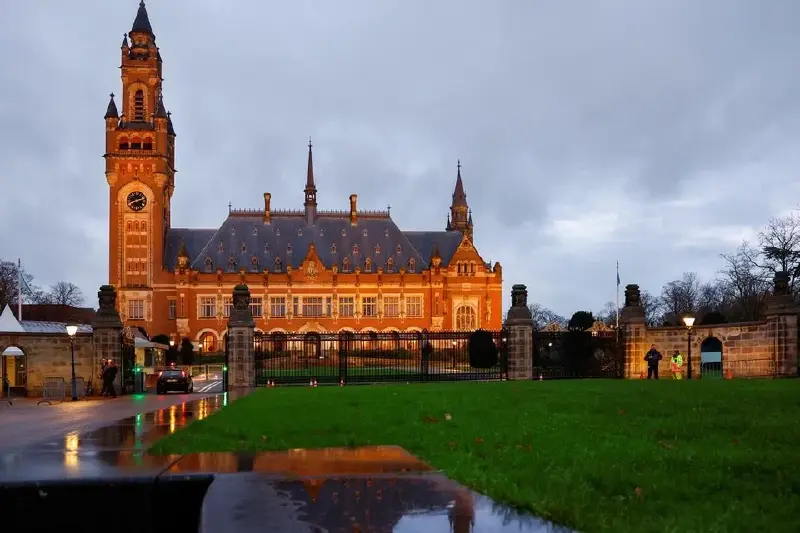


The International Court of Justice will open hearings on Monday in a landmark case brought by Gambia accusing Myanmar of genocide against the Rohingya, with victims due to give evidence in closed sessions as the proceedings are expected to shape how genocide is defined, proven and remedied.
- The International Court of Justice (ICJ) has begun hearings for a case accusing Myanmar of committing genocide against the Rohingya minority.
- The case was brought by Gambia in 2019, focusing on a 2017 military offensive that forced at least 730,000 Rohingya to flee into Bangladesh.
- Myanmar has rejected the genocide allegations, claiming its military campaign was a legitimate counter-terrorism operation.
- The hearings will mark the first time Rohingya victims will be heard by an international court, though their sessions will be private.
A closely watched case alleging that Myanmar committed genocide against the Rohingya minority is due to open on Monday (January 12) at the International Court of Justice (ICJ), the United Nations’ top court.
It will be the first genocide case the court has heard in full in more than a decade, and the result could have wider implications, including for South Africa’s separate genocide case at the ICJ against Israel over the war in Gaza.
The case was filed in 2019 by Gambia, a predominantly Muslim West African country, accusing Myanmar of genocidal acts against the mainly Muslim Rohingya in Rakhine State.
The allegations centre on a 2017 military offensive that drove at least 730,000 Rohingya into neighbouring Bangladesh, where refugees described killings, mass rape and arson.
A UN fact-finding mission said the operation included “genocidal acts”, while Myanmar has rejected the accusations and said the campaign was a lawful counter-terrorism response to attacks by Muslim militants.
Nicholas Koumjian, head of the UN’s Independent Investigative Mechanism for Myanmar, said the proceedings could set important precedents on how genocide is defined, proven and remedied.
Hearings begin at 10am on Monday and are scheduled to run for three weeks. For the first time, Rohingya victims will be heard by an international court, although those sessions will be closed to the public and media for privacy and sensitivity reasons.
Myanmar has been in further turmoil since the military ousted the elected civilian government in 2021 and violently suppressed pro-democracy protests, triggering a nationwide armed rebellion. The country is also holding phased elections that the United Nations, some Western governments and human rights groups have criticised as neither free nor fair.
Reuters
