
DDC probes chickenpox outbreak at Thammasat Rangsit campus
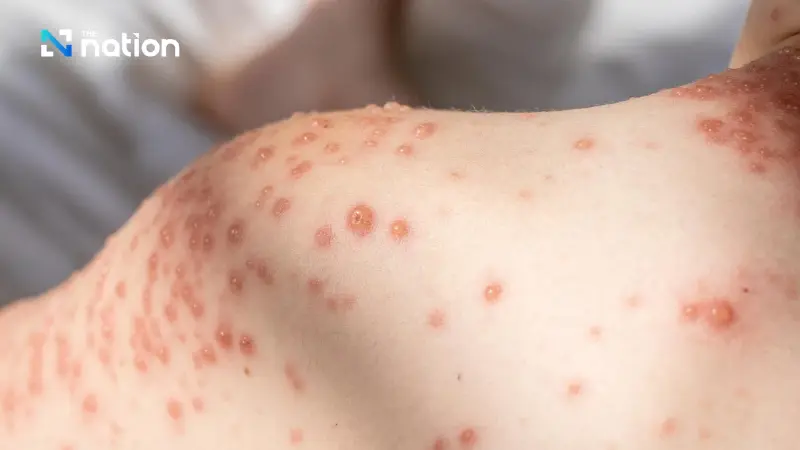


The Department of Disease Control has launched an urgent investigation into a chickenpox outbreak at two faculties at Thammasat University’s Rangsit campus, after classes were moved fully online from March 3 to 6. Officials said an investigation team was dispatched and authorities are tracing cases linked to a mid-February student camp.
Urgent investigation launched after online switch
The Department of Disease Control (DDC) has conducted an urgent disease investigation after an outbreak of chickenpox at two faculties at Thammasat University’s Rangsit campus prompted the campus to switch their classes to be fully online from March 3 to 6.
DDC director-general Dr Montien Kanasawat on Wednesday updated the media of disease investigation after he sent an emergency investigation team to the campus on Tuesday.
Dr Montien said the DDC was alerted to the situation on March 3, 2026, and dispatched a disease investigation team to the area, working with the Office of Disease Prevention and Control Region 4 and the Pathum Thani Provincial Public Health Office.
February student camp identified as key exposure event
Initial information showed a student camp was held from February 13–16, 2026, with around 66 participants. About 60 school students from several provinces reportedly joined. One participant developed chickenpox symptoms and was asked to leave, while the camp continued.


13 university students and 10 school pupils reported ill
Dr Montien said that from late February to early March, cases were detected among both university students and school pupils. About 13 university students and 10 school pupils were reported ill and had entered the treatment system. The university announced a suspension of classes, while officials began tracing which provinces the school pupils returned to, so provincial public health offices could be assigned to manage the situation locally.
Officials warn against complacency; cases nationwide “not higher” year-on-year
Dr Montien said the cluster underlined the need for stronger personal health education and prevention measures. He said some people might assume that sending a sick person home resolves the problem, but in practice additional measures may be needed.
He added that chickenpox is common, with around 10,000 cases recorded nationwide over the first two months of 2026, and the figure was not higher than the same period last year.
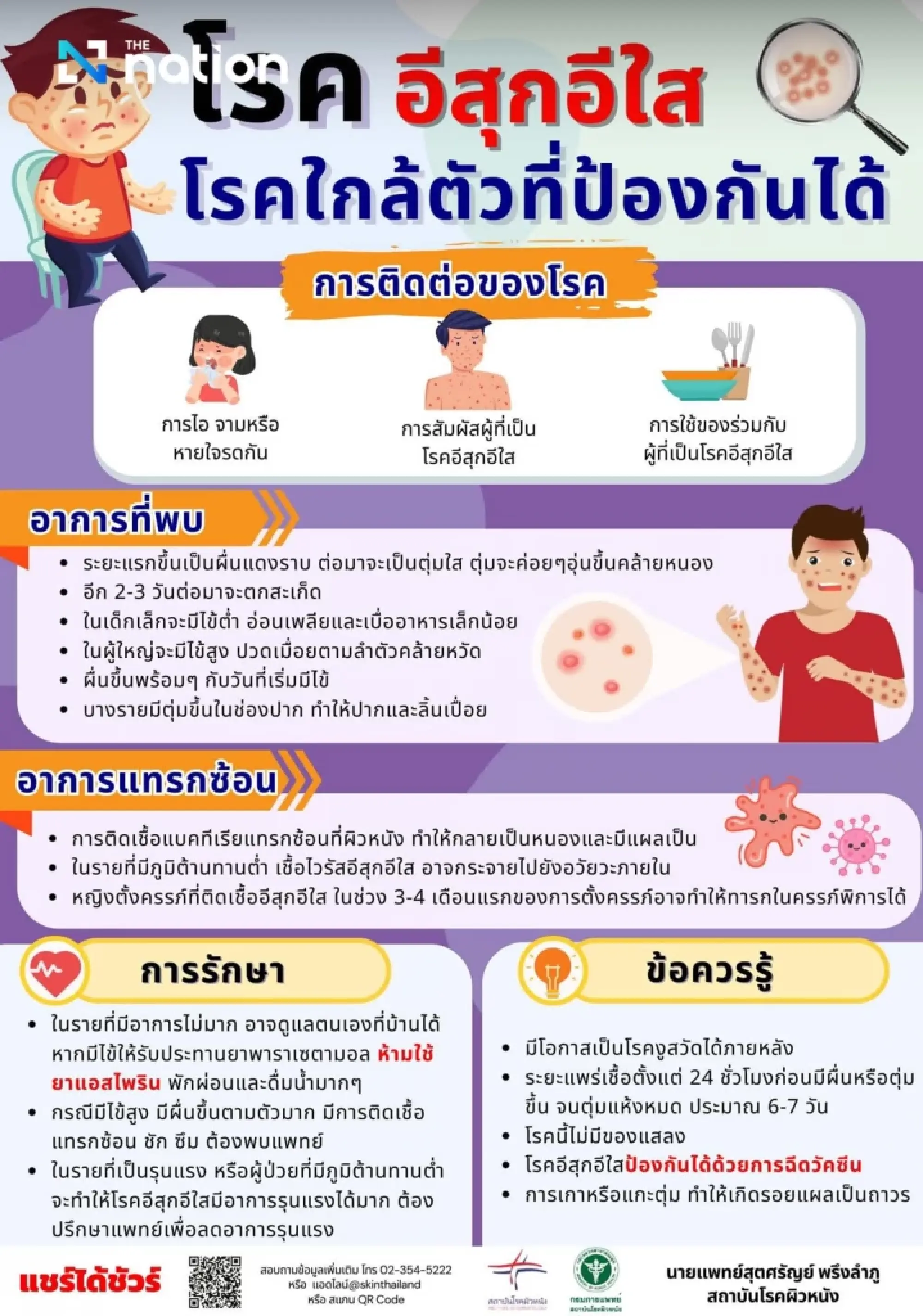

How chickenpox spreads and how to prevent infection
Chickenpox spreads easily through coughing and sneezing, as well as contact with a patient’s secretions, Dr Montien said. Typical symptoms include rashes, blisters and fever. Children often experience milder illness, while adults may have more severe symptoms.
He advised avoiding close contact with patients and maintaining good personal hygiene, including frequent handwashing. Vaccination can help for those who can receive it, but it remains an optional, self-paid vaccine. Any move to make it free would require an assessment of cost-effectiveness.
Dr Montien said most people get chickenpox only once, but immunity can decline over time. People without immunity—either because they have never had the disease or have never been vaccinated—face a higher risk of becoming infected after exposure. He added there was no indication the virus itself had changed to become more contagious.
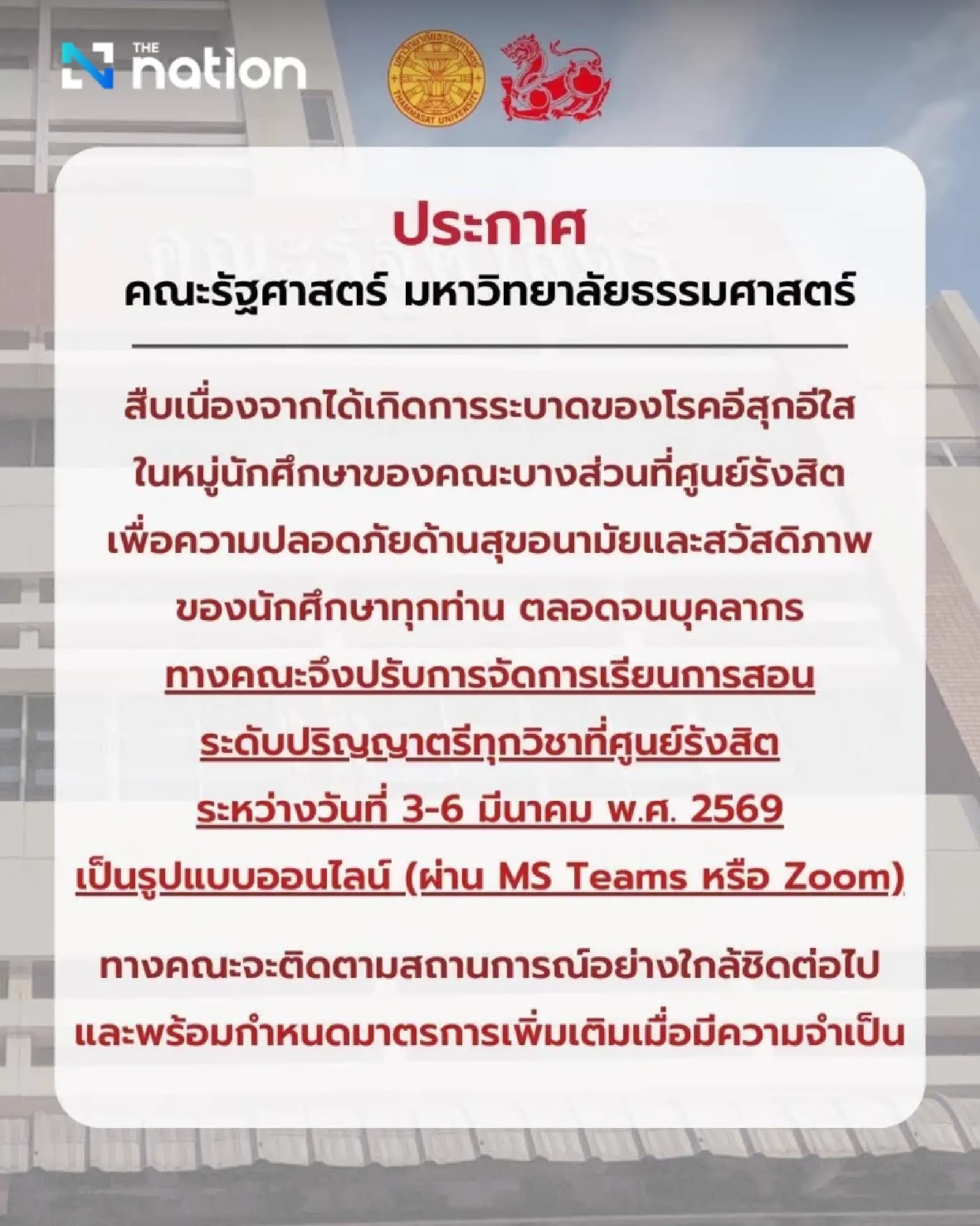

Faculty announcement: all undergraduate classes online via MS Teams or Zoom
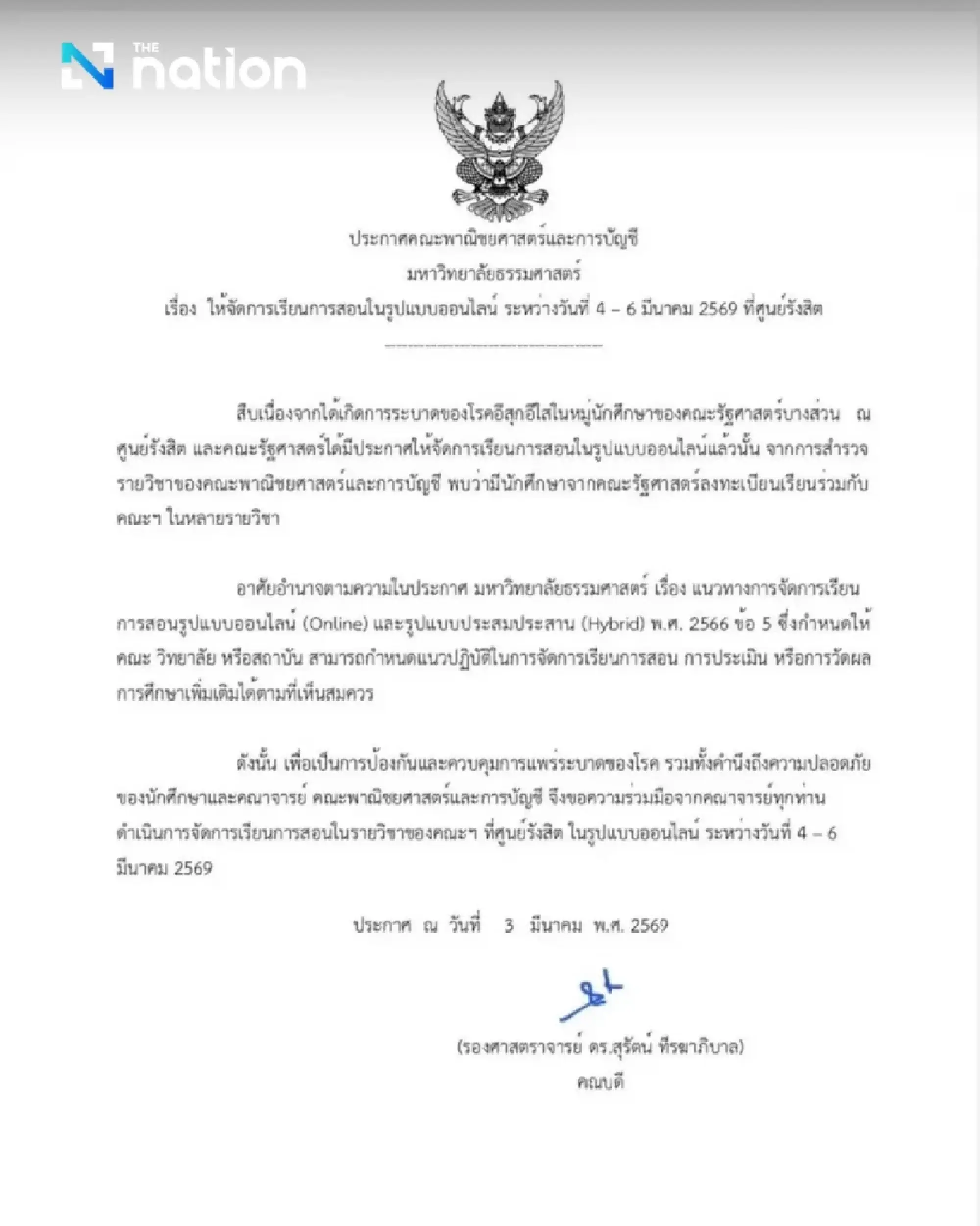
On March 3, 2026, the Faculty of Political Science at Thammasat University posted an announcement on Facebook, switching undergraduate teaching at the Rangsit campus to fully online from March 3–6, 2026 after detecting chickenpox among some students.
The faculty said all undergraduate classes at the Rangsit campus would be taught online via MS Teams or Zoom, and the situation would be monitored closely, with further measures to be introduced immediately if needed. The move came during the seasonal period when chickenpox often spreads, typically from January to April.

Doctors outline incubation period, symptoms and complications
Dr Pairoj Surattanawanich, deputy director-general of the Department of Medical Services, said chickenpox is highly contagious and can spread through coughing, sneezing, close-range breathing, close contact, or sharing items with a patient. People with shingles can also spread the virus. The incubation period is typically two to three weeks.
Symptoms often begin with a flat red rash that develops into clear blisters, which can later become cloudy. The rash commonly appears on the face, torso and back and may also occur in the mouth. After two to three days, lesions begin to crust over. Young children often have low-grade fever, fatigue and poor appetite, while adults are more likely to develop high fever and flu-like aches. Some adults may develop mouth blisters that become painful ulcers.
Complications can include secondary bacterial infection of the skin that leaves scars. In people with weakened immunity, infection can spread to the lungs, brain or liver. In pregnant women in the first three to four months of pregnancy, it may affect the foetus.
Home care advice and when to seek urgent treatment
Dr Sutsaranya Pruenglamphu, a dermatologist at the Institute of Dermatology, said mild cases can be treated at home with rest and paracetamol to reduce fever. He cautioned against using aspirin due to the risk of serious complications affecting the brain and liver. Patients should drink plenty of fluids and use anti-itch medication if needed.
He said those with high fever, extensive rash, shortness of breath, seizures, drowsiness, or underlying health conditions should seek medical attention immediately.
The infectious period begins around 24 hours before the rash appears and lasts until all blisters have dried—typically six to seven days. Patients should stay off school or work to prevent transmission and avoid scratching or picking at blisters, which can cause permanent scarring.
