
PAT keeps port tariffs and service charges unchanged, watches Middle East fallout
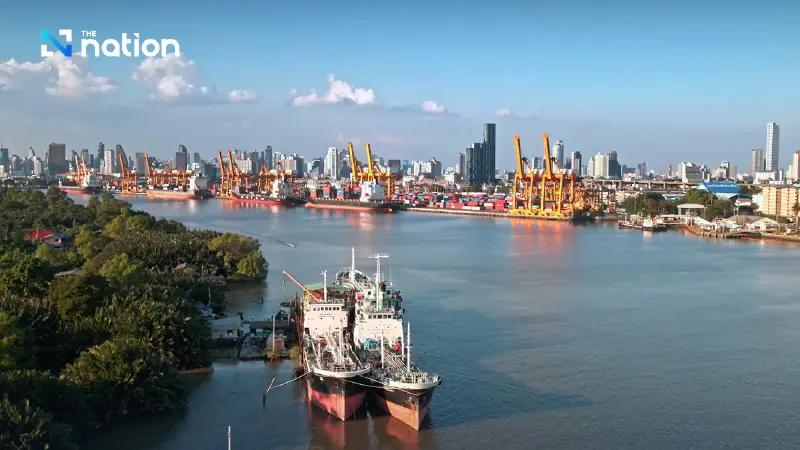


Thailand’s Port Authority says all ports under its supervision are operating normally around the clock, with contingency plans in place to manage any changes to international shipping routes. Fees will remain at existing rates as it tracks risks tied to the Middle East conflict.
- The Port Authority of Thailand (PAT) is keeping its port tariffs and service charges at normal rates, with no changes linked to the conflict in the Middle East.
- PAT is closely monitoring the Middle East conflict for potential impacts on international shipping routes, energy markets, and sea freight costs.
- Despite the external situation, all ports under PAT supervision, including Bangkok and Laem Chabang, are continuing to operate normally without disruption to cargo handling.
- The authority has affirmed its readiness with emergency contingency plans and flexible resource management to handle any adjustments to shipping schedules and ensure service continuity.
A report from the Port Authority of Thailand (PAT) highlighted the conflict involving the United States, Israel, and Iran in the Middle East, which has created volatility in energy markets and international sea freight costs.
This could be linked to the management of international shipping routes.
PAT is closely monitoring developments and assessing any potential impact on Thailand’s maritime transport system.
However, PAT confirmed that services at all ports under its supervision are continuing as normal: Bangkok Port, Laem Chabang Port, Chiang Saen Port, Chiang Khong Port and Ranong Port.
It said clear port management systems and emergency contingency plans remain in place, allowing vessels to berth and depart and cargo to be handled continuously.
On monitoring, PAT said it has been coordinating closely with shipping lines, ship agents, terminal operators and relevant agencies, while using real-time vessel-tracking systems and ship schedules to assess movements on international routes.
If routes or sailing schedules are adjusted, PAT said it can manage berth allocation and port resources flexibly to prevent any impact on cargo transport.


Act Sub-Lt Rutthakorn Khiewpaisal, Deputy Director General of PAT for Financial Management and Corporate Strategy, serving as acting Director General, said PAT’s services remain normal around the clock, and it has not found any impact on its core mission of import and export cargo handling.
Tariffs and service charges remain at normal rates, with no changes linked to the situation.
PAT is continuing to monitor developments and assess risk factors comprehensively to ensure the country’s waterborne logistics system remains stable and continuous.

PAT added that Thailand’s infrastructure, management systems and cooperation with the private shipping sector are ready to cope with global volatility, with top priority given to safety, service continuity and building confidence among all operators and service users.
PAT said it will continue to monitor the situation closely and is ready to communicate accurate and complete information to stakeholders, reaffirming that the country’s maritime transport remains stable and that overall core services are not affected.

