
Asian nations assure energy supplies, saying oil will last at least a month
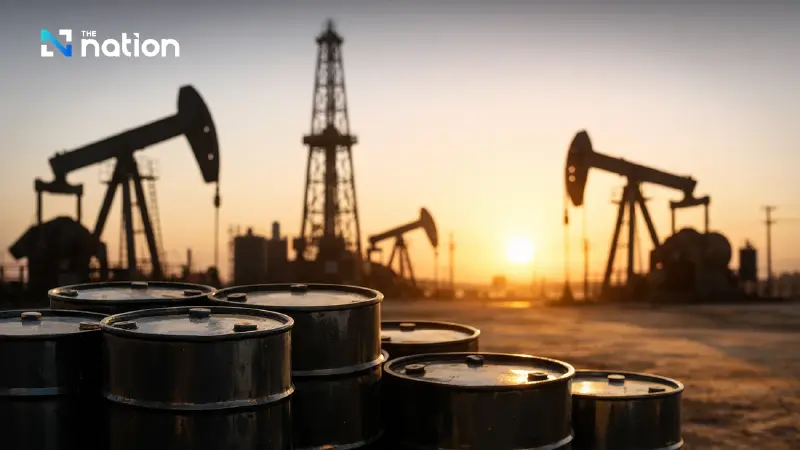


Amid Middle East tensions, several Asian governments are moving to reassure the public and markets that oil and gas reserves remain sufficient for at least the next month.
As war in the Middle East intensifies, governments across Asia are seeking to reassure the public and financial markets that they still hold adequate oil and gas reserves should the conflict drag on for several weeks.
Deepali Bhargava, head of Asia-Pacific regional research at ING, said that for now Asia appears able to cope with the latest rise in oil prices because inflation in many countries remains relatively low and manageable.
However, she said the real question is how high oil prices could climb — and how long they might stay elevated — because that will ultimately determine how severe the economic fallout becomes.
Nikkei Asia reported that in 2025, about 13.4 million barrels per day of crude oil were shipped through the Strait of Hormuz, accounting for roughly 30% of global seaborne oil trade. Of that total, more than 80% was destined for Asian countries.
China is the largest importer of oil through the strait, bringing in about 3.8 million barrels per day — more than 30% of its total oil imports — according to data from commodities intelligence firm Kpler.
India follows with around 2 million barrels per day, Japan with about 1.7 million barrels per day, and South Korea with roughly 1.6 million barrels per day.
Liquefied natural gas (LNG) shows a similar pattern. Of the 82.3 million tonnes of LNG transported through the Strait of Hormuz, more than 80% was also shipped to Asian countries, with China and India the biggest buyers.
Most LNG passing through the strait comes from Qatar, the world’s second-largest LNG exporter. Qatar accounts for about 20% of global LNG exports, and all of its LNG shipments must pass through the Strait of Hormuz before reaching international markets.
Despite these risks, countries heavily reliant on the route have been quick to say fuel shortages are unlikely.
Japan said it has enough oil reserves for around 254 days, while utilities hold LNG stocks sufficient for about three weeks.
South Korea said it has adequate oil reserves to meet energy demand for at least several months.
China holds strategic petroleum reserves as large as 1.5 billion barrels — enough to cover about 200 days of oil imports — according to Michael Hague, head of global commodities at investment bank Societe Generale. Analysts at Kpler added that China is likely to increase purchases of Russian oil as an alternative.
In India, the minister of petroleum and natural gas told parliament that the country has strategic oil reserves of about 74 days, including oil stored in underground caverns, at refineries and in floating storage at domestic ports.
The Philippines said on Tuesday that it has enough energy reserves for nearly two months.
Indonesia’s minister of energy and mineral resources said the country’s fuel stocks are sufficient for around 20 days, and insisted that even if the Middle East conflict escalates, it will not affect domestic fuel-price subsidy programmes.
For Thailand, Prime Minister Anutin Charnvirakul said the country has enough oil reserves for at least 60 days, and that the impact remains manageable.
