
Thailand needs 1.09m highly skilled workers during 2025–2029
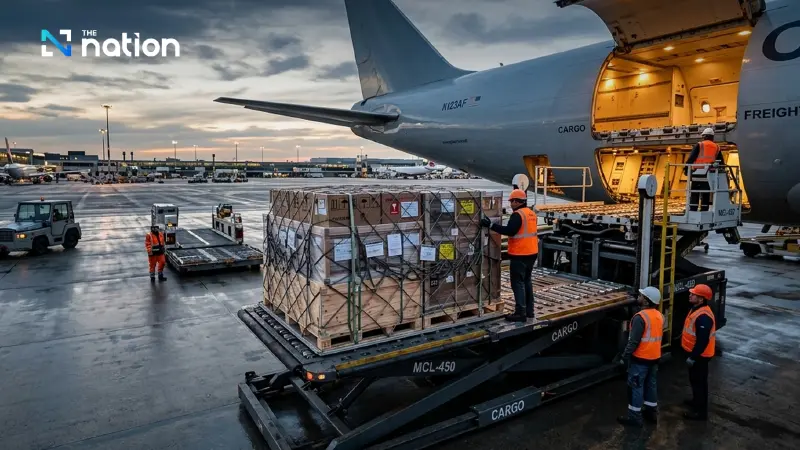


Thailand projects demand for 440,573 skilled aviation and logistics workers in 2025–2029 as universities align courses with employers.
- Thailand projects a need for nearly 1.09 million highly skilled workers across 10 target industries for the period of 2025–2029.
- The aviation and logistics sector accounts for the largest portion of this demand (40.5%), followed by smart electronics and industrial robotics.
- To address this shortage, the government is promoting flexible university curricula, lifelong learning, and greater private-sector involvement in practical training.
Thailand’s 10 target industries are projected to need 1,087,548 highly skilled workers during 2025–2029, with aviation and logistics leading demand as the government pushes universities to align courses and practical training more closely with employers’ needs.
The Ministry of Higher Education, Science, Research and Innovation (MHESI) is promoting flexible curricula, lifelong learning and greater private-sector involvement in training to help meet the requirements identified in the Thailand Talent Landscape 2025–2029 survey.

Dr Surachai Sathitkunarat, president of the Office of the National Higher Education, Science, Research and Innovation Policy Council (NXPO), outlined the workforce requirements and policy response on November 19, 2026.
Aviation and logistics account for 40.5% of demand
Aviation and logistics account for approximately 40.5% of projected demand across the 10 industries, followed by smart electronics and industrial robotics.
The six industries with the highest projected demand for highly skilled workers during 2025–2029 are:
- Aviation and logistics: 440,573 workers
- Smart electronics and industrial robotics: 226,423 workers
- Digital industry: 87,568 workers
- Next-generation automotive: 77,652 workers
- Medical services: 71,207 workers
- High-value and wellness tourism: 60,004 workers
Aviation and logistics, together with smart electronics and robotics, account for 666,996 workers, or approximately 61.3% of the total.

The survey identifies engineers, technicians, software developers, healthcare professionals and logistics specialists among the occupations in high demand, reflecting employers’ need for specialised knowledge, technological proficiency and practical workplace skills.
Universities adapt courses and expand workplace training
MHESI’s Higher Education Sandbox allows universities to adjust programme duration, academic credits and curriculum standards, giving institutions greater flexibility to respond to industry requirements and changing working practices.
Chulalongkorn University’s Computer Engineering and Digital Technology (CEDT) programme illustrates the approach. The three-and-a-half-year programme works with more than 100 private-sector partners and gives students practical workplace experience every year, helping develop skills and competencies that match employers’ needs.
The CEDT model aims to narrow the gap between university education and employment by incorporating experience of real working environments into students’ studies.
Skills programmes linked to 16,490 new jobs
MHESI and NXPO are connecting educational institutions, employers and learners in science, technology, engineering and mathematics (STEM) through the STEMPlus Platform and STEM One-Stop Service.

The services compile information on workforce demand, receive applications for course certification and connect jobseekers with employers, supporting the process from training through to employment.
NXPO reported that 603,243 people had completed training across 2,609 courses delivered by 219 training providers. The office linked the initiatives to 16,490 new STEM jobs across 260 organisations, generating approximately 5.6 billion baht in combined annual income.
The New Breed Graduates programme and GenNX also involve employers in designing teaching and assessing the competencies learners can apply at work.
NXPO reported an employment rate of 86% among graduates of GenNX’s intensive short courses, with incomes rising two to sixfold within three months.
Tax incentives aim to encourage investment in skills
Surachai also cited the Thailand Plus Package and the Board of Investment’s BOI-STEM++ initiative as mechanisms to encourage companies to hire and train STEM personnel and invest in skills development.
The Thailand Plus Package’s published rules for qualifying expenditure in 2023–2025 provided corporate income tax deductions of 1.5 times eligible STEM salary costs and 2.5 times certified training expenses, subject to the scheme’s conditions.
Lifelong learning addresses four economic pressures
Surachai identified four challenges affecting Thailand’s economy, labour market and competitiveness: an ageing population, climate change, geopolitical volatility and international competition for talented workers.
MHESI’s lifelong learning policy covers early childhood, school years, working life and older age. The ministry is promoting continuous learning, reskilling and upskilling to help people adapt to technological change and business requirements.
The ministry is also developing flexible credit accumulation arrangements that allow learners to build on previous study and training, alongside more accessible funding for learning. The aim is to enable people of all ages to develop knowledge and skills beyond formal education.
Three deep-tech initiatives support future industries
MHESI is advancing the Thailand²: Nation of Masters strategy to develop expertise in advanced technologies through three initiatives:
Siam Silica focuses on semiconductors and advanced electronics. According to NXPO, its targets include eight integrated circuit design businesses and centres, alongside at least one photonics or power-semiconductor fabrication facility, by 2030.
Siam Medica aims to develop specialists in advanced medicine and wellness science to support medical technology and innovation.
Siam Terra focuses on food technology and precision agriculture, using technology and innovation to strengthen the competitiveness of the agricultural and food industries.
MHESI and NXPO regard flexible education, lifelong learning and cooperation with employers as key mechanisms for meeting projected workforce demand and strengthening Thailand’s position in future industries.
Surachai presented the plans at the first Association of Southeast Asian Nations (ASEAN) Summit on Adult Learning and Education, held at HSE University in Moscow, Russia, with online participation. His presentation was titled “Building a Lifelong Learning Ecosystem for a Resilient Future: Higher Education Innovation and Workforce Transformation”.
