
ASEAN drew US$246bn in 2025 and Thailand a record US$19.1bn as region targets high-tech investment
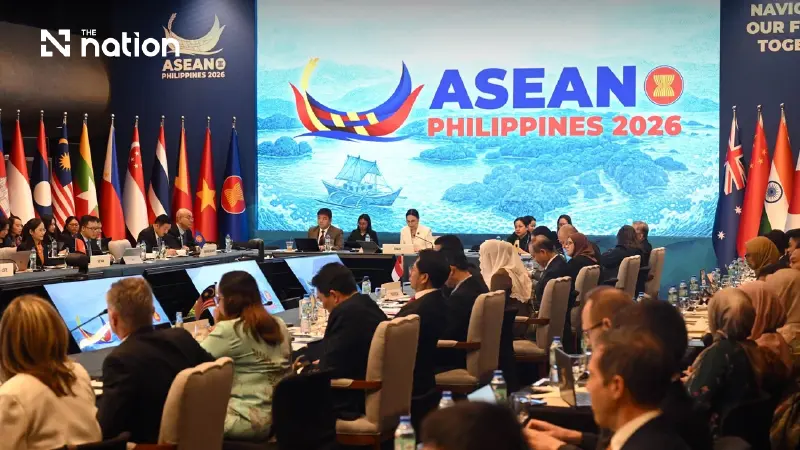


Thailand’s investment board says ASEAN drew US$246 billion in foreign direct investment in 2025 as the region prepares for more high-tech projects
- According to the Board of Investment (BOI), ASEAN attracted more than THB8.1 trillion (US$246 billion) in foreign direct investment (FDI) in 2025, up 10%, making it the largest FDI recipient among developing regions.
- Thailand’s FDI inflows reached a record high of more than THB630 billion (US$19.1 billion), up 30%, driven by investment in services, finance, manufacturing and the digital economy.
- Thailand and its ASEAN partners aim to prepare the region for high-tech investment by developing science and technology talent, strengthening research and development (R&D), and improving supply chains.
- The BOI has outlined measures to improve Thailand’s investment environment, including Thailand FastPass, and is working with ASEAN through the Regional Investment Promotion Action Plan (RIPAP) to attract high-quality investment and build integrated regional supply chains.
Thailand attracted a record US$19.1 billion in foreign direct investment (FDI), equivalent to more than 630 billion baht, in 2025, up 30%, according to the Board of Investment (BOI).
BOI secretary-general Narit Therdsteerasukdi said Thailand and its ASEAN partners must strengthen workforce skills, research and development, and supply chains to attract the next wave of investment in advanced technologies.
Narit was speaking after representing the Thai government at the ASEAN Investment Area Council meeting in Manila, the Philippines, on September 19, 2026. The meeting discussed cooperation on investment promotion amid geopolitical uncertainty, changes in global supply chains and the rapid transition towards green and digital economies.

ASEAN investment growth outpaces the global rate
The Association of Southeast Asian Nations (ASEAN) received US$246 billion in FDI in 2025, equivalent to more than 8.1 trillion baht, according to the BOI. Regional inflows increased by 10%, outpacing global FDI growth and accounting for more than 15% of the worldwide total.
The BOI said ASEAN was the largest and fastest-growing recipient of FDI among developing regions. Regional inflows also exceeded those of major East Asian economies for the first time, reflecting ASEAN’s growing importance as an international investment destination.
Thailand’s record inflows were driven by services, finance and manufacturing, the BOI said. Investment in information and communications doubled as the digital economy and supporting infrastructure expanded.
BOI urges skills and research investment for advanced industries
Thailand’s position at the meeting was that ASEAN must prepare its workforce, research capabilities and supply chains for emerging industries, Narit said. The aim is to generate greater value within the region and support sustainable growth.

The BOI cited findings from UN Trade and Development (UNCTAD) showing a structural shift in global and ASEAN investment towards intangible assets and activities. These include technology, innovation, research and development, workforce training, technical services and business-support services.
According to the UNCTAD findings cited by the BOI, the share of intangible investment rose from 44% in 2005–2010 to 64% in 2020–2025, growing almost twice as quickly as investment in tangible assets.
ASEAN’s share of investment devoted to research and development remains low compared with other regions, the BOI said. That leaves scope for Thailand and its neighbours to attract investment that develops technology, innovation and greater local value.
“Thailand and ASEAN need to accelerate the development of personnel in science, technology, advanced digital fields and engineering to support new industries,” Narit said. “This is a priority for the government and the BOI, particularly through Skill Bridge, which develops skills that match industry needs, and Business Transformation, which helps Thai businesses adopt technology to strengthen their competitiveness, enabling Thailand and ASEAN to realise their full potential in attracting high-quality investment.”

Thailand FastPass targets faster investment approvals
The BOI presented progress on Thailand FastPass, which aims to make approvals and licensing procedures across government agencies 20–50% faster. The mechanism also coordinates efforts to resolve investment obstacles so that large and strategically important projects can proceed efficiently.
Narit said participants agreed with the Organisation for Economic Co-operation and Development (OECD) that competition for investment should extend beyond tax incentives. Streamlined approvals, clear regulations, infrastructure, skilled personnel and comprehensive investor services were also essential to building confidence and retaining high-quality investment over the long term.
ASEAN plan promotes investment across regional supply chains
Thailand is also supporting regional cooperation through ASEAN’s Regional Investment Promotion Action Plan 2025–2030, known as RIPAP, working with the United Nations Economic and Social Commission for Asia and the Pacific. The plan promotes ASEAN as a collective investment destination, drawing on the complementary strengths of member states.
The BOI said the regional approach aims to attract investment across entire supply chains, covering upstream, midstream and downstream activities.
“Regional cooperation will help ASEAN connect each country’s different strengths into complete supply chains and improve its competitiveness globally,” Narit said. “Thailand is ready to continue supporting implementation of RIPAP to turn ASEAN’s potential and opportunities into concrete investment projects and ensure that the benefits are shared widely among member states.”
