
Business leaders seek investment as 7-day IMF-World Bank meetings begin October 12
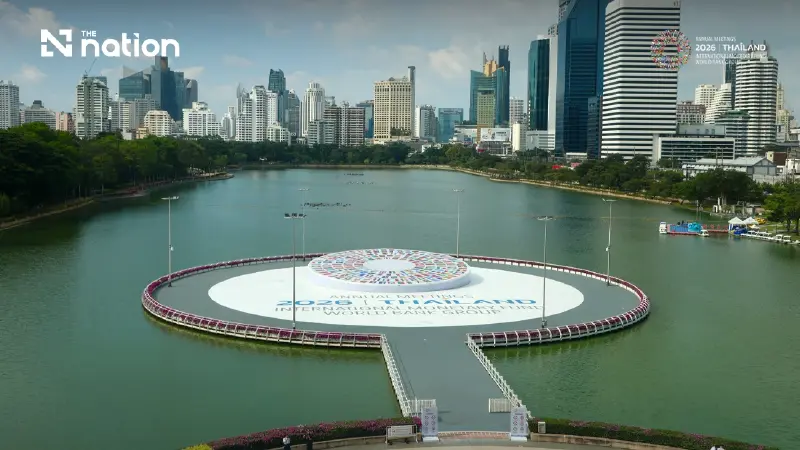


Business leaders urge regulatory reform, AI investment and stronger networks to turn Thailand’s IMF-World Bank meetings into lasting economic gains.
- Thai business leaders are using the IMF-World Bank meetings in Bangkok as an opportunity to call for fresh foreign investment and practical regulatory reforms.
- The Thai government plans to showcase the country's digital infrastructure and clean energy readiness to attract investment in future industries like artificial intelligence (AI) and electric vehicles (EVs).
- Executives are urging for the removal of regulatory barriers and faster implementation of proposals to turn discussions into tangible economic benefits and new sources of growth.
- A key goal of the event is to restore Thailand's international prominence and advance its ambition to become a regional financial hub by building lasting global connections.
Thai business leaders are calling for fresh investment and practical reforms as Thailand hosts the International Monetary Fund (IMF) and World Bank Group Annual Meetings in Bangkok from October 12–18, 2026. Executives see the gathering as a chance to restore Thailand’s international prominence, but say lasting economic benefits will depend on translating proposals into action.
Thailand last hosted the meetings in 1991, 35 years ago. This year’s gathering brings together national leaders, finance ministers, central bank governors, policymakers, international organisations, financial institutions, businesses and civil society to discuss the direction of the global economy, finance and public policy.
Ekniti promotes investment and two Bangkok initiatives
Deputy Prime Minister and Finance Minister Ekniti Nitithanprapas said Thailand would showcase its digital infrastructure, clean energy readiness and investment incentives to attract foreign direct investment in industries of the future, particularly artificial intelligence (AI) and electric vehicles (EVs).
Ekniti said the meetings were expected to generate an immediate 1,050–2,250 million baht in circulation within Thailand’s economy while opening opportunities for the country’s economic future. The investment drive aims to strengthen Thailand’s competitiveness over the long term.
Flagship discussions during the IMF–World Bank meetings will address public debt, energy volatility and technological disruption from AI.
Thailand plans to advance two key outcomes:
Bangkok Blueprint: A framework for modern digital finance, using technology to improve access to funding for people on low incomes and underserved groups. Ekniti highlighted Thai innovations such as the Paotang and Tung Ngern applications and the Nok Krasip AI tool, alongside cooperation with the IMF on stronger digital financial security. Thailand wants financial leaders elsewhere to be able to adapt the approach.
Bangkok Dialogue: Ekniti is scheduled to present a concluding account on October 17 of the messages Thailand has conveyed throughout the meetings, while advancing policy issues for international consideration.
Bank of Thailand governor Vitai Ratanakorn said the government and Finance Ministry had framed Thailand’s contribution around “Thailand’s New Horizons: Empowering People, Building Resilience”, combining development centred on people with greater national resilience.
Vitai said the Bangkok Blueprint would offer guidance for countries seeking more effective responses to financial scams and cyber threats. The framework would draw on regional experience, allowing countries to study and adapt measures to their own circumstances rather than setting out an approach solely for Thailand.
Business leaders call for regulatory reform and wider AI adoption
Payong Srivanich, president of Krungthai Bank and chairman of the Thai Bankers’ Association, said the meetings offered Thailand an opportunity to demonstrate its relevance amid economic, political and demographic change. However, the benefits would depend on applying the knowledge gained to the country’s structural challenges and developing new sources of growth.
Payong said learning from global policymakers in economics, finance, fiscal policy and banking was another important opportunity. Understanding how national leaders viewed the coming century, and how they intended to adapt, could help Thailand prepare for change.
Prasit Boondoungprasert, chief executive of Charoen Pokphand Foods (CPF), told Bangkok Biznews that Thailand’s central challenge was carrying proposals through to successful implementation.
Prasit said food was among the priority industries identified as potential drivers of growth, but implementation in Thailand frequently encountered regulations, rules and government key performance indicators (KPIs) that did not support commercial results.
CPF’s chief executive urged Thailand to connect international policy discussions with practical action by addressing systemic problems, removing regulatory barriers and adjusting KPIs to measure commercial impact. Such changes were necessary to turn proposals made on the global stage into new opportunities for industry and the economy.
Jareeporn Jarukornsakul, chairman of the executive committee and group chief executive of WHA Corporation, told Bangkok Biznews that Thailand needed to accelerate new investment to strengthen economic growth. Investment attracted in previous years was now moving through factory construction, production and export stages.
Jareeporn said the benefits of emerging industries must reach the public, small and medium-sized enterprises (SMEs), and entrepreneurs. After two years of attracting investment in digital infrastructure and data centres, Thailand’s next step should be wider business use of AI and workforce development to support its expansion.
WHA’s group chief executive also called for industrial indicators to reflect changes in sectors such as EVs, chips and semiconductors, and smart electrical appliances. More appropriate measurements would give policymakers a clearer picture of industrial transformation and help businesses adapt more quickly.
EGCO and BAFS propose new sources of growth
Tawatchai Sumranwanich, president of Electricity Generating (EGCO), told Bangkok Biznews that Thailand should develop new economic drivers across three time horizons:
Short term, one to two years: Turn investment opportunities into economic value by accelerating projects that have already received investment promotion approval. Priorities include data centres, cloud services, renewable energy and battery energy storage systems, which could provide an immediate economic stimulus.
Medium term, three to five years: Develop low-carbon industries and future supply chains, including advanced electronics such as printed circuit boards (PCBs), EVs, low-carbon petrochemicals, and health and medical industries requiring clean electricity.
Long term, five to 10 years and beyond: Transform the energy system through advanced technologies, including hydrogen, carbon capture, utilisation and storage (CCUS), and small modular nuclear reactors (SMRs).
M.L. Nathasit Diskul, president of Bangkok Aviation Fuel Services (BAFS), said the meetings offered a chance to demonstrate Thailand’s potential amid geopolitical conflict. In Nathasit’s view, Thailand and ASEAN stood out as neutral partners that international investors regarded as relatively safe destinations.
Nathasit proposed two further sources of growth:
Quality tourism: Build on wellness, hospitality and sports tourism, drawing on Thailand’s distinctive strengths and expertise accumulated over many years, which Nathasit said would be difficult for foreign competitors to replicate.
The creative economy: Combine the design skills and creativity of younger generations with AI to strengthen national competitiveness.
Banking leaders seek a financial hub and lasting global connections
Kattiya Indaravijaya, chief executive of Kasikornbank, said Thailand should use the meetings to advance its ambition to become a regional financial centre. The presence of international delegates and financial institution leaders created opportunities to exchange views and approaches to doing business.
Kattiya said the gathering should provide space for participants to share experience and adapt ideas to their own circumstances, particularly those of Thailand and ASEAN. The value would lie in turning that exchange into practical benefits beyond the meetings themselves.
Sakchai Peechapat, group chief executive of TISCO, said the return of the annual meetings offered an important opportunity to welcome international participants into a business environment that had changed substantially over the past 35 years.
Sakchai said government support for activities, a clear presentation of Thailand’s development direction, and opportunities for businesses to participate and organise joint events would help connect delegates across sectors.
TISCO’s group chief executive stressed the importance of building relationships among government, businesses and international participants so that encounters during the meetings could lead to continuing exchanges and cooperation.
Dr Rak Vorrakitpokatorn, chief executive of Bangkok Commercial Asset Management (BAM), said participation in international forums could strengthen Thailand’s identity and draw global attention back to the country.
Rak said Thailand had technological infrastructure and human capital to showcase. The IMF–World Bank meetings presented an opportunity to restore the country’s prominence internationally, including the leadership role it had previously held within ASEAN.
