
Refineries, motor vehicles and palm oil pull June industrial output lower


Second-quarter production fell 1.79%, though domestic demand supported sugar, cleaning products, soap, cosmetics and pet food
- Thailand's Manufacturing Production Index (MPI) fell by 3.10% year on year in June, primarily due to weaker output from the motor vehicle and petroleum refining sectors.
- Motor vehicle production contracted by 12.59%, a result of weakened domestic demand linked to high household debt and tight lending standards from financial institutions.
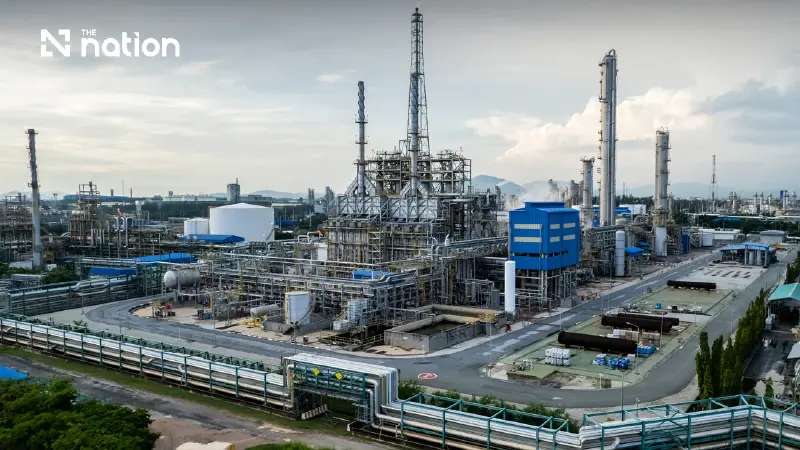
- Refined petroleum product output decreased by 7.97% as producers slowed operations to manage large, accumulated inventories of diesel and petrol.
Thailand’s Manufacturing Production Index (MPI) fell 3.10% year on year to 94.99 in June, dragged down by weaker vehicle and petroleum-refining output, the Office of Industrial Economics (OIE) reported.
Capacity utilisation stood at 57.61%, while prolonged conflict in the Middle East contributed to volatility in energy prices and transport costs.
Second-quarter MPI averaged 95.96, down 1.79% from the same period last year, with average capacity utilisation of 57.47%.
Supakit Boonsiri, director-general of the OIE, said the agency would accelerate an overhaul of its industrial indices to reflect Thailand’s current industrial structure more accurately and provide a clearer measure of the sector’s potential and competitiveness.
The revised indices are also intended to support industrial policy and the country’s longer-term economic development.

Domestic demand cushions production decline
Despite the overall contraction, June production received support from a gradual recovery in domestic demand, particularly for consumer and essential goods such as sugar, cleaning products, soap and cosmetics.
The OIE attributed part of that demand to government measures under the Thais Help Thais Plus programme, which was introduced to stimulate spending and ease living costs.
Industries responding to changes in consumer behaviour also continued to grow. Prepared pet-food production benefited from the trend of treating pets as family members, while ready-made food expanded alongside increasingly urban lifestyles.
These industries helped support manufacturing activity and created additional value for related businesses.
The football World Cup in June also lifted demand for sportswear, providing support to the textile industry.
The OIE’s preliminary industrial warning system for July remained at a normal level, despite a renewed escalation of Middle East tensions that affected production costs, transport expenses and international trade.
Domestic conditions continued to receive support from the Thais Help Thais Plus programme, while external factors remained under watch because of the prolonged regional conflict and uncertainty surrounding US import tariffs.
Continued demand for electronics and technology-related products provided a positive external factor.
Chemicals, pet food and sugar support June output

The main industries making positive contributions to June MPI compared with the same month last year were:
- Basic chemicals: Output increased 22.35%, led by caustic soda and chlorine. Demand continued to rise from industries including petrochemicals, wastewater treatment and consumer goods, prompting some producers to expand production to meet orders.
- Prepared animal feed: Output rose 10.73%, driven mainly by prepared pet food and sustained demand from domestic and export markets.
- Sugar: Production increased 19.83% as factories accelerated the processing of raw sugar into refined white sugar for delivery under contracts.
The main industries weighing on the index were:
- Motor vehicles: Output contracted 12.59%, led by large passenger cars, pickup trucks, small passenger cars and small hybrid models. Domestic demand weakened as household debt remained high and financial institutions maintained tight lending standards.
- Refined petroleum products: Production fell 7.97%, mainly because of lower output of high-speed diesel and petrol. Producers slowed operations after accumulating large inventories.
- Palm oil: Output declined 33.24%, led by crude and refined palm oil, as fewer oil-palm fruits entered the market.
Middle East shipping risks remain under watch
Supakit warned that a wider Middle East conflict affecting shipping through the Red Sea and the Bab el-Mandeb Strait would increase risks to freight movements, logistics costs and Thailand’s industrial supply chains.
“If the conflict expands and affects shipping routes in the Red Sea and the Bab el-Mandeb Strait, it will further increase risks to freight transport, logistics costs and the supply chains of Thai industry,” he said.
Manufacturers should respond by diversifying their sources of raw materials and export markets to reduce reliance on any single country or region, he added.
The OIE also recommended using forward contracts to manage costs, improving production and energy efficiency, expanding the use of renewable and biomass energy, and applying digital technology and AI to reduce costs and raw-material losses.
Businesses should also develop workers’ skills and, over the medium to long term, restructure production to reduce dependence on imported raw materials and energy.
Supakit called for greater use of local content and stronger promotion of the Made in Thailand programme to improve competitiveness and reinforce the industrial sector’s long-term resilience.
