
Bang Na-Trat rises as Bangkok’s new eastern CBD as city plan and mega-projects reshape corridor
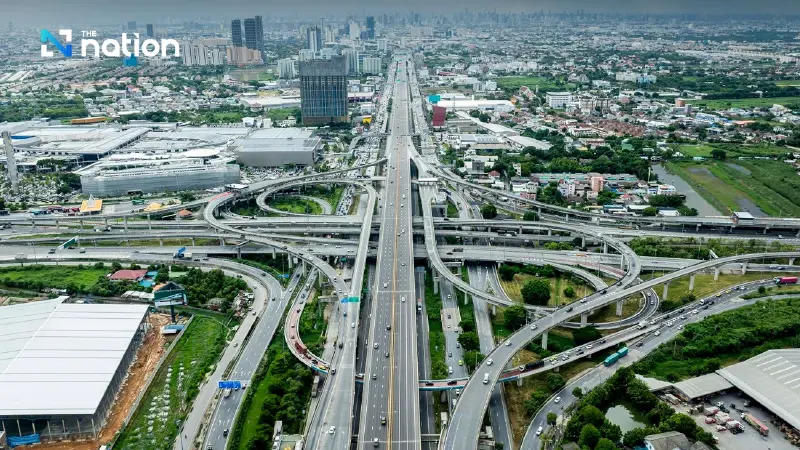


Bang Na-Trat Road is emerging as Bangkok’s next major business and lifestyle district, backed by the draft city plan, future Silver Line, rising land prices and major mixed-use investments.
Bang Na-Trat tipped as Bangkok’s next eastern CBD
Bang Na-Trat Road is emerging as Bangkok’s next major business and lifestyle district, with the draft Bangkok Comprehensive Plan, new mass-transit links and large-scale private investment turning the eastern corridor into a gateway between the capital, Suvarnabhumi Airport and the Eastern Economic Corridor.
The area in eastern Bangkok is being elevated into a new central business district, or New CBD, under the draft Bangkok Comprehensive Plan, fourth revision. It is also being positioned as a key suburban community hub, reflecting rapid urban growth, stronger connectivity and rising demand for residential, commercial and lifestyle space.
Major developers commit billions to eastern Bangkok
Large private-sector projects are now spreading along the corridor, following the government’s infrastructure investment. Development starts from Bang Na Intersection, a major connection point on the BTS Green Line, and extends towards Samut Prakan and Chachoengsao, forming a strategic gateway to the Eastern Economic Corridor, or EEC.
The corridor is expected to gain further momentum from the planned Silver Line, the Bang Na-Suvarnabhumi section under the Mass Rapid Transit Authority of Thailand. The 19.7-kilometre light rail transit project will have 14 stations, starting from Bang Na Intersection and running along Thepharat Road, also known as Bang Na-Trat Road.
The route will pass Si Iam Intersection and Mega Bangna before turning onto Suvarnabhumi 3 Road and ending at the southern side of Suvarnabhumi Airport. Together with existing roads and expressways, the new rail link is expected to strengthen Bang Na-Trat’s role as a high-potential property corridor.
The area has already attracted leading property developers, with new luxury low-rise and high-rise housing projects, office buildings, mixed-use developments and logistics facilities. Land prices along the early section of Bang Na-Trat Road have risen to around 300,000 baht per square wah and are expected to increase further.
Bangkok Mall and BITEC anchor Bang Na’s new growth
One of the most important projects in the area is Bangkok Mall by The Mall Group, a mega mixed-use development located at Bang Na Intersection.
The project, covering more than 1.2 million square metres on over 100 rai of land, is planned as one of the largest shopping centres in Thailand and Southeast Asia. It will include a shopping complex, the 16,000-seat Bangkok Arena concert hall, a hotel, office space and an amusement park.
The project is currently under construction and is expected to open partially in 2026.
Opposite Bangkok Mall is BITEC Bang Na, a major convention and exhibition centre that also functions as an entertainment and indoor sports venue. Together, Bangkok Mall and BITEC are expected to turn Bang Na Intersection into one of Bangkok’s busiest commercial nodes.
Central Bangna undergoes major mixed-use transformation
Central Pattana Plc, or CPN, is carrying out the biggest renovation of Central Bangna in 30 years as it transforms the shopping centre into a full-scale mixed-use project.
The investment, worth more than 15 billion baht when combined with other branches, is designed to capture demand from high-spending consumers in the Bang Na area.
The expanded project will sit on more than 50 rai of land, with a total area of over 300,000 square metres. It will combine retail space, office buildings and residential components in one location. The redesigned shopping zone is expected to open in the fourth quarter of 2026.
Mega-projects target high purchasing power
Further along Bang Na-Trat Road, at kilometre 7, The Forestias is being developed as one of the largest mixed-use projects in Thailand.
The project covers 398 rai and is valued at 125 billion baht. Developed under the concept of a “city in the forest”, it combines large green spaces, luxury condominiums, residential projects for retirees and a medical centre.
At the front of The Forestias is Happitat, a new lifestyle and retail destination covering more than 60 rai, with an investment value of more than 20 billion baht. The project focuses on green space, edutainment activities, shopping and family-oriented activity areas.
Mega City Bangna is another major development shaping the corridor. The project expands on the existing Mega Bangna shopping centre and is designed as a compact urban district with office buildings, condominiums, hotels and green areas to support a complete lifestyle ecosystem.
New city plan unlocks development potential
The draft Bangkok Comprehensive Plan supports Bang Na’s development as a commercial district on the eastern side of the capital. It also encourages residential and commercial growth along the BTS Green Line from On Nut to Kheha and aligns with the Samut Prakan Comprehensive Plan 2025.
Under the revised plan, land-use designations in parts of the area will be adjusted to allow more development. These include medium-density residential zones, or orange zones, under Y.9 with a floor area ratio, or FAR, of 5 and an open space ratio, or OSR, of 8%; and Y.10 with an FAR of 5.5 and OSR of 7.5%.
Some areas will also be designated as commercial land under P.5, with an FAR of 7 and OSR of 5.5%.
The current Bangkok Comprehensive Plan designates the area mainly as medium-density residential land, including Y.6 with an FAR of 4.5 and OSR of 6.5%, and Y.7 with an FAR of 5 and OSR of 6%.
Eastern gateway gains long-term appeal
With stronger planning support, better rail connectivity and major private-sector investment, Bang Na-Trat is moving beyond its old image as a suburban road and logistics corridor.
The area is increasingly being reshaped into a mixed-use urban district combining retail, offices, housing, hotels, healthcare, entertainment, logistics and green space. Its location between inner Bangkok, Suvarnabhumi Airport and the EEC is expected to make it one of the most closely watched property markets in the capital over the next few years.
