
Thailand Faces Japan-Style Housing Crisis as Unsold Stock Tops 213,000 Units
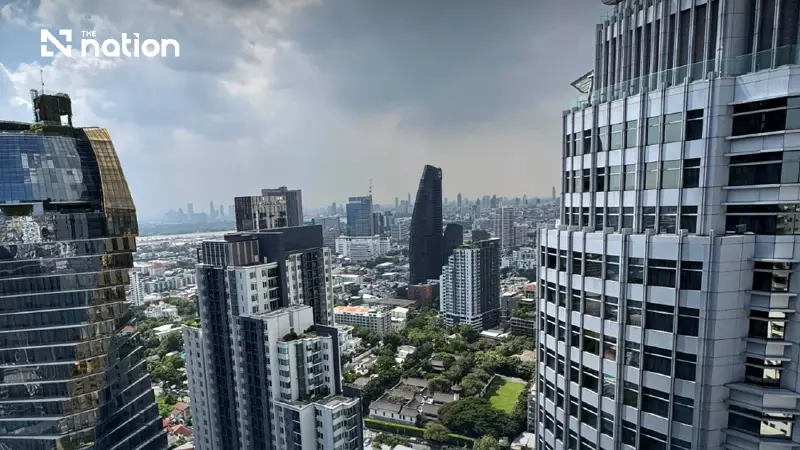


A toxic mix of record household debt, strict lending criteria, and a severe demographic slowdown leaves Bangkok's property market heavily oversupplied
- Thailand's unsold housing inventory is projected to reach an unprecedented 213,000 units by 2026, stemming from a massive oversupply created between 2016 and 2023.
- The crisis is fueled by severe economic pressures on buyers, including record household debt, strict bank lending criteria, and stagnant wages, which have crippled consumer purchasing power.
- A long-term demographic decline, featuring a shrinking working-age population and an aging society, is creating a chronic structural problem that mirrors the conditions of Japan's vacant home crisis.
A toxic mix of record household debt, strict lending criteria, and a severe demographic slowdown leaves Bangkok's property market heavily oversupplied.
The accumulated inventory of unsold residential properties in Bangkok and its surrounding provinces is projected to surge to an unprecedented 213,000 units by the end of 2026, triggering warnings that Thailand is on the brink of a chronic, Japan-style vacant housing crisis.
Industry analysts attribute the looming property glut to a severe contraction in consumer purchasing power. This downturn has been exacerbated by historically high levels of household debt, sluggish economic growth, and significantly tightened lending criteria imposed by commercial banks.
Compounding these immediate economic headwinds is a profound structural shift in Thailand’s demographics. A declining birth rate, coupled with a rapidly ageing society, means the country's working-age population—the bedrock of the domestic property market—is in permanent decline.
Experts warn that without immediate intervention, Thailand risks inheriting a vast landscape of abandoned properties, mirroring the infamous “Akiya” (vacant home) crisis that has plagued Japan for decades.
A Glaring Supply-Demand Mismatch
According to reporting by Krungthep Turakij journalist Bussakorn Phoosae, Thai property developers aggressively launched new projects between 2016 and 2023.
During this period, condominiums, detached houses, and townhomes sprouted across the Greater Bangkok area at an average rate of over 100,000 new units per year.
However, genuine market demand failed to keep pace, averaging just 92,000 units annually. While the yearly deficit appeared marginal at the time, it silently accumulated into a monumental overhang of excess stock. As economic growth slowed, this systemic vulnerability was laid bare.
Industry data suggests that if developers completely halted all new construction today, it would take more than four years for the market to fully absorb the current backlog of inventory.
Prior to 2023, the typical absorption rate was just two years. This stark doubling of the timeline confirms that the market has entered a state of severe oversupply, even though developers have since slashed new launches by nearly half to an average of 51,000 units per year.
The Financial Squeeze on Buyers
The crisis is no longer just a supply-side problem; the domestic buyer has run out of momentum. British estate agencies operating in the region note that a combination of four distinct economic pressures has effectively paralysed the market:
Elevated Household Debt: Consumer leverage remains among the highest in Asia, severely limiting new borrowing capacity.
Stagnant Real Wages: Disposable income growth has failed to keep pace with the rising cost of living.
Onerous Mortgage Controls: Anxious banks have drastically increased loan rejection rates.
Macroeconomic Uncertainty: Widespread financial insecurity has prompted families to indefinitely defer big-ticket purchases.
Consequently, research firm SCB EIC estimates that the mountain of unsold residential stock will hit historical highs by the end of 2026.

The Demographic Time Bomb
While cyclical economic downturns eventually correct themselves, Thailand's changing demographic structure presents a far more intractable challenge.
Over the past decade, the number of Thai citizens under the age of 15 has plummeted from 11.7 million to 9.6 million. Conversely, the elderly demographic has ballooned from 8.4 million to 12.6 million.
The vital working-age bracket, which comprised 68% of the population in 2015, has shrunk to 64% today and is on track to drop to a mere 58% by 2040.
Furthermore, younger generations are fundamentally shifting their attitudes toward homeownership. Historically viewed as an essential anchor of financial security, young professionals now heavily favour lifestyle flexibility.
Driven by frequent career changes and urban mobility, they are increasingly choosing to rent rather than buy, opting to deploy their capital into alternative asset classes.
Global Precedents and the Path Forward
Thailand's trajectory closely follows shifts observed in larger global economies:
Japan: A super-aged demographic profile has resulted in more than 9 million abandoned Akiya homes, representing roughly 14% of the country's entire housing stock. Japanese developers have subsequently been forced to pivot away from speculative construction toward rental management and integrated elderly care services.
China: A deep property downturn has discouraged young buyers, many of whom have adopted a "wait-and-see" approach, choosing to inherit family properties rather than enter the market.
United States: Macroeconomic pressures have popularised alternative structures such as "Rent-to-Own" schemes to help consumers bypass rigid mortgage barriers.
For Thai developers, the immediate priority must be aggressive inventory clearance via alternative financing models, including rent-to-own schemes and long-term leasing. In the long term, the industry must transition toward senior-living developments and multi-generational housing integrated with healthcare services.
For policymakers, the focus must shift toward legitimising and regulating the rental sector. As the traditional dream of homeownership fades, renting is no longer a temporary stepping stone but the permanent future of Thai housing.
