
AWC cuts Asiatique tower to 56 storeys in major Chao Phraya revamp
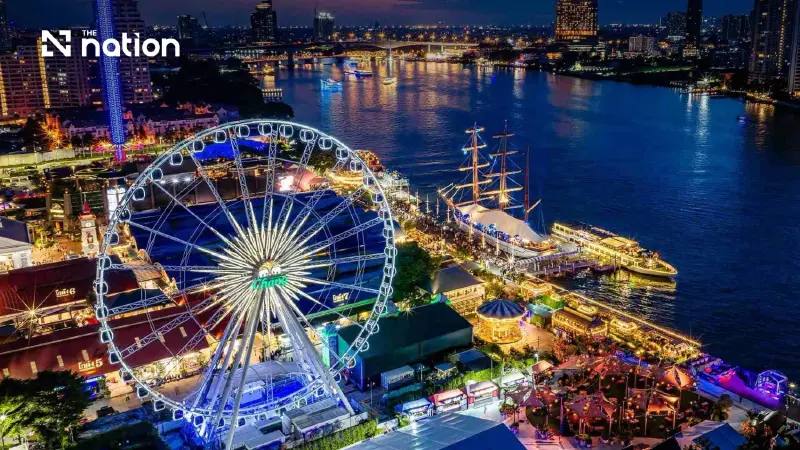


AWC has revised its Asiatique redevelopment on Bangkok’s Chao Phraya riverfront, cutting a tower to 56 storeys and adding the Blue Dome, a cable car and MONA Bangkok.
- Asset World Corp (AWC) has reduced the planned height of its tower at Asiatique The Riverfront from approximately 100 storeys to 56.
- The redesigned tower will also be relocated away from the Chao Phraya riverfront to a site next to Charoen Krung Road.
- This move creates more open space along the river, which will now feature the Blue Dome, an architectural structure from Expo 2025 Osaka, as a new landmark.
- The changes are part of a major revamp to transform the area into an international destination for lifestyle, arts, and culture, rather than just a commercial center.
Asset World Corp Public Company Limited, or AWC, is undertaking a major overhaul of its property-development strategy in Bangkok’s Charoen Krung area, with a particular focus on Asiatique The Riverfront Destination.
The company aims to transform the Chao Phraya riverside complex into more than a shopping centre and tourist attraction, positioning it as an international destination for lifestyle, arts, culture and tourism.
Wallapa Traisorat, Chief Executive Officer and President of AWC, outlined progress on the company’s property and hotel developments along the Chao Phraya under the “AWC Riverside Journey” concept.
The portfolio currently encompasses 11 projects designed to connect riverside destinations and create new experiences for Thai and international visitors.

Asiatique tower reduced from 100 to 56 storeys
One of the most significant changes involves a proposed high-rise building at Asiatique. AWC had originally planned a tower of about 100 storeys on the Chao Phraya riverfront.
The company has now revised the development, reducing the building to 56 storeys and moving it away from the waterfront to a site adjoining Charoen Krung Road.
The redesigned layout will provide more open space along the river, allowing the waterfront to accommodate new elements of the Asiatique development, particularly the Blue Dome, which is set to become one of the project’s principal attractions.
AWC also regards 56 as an auspicious number. Moving the tower closer to Charoen Krung Road is expected to open up views and give the waterfront a greater role in shaping visitors’ experiences.

Blue Dome moves to waterfront for new visitor experiences
With the tower relocated away from the river, AWC plans to turn the vacated waterfront site into a landmark area centred on the Blue Dome.
The architectural structure, originally created for Expo 2025 Osaka in Japan, will be developed as a new experiential venue. AWC plans to work with international partners to establish a new entertainment, arts and cultural destination in Charoen Krung.
One of its main attractions will be “Avatar: Guardians of Eywa”, an immersive experience inspired by the Avatar film franchise. Through The Magic Walk™ Experience, visitors will become directly involved in the story and its surroundings across more than 4,000 square metres.
The area surrounding the Blue Dome will also be developed with green spaces and riverside recreation areas, expanding the public space available for visitors to relax and enjoy views of the Chao Phraya.
The changes will shift the waterfront’s role away from being predominantly commercial towards providing a wider range of experiences.

Riverside Journey to connect Charoen Krung and Charoen Nakhon
AWC’s strategy extends beyond the Charoen Krung side of the river. The company also plans to connect the development with Charoen Nakhon, creating a network of destinations across both banks of the Chao Phraya.
One project under consideration is a cable-car system linking the two sides of the river. AWC has earmarked more than 2 billion baht for the project, with plans for both enclosed and open cabins so that crossing the river becomes part of the tourism experience.
Another major development is MONA Bangkok, an immersive art museum planned in partnership with Australia’s Museum of Old and New Art, or MONA.
The museum is intended to become a new destination for tourists, art enthusiasts and international collectors.
Together, the projects reflect AWC’s ambition to create a Chao Phraya destination where visitors can spend an entire day experiencing hotels, restaurants, art, entertainment and riverside activities.

Billions earmarked to transform Charoen Krung
AWC has earmarked more than 8 billion baht for the new phase of its Asiatique development, including the Blue Dome.
Asiatique Phase 2.2 has an estimated investment budget of about 5 billion baht, while more than 2 billion baht has been allocated to the cable-car project.
The investment is intended not merely to develop individual properties, but to reshape Charoen Krung by linking tourism, hotels, retail, arts, culture and the riverfront.
For AWC, the “AWC Riverside Journey” forms part of a long-term strategy to position Bangkok as an international centre for tourism, arts and culture, using the Chao Phraya River as the main link between visitor experiences.
The central objective is therefore not simply to build taller structures, but to design a district that gives people reasons to visit, spend time there and return.
The strategy reflects a broader transition in the property industry from selling space towards creating experiences and long-term destinations.
