
Bang Na land prices jump 39% as east Bangkok growth accelerates



Land prices in Bang Na and nearby eastern Bangkok districts rose 39% year on year, leading gains across Bangkok and surrounding provinces in Q3 2026.
Undeveloped land prices in Bangkok and surrounding provinces continued to rise in the third quarter of 2026, led by a 39% surge in the Phra Khanong-Bang Na-Suan Luang-Prawet area as transport links and major developments strengthen eastern Bangkok’s growth prospects.
The Real Estate Information Center (REIC), Government Housing Bank, reported that its undeveloped-land price index for Bangkok and surrounding provinces stood at 459.0 in the third quarter, up 2.6% from a year earlier and 4.1% from the previous quarter.
REIC attributed the overall increase partly to expanding mass-transit and road networks linking central Bangkok with suburban areas, as well as major mixed-use and retail developments that are increasing demand for land.
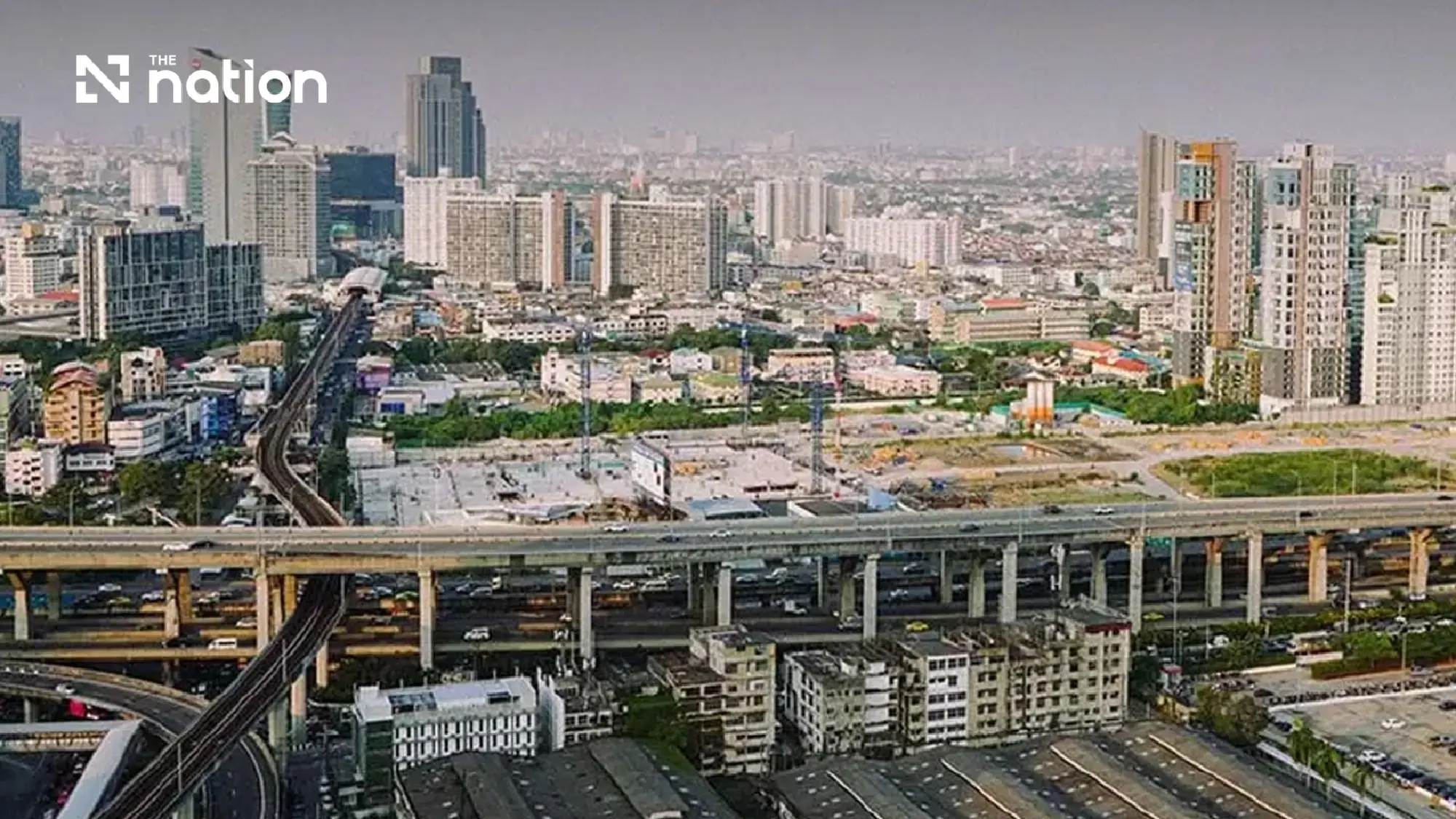

Eastern Bangkok leads with 39% rise
Phra Khanong-Bang Na-Suan Luang-Prawet recorded the strongest annual increase among the locations surveyed, with undeveloped land prices rising 39%.
The area has now recorded positive price growth for five consecutive quarters after recovering from an earlier contraction, although REIC noted that the pace of increase was beginning to moderate.
The location benefits from several transport systems, including the BTS Sukhumvit Line, Yellow Line and Airport Rail Link, together with the planned Bang Na-Suvarnabhumi light rail, or Silver Line.
Road connections include the Chalerm Maha Nakhon and Chalong Rat expressways, the Bangkok-Chonburi Motorway and the new Krungthep Kreetha Road.
REIC also pointed to urban expansion from inner Sukhumvit towards eastern Bangkok and large mixed-use and retail developments, including Bangkok Mall, as factors supporting the area’s potential to emerge as a new eastern economic hub.
Central Bangkok remains supported by limited land supply
Inner Bangkok ranked second, with undeveloped land prices rising 12.7% year on year.
Unlike suburban markets, growth in central Bangkok is driven largely by the scarcity of vacant land. New projects often require developers to acquire existing properties for demolition and redevelopment.
Mass-transit networks and major mixed-use projects continue to support demand in key business districts.
REIC said central Bangkok land prices have recorded positive annual growth in every quarter since 2024. Although the pace has fluctuated, limited supply and persistent demand have supported relatively steady increases rather than sharp swings.
Samut Sakhon ranked third with an 11.4% increase, supported by Rama II Road and the M82 elevated motorway, which are improving connections with Bangkok and attracting developers seeking relatively affordable land for commercial and housing projects.
However, REIC noted that price growth in Samut Sakhon has been volatile. Strong increases linked to progress on the M82 project were recorded in late 2024 and 2025, while growth began to slow in 2026 after some high-potential plots had already been acquired.
Pathum Thani and western Bangkok also record gains
Mueang Pathum Thani-Lat Lum Kaeo-Sam Khok ranked fourth, with land prices increasing 10.9%.
The area has benefited from road-network expansion, including new sections of Ratchaphruek Road that improve access from Pathum Thani to Bangkok.
Lat Lum Kaeo also has potential for industrial, warehouse and distribution-centre development because of its links to Kanchanaphisek Road and Highway 340 between Bang Bua Thong and Suphan Buri.
After weak conditions throughout 2025, land prices in the area returned to positive growth in the second and third quarters of 2026.
The Rat Burana-Bang Khun Thian-Thung Khru-Bang Bon-Chom Thong area ranked fifth, with prices up 7.5%.
Supporting factors include the southern Purple Line between Tao Poon and Rat Burana, the BTS Silom Line and the M82 motorway between Rama II Road and Ban Phaeo.
Large plots around Samae Dam and nearby areas are also attracting interest for fulfilment centres and small factories serving e-commerce and logistics businesses.
REIC said price movements in this area remained uneven, with growth expected to stay at a low to moderate level.
BTS Sukhumvit Line leads rail-linked land gains
Land along the BTS Sukhumvit Line recorded the strongest price growth among mass-transit corridors in the third quarter.
The index reached 580.2, up 14.3% year on year.
REIC attributed the increase to the line’s connections with central business and major economic districts, where vacant development land remains limited and demand continues for high-end condominiums and Grade A office buildings.
Land along the MRT Blue Line and the planned Dark Red Line section between Bang Sue and Hua Lamphong shared second place, with prices rising 12.7%.
The Blue Line index stood at 738.0, while the Dark Red Line corridor reached 726.5.
The Blue Line serves major areas including Ratchadaphisek, Rama IX and Silom, where land prices already have a high base.
The Bang Sue-Hua Lamphong section of the Dark Red Line remains a future project, but REIC sees development potential because of its links with major transport hubs and central commercial areas.
Land along the Orange Line between Thailand Cultural Centre and Min Buri ranked third, with its index at 558.1 and prices up 11.6%.
Progress on construction has increased confidence in the development potential of eastern Bangkok and encouraged developers to acquire land in anticipation of further urban expansion.
The Airport Rail Link ranked fourth, with an index of 522.9 and land prices rising 11.1%.
Its connections between the airport, Makkasan and Phaya Thai support residential development, including projects targeting expatriates and international residents.
The Green Line section between Mo Chit, Saphan Mai and Khu Khot ranked fifth. Its index stood at 659.4, with prices increasing 10.8%.
REIC linked the growth to population movement from inner Bangkok towards the northern suburbs, supporting housing estates, townhouses and community retail developments.
Overall, REIC said undeveloped land prices along mass-transit routes remained on an upward trend.
Central business areas continue to command high values because of limited land availability, while suburban locations, airport links and rail extensions in eastern and northern Bangkok are benefiting from transport investment and continued urban expansion.
