
Bangkok ultra-luxury condos could top 1m baht per sq m
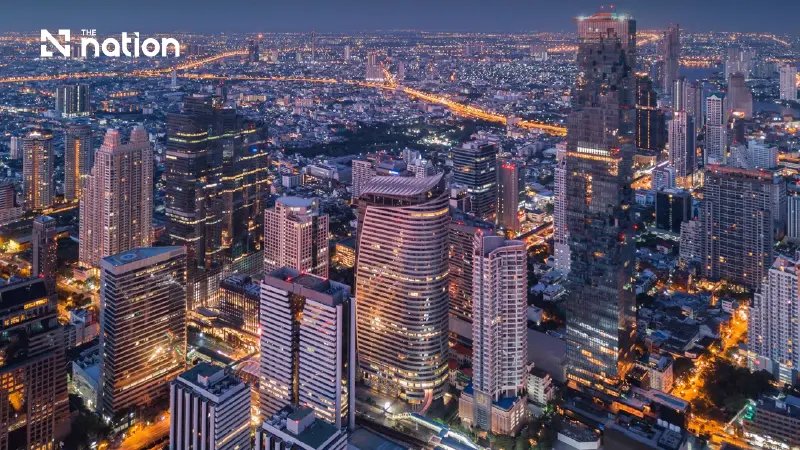


Savills forecasts Bangkok ultra-luxury condo prices could top 1m baht per sq m as land costs and branded residences drive the top-end market.
- Property consultancy Savills predicts that ultra-luxury condominium prices in prime Bangkok locations could soon exceed 1 million baht per square metre, driven by rising land costs and high demand from wealthy buyers.
- This trend is fueled by the expansion of branded residences, where developers partner with international brands to offer premium services and exclusivity, commanding higher prices.
- Soaring land costs are a major factor, exemplified by a recent land sale for a luxury project that reached over 875,000 baht per square metre, pushing up final development prices.
- Strong market demand for such properties is already evident, with the Upper House branded residences achieving sales of over 10 billion baht, including units priced above 850,000 baht per square metre.
Bangkok’s ultra-luxury condominium prices could exceed 1 million baht per square metre in the near future, according to Savills, as rising prime land costs, distinctive developments and demand from wealthy buyers support the top end of the market.
Phattarachai Taweewong, senior director of market research and public relations at Savills (Thailand), puts the potential price shift in the Ultimate Class segment in high-potential locations, rather than the broader condominium market.
The forecast comes as Thailand’s branded-residences sector, comprising homes associated with international brands and their service standards, expands into a market worth around 220 billion baht.
Prime locations drive development costs
Lumphini, Langsuan and Sarasin are attracting new launches and the renewed marketing of existing developments. Access to business and lifestyle districts, scarce land and a limited choice of luxury projects are increasing development costs and sharpening competition.
Activity includes the relaunch of NIMIT Lumpini Park North, CG Capital’s luxury developments in Langsuan, Capella Residences and Sansiri’s luxury condominium project in the Sarasin area.
Developers increasingly need to offer more than an address and facilities. Affluent buyers are placing greater value on privacy, brand reputation, service quality and distinctive living experiences, alongside the prestige of ownership.
International brands are becoming involved in everything from design concepts to service standards and relationships with residents, helping developers distinguish their projects.
Upper House sales highlight premium demand
Upper House branded residences in Bangkok, the brand’s first residential development worldwide, recorded sales exceeding 10 billion baht within six months of launch. Some units were priced above 850,000 baht per square metre.
The performance illustrates demand for developments combining an established brand, a prime location and high residential standards.
InterContinental Residences Bangkok Asoke, developed by CG Capital with IHG Hotels & Resorts and launched in late 2025, has also attracted sustained interest, with reports of strong sales.
Such developments reflect a market increasingly focused on the experience of living in a property, rather than its location and facilities alone.
Rosewood illustrates the pressure from land prices
Rosewood Residences Bangkok, developed by SC Asset with Tokyo Tatemono Group, is the brand’s first residential project in Southeast Asia. Rosewood describes the development as 85 private residences spread across 37 floors, with an emphasis on privacy and exclusivity.
The project occupies the former Sri Fuang Foon Building site on Rama IV Road. The 0.3948-hectare plot was reportedly sold in 2024 for more than 3.5 million baht per square wah, equivalent to over 875,000 baht per square metre, at a total value exceeding 3.5 billion baht.

Savills estimates that selling prices at the development could exceed 550,000 baht per square metre.
Such land costs increase the pressure to create additional value through architecture, brand credibility, limited unit numbers and hotel-standard services. Whether buyers continue to accept premium prices depends on the value they attach to these features relative to the additional cost.
Thailand’s branded market reaches 18,801 units
Thailand has the largest number of completed branded residential projects in Asia-Pacific and ranks among the world’s top 10 markets by the number of projects under development.
Savills puts cumulative supply at approximately 18,801 units worth around 220 billion baht. It expects about 650 new units to be launched for sale in 2026, up approximately 32% from the previous year, with Bangkok and Phuket remaining the principal growth markets.
However, branded residences are not confined to the highest price tiers.
High-end projects priced at 150,000–249,999 baht per square metre account for the largest share of supply, at around 42%. The Upscale segment, priced at 100,000–149,999 baht per square metre, represents approximately 23%.
These figures show that branding also serves as a way to differentiate properties below the ultra-luxury tier. Developers must match their chosen brand to the selling price, target buyers and intended residential experience.
Regional pipeline points to growth through 2032
A report by Savills Global Residential Development Consultancy puts Asia-Pacific’s share of completed branded residential projects worldwide at approximately 23%.
Another 187 projects are expected to be delivered in the region by 2032, an increase of around 97%. Thailand’s project count is forecast to rise by 152% over the same period.
Future growth depends not only on established markets but also on expansion into new countries and cities, alongside a broader mix of brands and development formats.
Wealth accumulation provides another source of demand. The value of assets held by billionaires worldwide has increased by 121% over the past decade, while high-net-worth and ultra-high-net-worth individuals have become increasingly influential buyers.
Demand from within Asia is broadening the customer base and reducing reliance on purchasers from outside the region.
Phuket attracts holiday-home and investment buyers
Phuket’s international tourism profile supports demand from Thai and foreign holiday-home buyers, while interest is also extending to Chonburi and Hua Hin.
Beachfront locations, resort-style living and recognised service standards appeal to purchasers seeking both personal use and long-term ownership.
However, the investment case depends on more than a destination’s popularity. Actual rental demand, management costs, seasonal fluctuations and each project’s terms also need to be considered.
A 31% price premium is not a guaranteed return
Savills estimates that branded residences can command an average selling-price premium of approximately 31% over comparable unbranded luxury properties.
That premium does not guarantee an investment return or success for every development. Location, design quality, brand credibility, purchasing power and market conditions at launch all influence what buyers are prepared to pay.
Likewise, higher asking prices do not necessarily translate into higher prices in completed transactions. The affluent buyer base is limited, making the market’s ability to absorb new supply a critical consideration.
Developments that offer distinctive locations, design and service may sustain premium prices. Those priced above buyers’ perceptions of value could face difficulties completing sales over the longer term.
As competition intensifies for international brands and scarce prime sites, developers face a challenge beyond creating a luxury image: converting brand reputation into actual sales and preserving long-term asset value through services and experiences that residents value.
Source: Krungthep Turakij
