
‘Turing Night’ film screening reflects on AI's impact and future
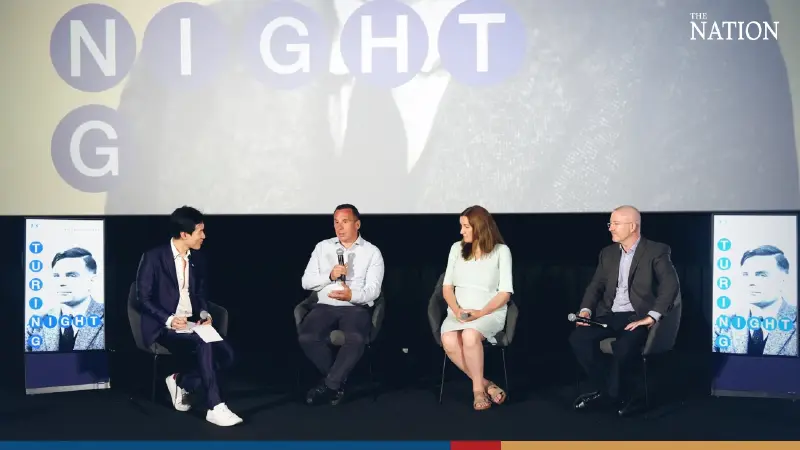


Hosted by the British Embassy in Bangkok on August 18, “Turing Night” marked the culmination of the UK AI Week. Attended by over 150 government officials, tech businesses, and investors.
The event aimed to foster collaboration and discussion on artificial intelligence (AI) advancements and governance.
The event featured an exhibition, networking reception, a panel discussion on AI, and a screening of the film “The Imitation Game”, which is based on the life of cryptanalyist Alan Turing and highlights the historic developments in computing since the Enigma code was cracked in the 1940s.
The British Chargé d’Affaires to Thailand, David Thomas, spoke of the collaborative spirit between the UK and Thailand in promoting ethical and beneficial AI development and emphasised the potential of AI in addressing global challenges while also underscoring the need for caution.

Dr Clare Walsh, director of Education at The Institute of Analytics, expressed a balanced perspective on AI’s impact, urging caution while acknowledging its potential for solving critical issues. She mentioned concerns about the unknown consequences of AI, drawing parallels with negative outcomes observed in social media.
Prof Carsten Maple, Professor of Cyber Systems Engineering at WMG, emphasised AI's gradual integration with various aspects of daily life, noting that AI's impact on decision-making, especially in fields like healthcare and finance, could offer significant benefits while requiring continuous human oversight.
AI transformation in businesses
In a discussion on AI's role in transforming businesses, both Dr Walsh and Professor Maple highlighted the progress across sectors. Walsh noted that marketing had emerged as an early adopter due to the numerous benefits it offers when implemented effectively. She pointed out that innovations within individual companies were driving broader advancements within sectors.

Maple echoed this sentiment, citing personalised medicine and fitness industries as examples of AI's impact on health and well-being but stressed that AI's implementation depended on factors like regulation, risk profiles, and the nature of the industry.
Covid’s influence on AI development
Addressing the question of whether the Covid-19 pandemic had accelerated AI's development, Walsh said that while Covid coincided with AI advancements, the pandemic's digital shift generated the data necessary for AI applications.
Maple added that Covid-induced digitization had altered the way people interact with technology, facilitating the use of data to power AI. However, he emphasised that the fundamental algorithms were not suddenly created due to the pandemic but were already in place.
Preparing workers for AI
When discussing how business leaders were preparing their workforce for AI integration, both experts highlighted the challenges and varying approaches. Walsh noted the divide between data-native companies and those with longstanding operating models but noted the scarcity of trained individuals capable of understanding and implementing AI.

Maple acknowledged two types of leaders – those who prioritise economic decisions and those who involve workers in AI integration. He underscored the importance of workers contributing insights on areas where AI could improve efficiency and recognizsng the value of a combined AI-human workforce.
“Turing Night” provided a platform for thought-provoking discussions on AI's potential, challenges, and collaboration opportunities. As AI continues to reshape industries, the insights shared by experts shed light on the need for caution, effective implementation, and a balance between AI and human expertise.
