
IMF finds AI skills demand twice as high in exposed jobs on October 12
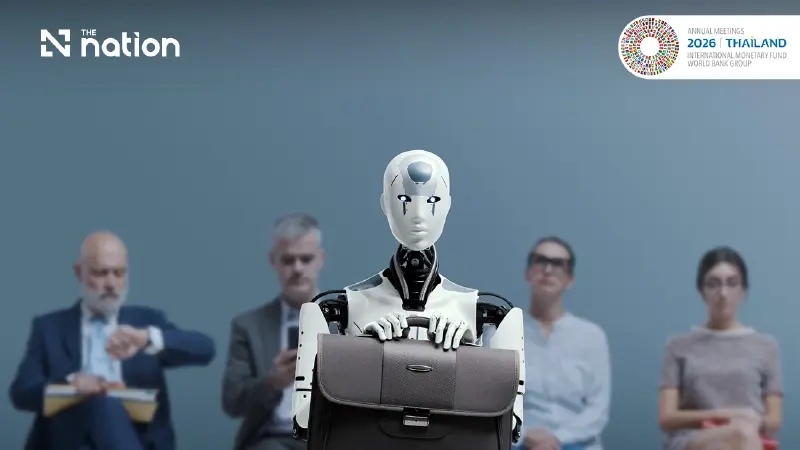


Developing Asia needs 150 million new jobs in a decade as AI reshapes hiring, IMF economist Divya Kirti told the annual meetings in Bangkok.
- According to IMF research presented on October 12, occupations highly exposed to AI have roughly double the demand for AI-related skills compared to less-exposed jobs.
- The analysis suggests employers are not eliminating human workers but are instead prioritizing candidates who can use AI to improve productivity.
- Three main categories of AI skills are in demand: general literacy, specialized capabilities like prompt engineering, and the ability to integrate AI with a company's internal data.
- While demand for AI skills is high in exposed fields like programming, the overall hiring demand for such roles has weakened by about 10% relative to less-exposed occupations.
Demand for artificial intelligence (AI) skills is roughly twice as high in occupations where the technology can assist with more tasks as in less-exposed jobs, according to International Monetary Fund (IMF) research presented in Bangkok on Monday (October 12, 2026). The analysis of 700 million job advertisements suggests employers are changing the skills they need even as hiring demand weakens in some occupations.
Divya Kirti, a senior economist in the IMF’s Asia and Pacific Department, presented the findings at the IMF–World Bank Group Annual Meetings during a session titled “Labor Markets in Asia: Challenges and Opportunities in the Age of AI”.
Kirti stressed that the evidence did not show AI was making human workers unnecessary. Employers were instead placing greater value on people who could use the technology to improve productivity.
Employers want three types of AI skills
The IMF’s analysis identified three groups of AI skills sought by employers: general literacy, specialised capabilities and the ability to connect the technology with an organisation’s internal knowledge.
General AI literacy involves understanding the technology and applying it to everyday work, Kirti explained.
Specialised skills include prompt engineering, or designing instructions that produce the intended results, and knowledge of AI agents that can pursue objectives and manage sequences of tasks, according to Kirti.
The ability to integrate AI with internal company data and expertise forms the third category. Kirti explained that many businesses have accumulated knowledge they have yet to use fully, creating opportunities for workers who can connect those resources with AI.
Occupations facing the strongest AI-related hiring pressure also showed the greatest demand for AI skills, Kirti noted. The roughly twofold difference compares more-exposed and less-exposed occupations, rather than measuring an increase over time.
Hiring demand weakens as AI takes on more complex tasks

The IMF found that hiring demand for programmers fell by about 10% relative to less-exposed occupations during 2024–2025. Kirti emphasised that this measured recruitment demand, not the proportion of existing employees who had been dismissed.
The IMF compared jobs where AI can assist with many tasks, such as computer programming, with work more dependent on human relationships, including managing relationships with business partners and suppliers.
The IMF data showed little initial change in hiring demand after ChatGPT’s launch in 2022, with the shift becoming clearer in 2024–2025.
Kirti described AI as a step beyond earlier technologies, from the printing press to the internet, which changed access to knowledge. AI can also apply knowledge to tasks, such as building a rental-price tracking website or finding and booking performance tickets, including selecting seats.
Kirti illustrated the pace of progress through the time a person would need to complete comparable work. Early ChatGPT systems handled tasks taking seconds, such as basic maths, before AI advanced to debugging and correcting code that might take a programmer about an hour.
AI can now undertake assignments comparable to a full day’s work, such as creating machine-learning models to analyse business data and identify factors affecting sales, Kirti explained.
The expanding capabilities have prompted employers to reconsider how many programmers they need and researchers to question whether such jobs could become unnecessary. Yet hiring demand in more-exposed occupations has not continued to fall sharply as AI improves, Kirti noted.
Employers still want programmers, particularly those who can use AI to accomplish more, according to Kirti. The finding points to changing expectations of workers rather than the disappearance of the occupation.
Developing Asia needs 150 million new jobs in a decade
Developing Asian economies need to create 150 million jobs over the next decade, Kirti said, as large young populations enter the labour market.
The employment challenge differs from that facing many high-income Asian economies, where ageing populations and shrinking workforces could make AI useful in compensating for fewer working-age people, Kirti explained.
High-income economies are likely to experience AI’s effects earlier because more workers are already employed in occupations the technology can assist. Kirti identified two questions for these countries: how much AI can offset workforce decline and which labour shortages would remain after its adoption.
Developing economies may experience less disruption initially because many workers remain in sectors such as agriculture, where AI can assist with fewer tasks, according to Kirti.
The difficulty for developing Asia is that raising incomes and moving closer to wealthier economies requires new jobs in more productive sectors. Many of those sectors are already experiencing AI-driven changes in hiring demand, Kirti noted.
Kirti also highlighted the need for education systems to prepare young people for changing job requirements. Shifts in demand between occupations raise further questions about how many workers might need to change careers and whether transitions on that scale are feasible.
IMF finds no clear evidence of AI wage effects
The IMF research has not yet found clear evidence that AI is affecting wage levels, Kirti told the meeting. The findings point to changes in the composition of hiring demand rather than a demonstrated wage effect, and do not establish whether AI would raise or lower inflation.
A participant raised a possible chain of effects in which AI-related job losses could depress wages and production costs, increasing profit margins if businesses maintained prices. The participant also asked whether rising wages could push up costs and prices, and how these effects might be managed.
Daniel Kostzer, chief economist of the International Trade Union Confederation (ITUC), whose network includes more than 360 affiliated organisations, described uneven experiences of AI among workers.
Kostzer explained that observations from labour organisations pointed to displacement risks in some occupations and additional work or greater work intensity in others. He asked how workers could participate in AI adoption and adjustment to help create a better labour market.
Kirti’s response focused on differences between occupations and countries’ levels of development. More-exposed occupations face greater hiring pressure alongside stronger demand for AI skills, while wealthy countries must consider workforce decline and developing economies the need for new jobs.
Younger workers question entry-level opportunities
The IMF study has not found clear evidence that younger or entry-level workers are more severely affected by AI than experienced employees, Kirti explained, although participants voiced concerns about the prospects facing new entrants.
A participant who introduced herself as the founder of AI Safety Thailand described job losses among friends and acquaintances in recent years. She questioned how young people, particularly programming students, could start careers when AI increasingly handles tasks that once offered entry-level opportunities.
AI’s role on both sides of recruitment also concerned the AI Safety Thailand participant, who described employers screening applications and jobseekers applying with the technology. She asked for concrete protections for younger and future generations and noted that few young people helped shape AI research, safety and technical governance discussions despite efforts to build communities around those issues.
Kirti emphasised that listening to workers’ experiences could reveal developments beyond those captured in large datasets. The research still showed opportunities for programmers able to use AI, despite weaker overall demand in more-exposed work.
Another participant questioned whether employers’ focus on AI skills could lead them to overlook critical thinking and the ability to check AI-generated results. Recent graduates need opportunities to learn and develop judgement through practical experience, the participant noted.
Kirti referred back to the three AI skill groups employers wanted, without offering a direct conclusion on how those requirements might affect the long-term development of other human skills.
AI’s future employment impact remains uncertain
AI development is still at an early stage and could progress faster or slower than expected, with very different implications for workers’ ability to adapt, Kirti told the meeting.
A master’s student in global governance and policy at the Middlebury Institute raised the possibility of superintelligence, meaning AI with capabilities far beyond those of humans. The student said the current findings offered limited reassurance as graduation approached.
The Middlebury Institute student questioned whether the roughly 10% relative decline in hiring demand reflected only today’s AI capabilities, and whether more advanced systems could replace workers on a much larger scale.
Kirti explained that high energy costs and the possibility that users were not yet paying prices covering the full cost of AI models could slow adoption and expansion. Cost constraints could give labour markets more time to adjust.
More rapid advances could raise broader economic and social questions, Kirti cautioned, including whether AI development should be directed towards supporting human workers.
Kirti also raised the possibility of reconsidering the assumption that most people must work to earn a living if technology can perform an increasing share of human tasks.
The current findings do not show AI making human labour unnecessary, Kirti stressed, but change has begun and policymakers need to monitor it closely because future effects could exceed those visible today.
“We still need humans for knowledge work, even as AI becomes much more capable. What we increasingly need are people who know how to use AI,” Kirti said.
