
Day 1 in Bangkok: From AI Hype to Adoption, and Thai Heritage on Show


AI adoption and trust dominated day one of the IMF-World Bank meetings, as Thailand welcomed delegates with Nora dance, massage and a Royal Legacy show
- The first day of the IMF-World Bank meetings in Bangkok focused on moving from AI's potential to its practical adoption, emphasizing the need for trust, policy collaboration, and worker training.
- Discussions highlighted AI's role in creating jobs for youth and boosting economic growth in Asia, countering fears of widespread job destruction.
- As the host nation, Thailand showcased its cultural heritage with performances like the Nora dance, traditional Thai massage, and the opening of a pavilion featuring an exhibition on the Royal Legacy.
AI adoption and trust dominated day one of the IMF-World Bank meetings, as Thailand welcomed delegates with Nora dance, massage and a Royal Legacy show.
The IMF-World Bank Annual Meetings opened in Bangkok with one theme above all: how to use artificial intelligence widely without losing trust, humanity or dignity.
There was little debate about what AI can do. Discussions on the first day focused instead on adoption and trust: how countries, companies and workers can capture the benefits while keeping people in charge.

Key takeaways
Trust builds partnership. Speakers said the private sector needs governments to set the right policies and that both sides must work together to decide which AI models deliver the best outcomes for everyone.
Training removes fear. Empowering people with knowledge and skills was seen as the most direct way to turn anxiety into confidence and to make sure workers are not left behind.
Small, practical AI for jobs. World Bank Group President Ajay Banga said about 1.2 billion young people in developing countries will turn 18 over the next 15 years.
He argued that the danger is moving too slowly to use AI to create jobs, not that AI will destroy them.
IMF Managing Director Kristalina Georgieva said AI could add 0.5 to 1 percentage point to annual growth in advanced Asian economies and 0.2 to 0.8 points in emerging Asia, while touching about 40 per cent of jobs worldwide.
Asia's growth model is changing. At the launch of the IMF's Shaping the Future of Asia, officials said ageing and fragmentation are reshaping the region's prospects, but that productivity growth of 0.8 per cent a year could offset the demographic drag.

A warm welcome from the host
Between sessions, Thailand gave delegates a taste of home.
A Thai heritage performance of Nora, the classical dance-drama of southern Thailand, entertained visitors, while the wellness zone offered traditional Thai massage for 15 minutes per person. A different cultural showcase will be featured each day.

The day ended with the official opening of the Thailand Pavilion, which presents four exhibitions. Digital Public Infrastructure highlights the country's digital financial systems, which have cut costs and widened access to capital.
Climate Resilience shows how data, technology and community strength can turn environmental risk into green economic opportunity. Longevity presents Thailand as a hub of the wellness economy, from its "30 baht" universal health scheme to precision medicine.
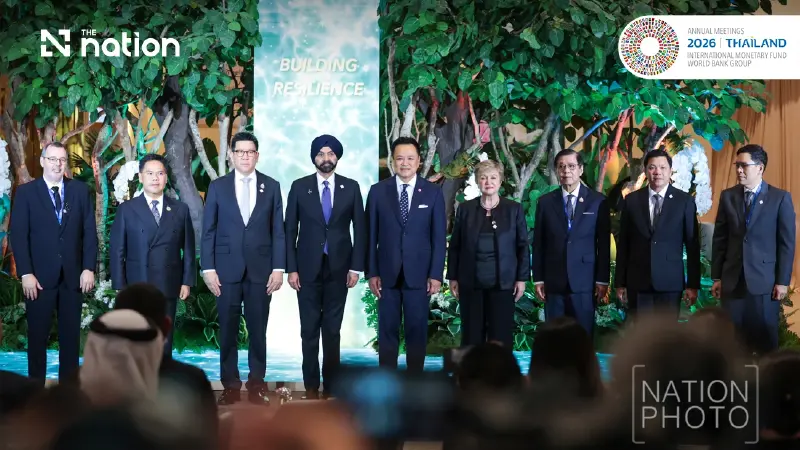
Prime Minister and Interior Minister Anutin Charnvirakul presided over the opening of the fourth, "The Royal Legacy: Empowering People, Building Resilience", a tribute to the late King Bhumibol Adulyadej, Rama IX. It is one of the four exhibitions of the Thailand Pavilion on show at the 2026 IMF-World Bank Group Annual Meetings until 18 October.
