
Parliament clears five trade agreements to boost exports, investment and trade competitiveness
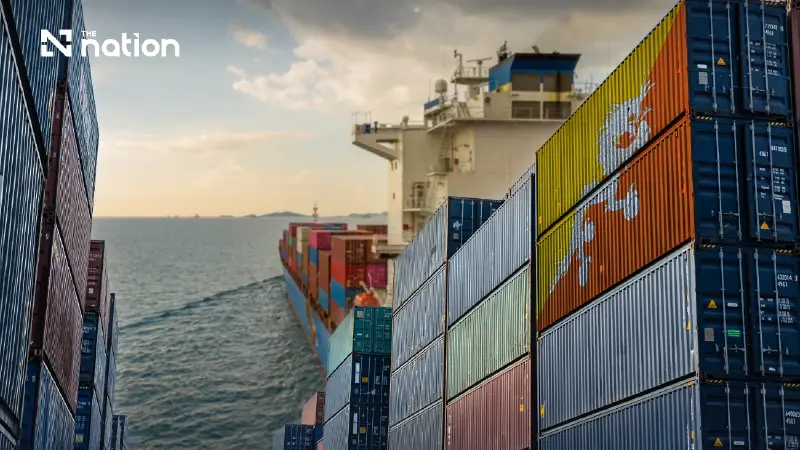


Thailand’s Parliament has approved five trade agreements, including FTAs with EFTA and Bhutan, upgrades to ASEAN trade pacts and the WTO Fisheries Subsidies Agreement.
Thailand clears five trade agreements to expand global trade links
Suphajee Suthumpun, Deputy Prime Minister and Minister of Commerce, said a joint session of MPs and senators has approved the submission of five trade agreements aimed at strengthening Thailand’s export competitiveness, widening market access and supporting long-term economic growth.
The agreements were submitted during Parliament’s 3rd Session, First Annual Ordinary Session. They include two new free trade agreements, two upgraded regional trade pacts and one World Trade Organisation-related protocol on fisheries subsidies.
The two new FTAs are the Thailand-European Free Trade Association Free Trade Agreement and the Thailand-Bhutan Free Trade Agreement. The upgraded agreements cover the ASEAN-China Free Trade Area and the Second Protocol to Amend the ASEAN Trade in Goods Agreement. The fifth agreement is the Protocol Amending the Marrakesh Agreement Establishing the WTO to incorporate the Agreement on Fisheries Subsidies.
EFTA deal marks Thailand’s first FTA with a European bloc
Suphajee said the Thailand-EFTA FTA represents a major milestone in Thailand’s trade strategy, as it is the country’s first free trade agreement with a European bloc.
EFTA comprises high-income markets with strong purchasing power. Under the agreement, the bloc will immediately eliminate import tariffs on a wide range of Thai products once the deal enters into force, creating new opportunities for Thai exporters in goods and services where the country has strong potential.
The Commerce Ministry expects the agreement to help Thai businesses expand into premium markets, while also encouraging higher standards in production, product quality and services.

Technology, sustainability and EU ambitions in focus
Suphajee said EFTA countries are recognised for their strengths in technology, innovation, environmental standards and sustainability. Closer trade and investment ties are expected to support technology transfer and help Thai entrepreneurs improve production processes to meet international benchmarks.
The agreement is also expected to strengthen Thailand’s readiness for deeper economic engagement with Europe, particularly as Thailand continues negotiations on a free trade agreement with the European Union. It is also seen as part of the country’s broader preparation for future OECD membership.
Bhutan FTA to open South Asian trade opportunities
The Thailand-Bhutan FTA will see both sides eliminate import duties immediately once the agreement comes into effect.
Thai products expected to benefit include automobiles and parts, fruit juices, dried fruits, instant rice vermicelli, processed food, textiles and garments, chemicals, electrical appliances, construction materials, and environmentally friendly technologies and equipment.
Suphajee said the deal would also give Thai manufacturers more options to source raw materials from Bhutan, helping reduce production costs and strengthening the competitiveness of Thailand’s industrial sector.
The agreement is expected to support Thailand’s trade and investment expansion into South Asia, a region with growing economic potential.
ASEAN-China FTA upgrade adds digital and green economy chapters
The upgrade of the ASEAN-China Free Trade Area focuses on modernising rules and expanding economic cooperation to better support businesses.
Key improvements cover customs procedures, standards for agricultural and industrial products, and economic and technical cooperation.
The upgraded agreement also introduces five new chapters: the digital economy, the green economy, competition and consumer protection, supply chain connectivity, and the promotion of micro, small and medium-sized enterprises.
Suphajee said these additions would help improve trade efficiency, reduce business costs and create new opportunities for Thai entrepreneurs to add value to their products and expand further into global markets.
ATIGA revision to reduce trade barriers within ASEAN
The revision of the ASEAN Trade in Goods Agreement is aimed at improving trade facilitation across the region, reducing non-tariff barriers and promoting the use of digital technology in trade procedures.
It will also increase regulatory transparency and establish a more efficient dispute settlement mechanism for trade-related issues.
The revised agreement will encourage cooperation on modern trade priorities, including environmental issues, MSME development, supply chain resilience and access to essential goods during crises.
WTO fisheries pact to support sustainable marine resources
Thailand’s participation in the WTO Agreement on Fisheries Subsidies will support efforts to protect marine resources and promote environmental sustainability.
The agreement mainly prohibits subsidies for operators involved in illegal, unreported and unregulated fishing. Suphajee said joining the pact would help ensure fair competition for Thai fishermen and fisheries-related businesses, while reinforcing Thailand’s commitment to sustainable trade and responsible resource management.
