
WHO raises DRC Ebola risk as suspected deaths climb above 170
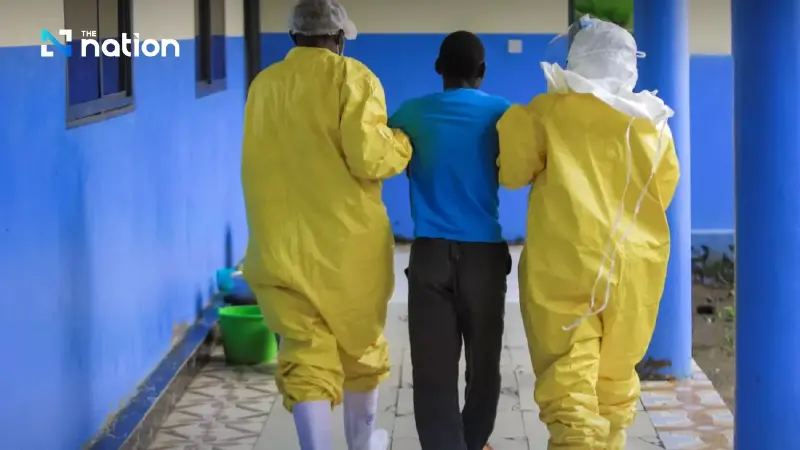


Three Red Cross volunteers have died as the DRC restricts flights from Bunia and regional health bodies warn neighbouring African states.
- The World Health Organisation (WHO) has elevated the public health risk for the Ebola outbreak in the Democratic Republic of the Congo (DRC) from “High” to “Very High”.
- This decision was prompted by a surge in suspected deaths to over 170 and a rise in suspected cases to nearly 750.
- The outbreak is caused by the rare Bundibugyo virus strain, which has a fatality rate of up to one in three and currently has no approved vaccine.
- Response efforts are being severely hampered by factors including the deaths of three Red Cross volunteers, the suspension of flights to the provincial capital, and armed conflict in the region.
The Ebola outbreak caused by Bundibugyo virus in Central Africa entered a global crisis phase on Sunday (May 24, 2026), when Dr Tedros Adhanom Ghebreyesus, director-general of the World Health Organisation (WHO), issued an urgent statement formally raising the public health risk warning inside the Democratic Republic of the Congo (DRC) from “High” to “Very High”.
This followed confirmed reports that suspected deaths had surged past 170 and suspected cases in the system had risen to nearly 750.
WHO said the risk across the African region was very high, while the risk on the international stage remained low.

Three Red Cross volunteers die after infection linked to body management
The International Federation of Red Cross and Red Crescent Societies (IFRC) stated condolences after confirming the deaths of three Congolese Red Cross volunteers: Alikana Udumusi Augustin, Sezabo Katanabo and Ajiko Chandiru Viviane.
They had worked with courage and humanity in Mongbwalu, Ituri province, currently the epicentre of the most severe outbreak.
Retrospective epidemiological investigations found that the three volunteers were likely to have been infected after exposure on Friday (March 27, 2026), while carrying out field work on a community project unrelated to the virus, before the authorities declared the major outbreak.
They died between May 5 and May 16.
Epidemiology and virology experts repeated warnings that the bodies of people who die from Ebola are among the most dangerous sources of transmission, as secretions and bodily fluids can still carry a high viral load and spread infection to those who come into contact with them.
The Bundibugyo strain is rare and “has a fatality rate of up to one in three infections and currently has no approved vaccine”.
Flights halted to the provincial capital as 10 African countries are warned
To prevent the disease from spreading widely across borders, the DRC Ministry of Transport announced an emergency order “suspending and banning all commercial and private flights to and from Bunia”, the capital of Ituri province and the location where deaths have been most heavily concentrated.
The order said humanitarian, medical or national emergency flights would be permitted only after special approval and strict screening by aviation and public health authorities.
At the same time, the Africa Centres for Disease Control and Prevention (Africa CDC) issued an alert to the governments of 10 African countries facing a high risk from cross-border spread:
Angola, Burundi, the Central African Republic, the Republic of Congo (Congo-Brazzaville), Ethiopia, Kenya, Rwanda, South Sudan, Tanzania and Zambia.
Among them, neighbouring Uganda reported on Saturday (May 23, 2026) that tests had confirmed three additional infections, bringing its cumulative total to five.
Angry crowds burn MSF field tent amid M23 rebel fighting
The medical crisis has been further aggravated by social fear and mistrust.
Médecins Sans Frontières (MSF) confirmed that a medical field tent it had sent to support the public health system and disease isolation in Mongbwalu was “set on fire and destroyed” by angry crowds on May 22.
The incident occurred one day after rioters stoned and set fire to Rwampara hospital in an attempt to take the body of a well-known local footballer.
MSF said in a statement that, amid rapidly changing conditions, communities remained fearful and did not understand the disease.
The repeated burning of medical facilities reflected a serious lack of credibility and trust-building between the medical sector and remote communities.
In addition, WHO officials’ access for disease investigation and containment work has been bogged down and has faced severe difficulties because parts of the outbreak area in North Kivu and South Kivu are currently under the control and influence of the armed rebel group M23, which is engaged in fierce clashes with the Congolese government army.
This has created a law-enforcement vacuum and a large blind spot obstructing international response work.
The Bundibugyo Ebola outbreak in late May 2026 is moving towards a full-scale public health emergency.
WHO’s move to raise the alert to the highest level indicates that the first line of defence in Africa is under severe strain.
The likely next phase is that containment efforts will intensify through the Congolese government’s air lockdown measures and land-border closures by surrounding countries.
The key point is that, as long as insecurity and fighting with M23 rebels continue, and as long as public trust remains low enough for villagers to burn health facilities, the delivery of assistance and disease control will be almost impossible in practice.
This could be the start of a new epidemic nightmare with the potential to cross continents and threaten global public health security.
