
The 'Halo Effect': Why Travel Is the New Battleground for Domestic Banking Loyalty
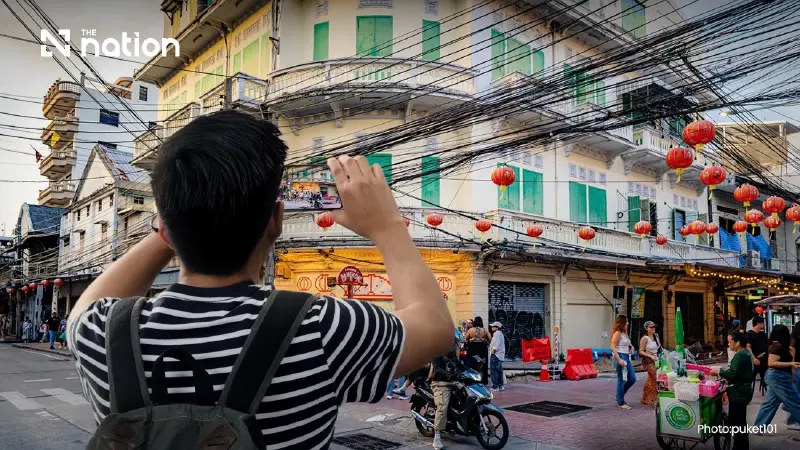


Visa unveils its global Destinations platform in Bangkok, arguing that trust earned abroad is the key to winning customers' top-of-wallet spend at home
- The "halo effect" is a data-backed concept where customers who trust their payment card while traveling internationally subsequently spend about four times more and have 25% higher retention on that card for domestic purchases.
- To capitalize on this, Visa is launching its "Visa Destinations" platform, starting in Thailand, to transform from a payment tool into a "travel companion" that offers curated experiences across the entire journey.
- Travel is a key battleground for loyalty because it is an emotionally significant part of a customer's life, and the trust a bank earns abroad directly drives significant long-term value and loyalty at home.
Visa unveils its global Destinations platform in Bangkok, arguing that trust earned abroad is the key to winning customers' top-of-wallet spend at home.
In a significant strategic move, Visa has selected Thailand as the first market globally to launch its new Visa Destinations platform at a country-wide level. Unveiled at a launch event in Bangkok on Tuesday, the initiative marks a deliberate evolution in Visa's business model — moving the brand from being simply a "way to pay" towards becoming what the company calls a genuine "travel companion".
Presenting the platform, Ciyi Lim, Visa's head of Cross-Border for Asia-Pacific, framed the launch in personal terms, describing Thailand as a country she has returned to across several chapters of her own life — first as a student, later as a professional living in Bangkok, and now as a parent introducing her young daughter to the country.
That repeat relationship, she said, mirrors exactly the kind of loyalty Visa is now trying to build with travellers more broadly.
Travelling Differently, Not Travelling Less
Lim opened by addressing a theme that ran through the day's earlier sessions: rather than travelling less amid economic uncertainty, consumers are travelling differently.
Trips may become shorter, closer to home or more flexibly planned, she said, but the underlying desire to travel rarely disappears – it simply redistributes.
That resilience, she argued, is precisely what makes travel such a powerful arena for winning long-term customer loyalty, since a payment card used on holiday earns a place in "one of the most emotionally important parts of a customer's life", rather than merely completing a transaction.
Lim also pointed to two distinct but complementary traveller segments: affluent travellers, valuable to financial institutions today, and Generation Z, whom she described as tomorrow's growth engine.
Where affluent travellers prioritise access, comfort and exclusivity, she said, younger travellers are driven more by identity, self-discovery and exploration — making travel, in her words, a "portfolio strategy" for banks looking to serve both current and future high-value customers.
The Business Case: The Halo Effect
Central to Visa's pitch is a data point Lim referred to as the "halo effect". According to Visa's research, customers who trust their card to work safely and seamlessly overseas go on to spend roughly four times more on that same card domestically, with retention rates around 25% higher than average.
Lim said the pattern held consistently across multiple regions and markets, transforming cross-border travel spending from a niche international story into a core driver of overall customer value for card issuers.
Five Stages of the Travel Journey
Lim set out Visa's model for winning across what she described as five distinct stages of any trip: Dreaming, Planning, Transit, Destination and Return.
1. Dreaming — the inspiration phase, where she noted generative AI has already become the leading channel travellers use to decide where to go.
2. Planning — addressing the anxiety that comes with booking flights, hotels and experiences from afar, where payments need to be safe, predictable and reliably approved.
3. Transit — covering airport transfers, lounge access and seamless movement between connections.
4. Destination — where travellers collect and savour the experiences and memories they will carry home.
5. Return — which Lim described not as the end of a journey but the beginning of the next one, reinforced by the halo effect driving renewed domestic engagement.
Lim argued that very few brands manage to show up consistently across all five stages and that doing so — rather than excelling at any single touchpoint — is what ultimately builds lasting differentiation.

Curation Over Commodity
A central feature of Visa Destinations is its shift away from generic discounts and towards curated, locally rooted experiences. Lim said the ambition was to help travellers "see every side of every place" through partnerships that surface restaurants, cultural moments and experiences that would be difficult to discover or book independently.
The platform is organised around what Visa calls "passion pillars" — the underlying reasons people travel — with global examples including priority access at the Louvre in Paris, exclusive entry to the top of the Rockefeller Center in New York, and private access to villages in the UK associated with popular television series.
In Thailand specifically, the local team has curated experiences reflecting the morning calm of Chiang Mai, riverside rituals, island and beach destinations, and food culture, alongside experiences inspired by the country's association with recent international television productions.
Lim was clear that the platform's ambition extends well beyond a handful of headline experiences in any one city. Working with global and local partners, she said Visa wants its card to remain useful continuously—from the moment a traveller begins dreaming and planning, through transit and arrival, to pursuing their interests at the destination and returning home already planning their next trip.
She singled out a Bangkok neighbourhood-based experience, developed with local teams, as a favourite example of the platform's intent: moving travellers beyond postcard versions of a destination and into real neighbourhoods, small merchants, crafts and stories that only emerge when a local resident "opens the door".
Visa Destinations is now live across 10 destinations globally, reaching an estimated 200 million international travellers, with Thailand positioned as one of the network's anchor markets.
The Road Ahead: Agentic Commerce
Looking further ahead, Lim acknowledged that the way people book and pay for travel is likely to keep changing, pointing to the emerging era of agentic commerce, in which AI agents may eventually handle significant parts of the booking and payment process on travellers' behalf.
While the eventual business models remain uncertain, she said Visa's aim is to ensure payments stay seamless — effectively invisible — regardless of how the booking journey evolves.
Lim closed by urging delegates to explore the platform themselves during their time in Bangkok and to engage with Visa's regional team to help refine the proposition further, framing the Thailand launch as the first step in a much broader global ambition to make Visa synonymous with the entire arc of a traveller's journey, not just the moment of payment.
