
Thailand expands stroke networks to cut critical treatment delays
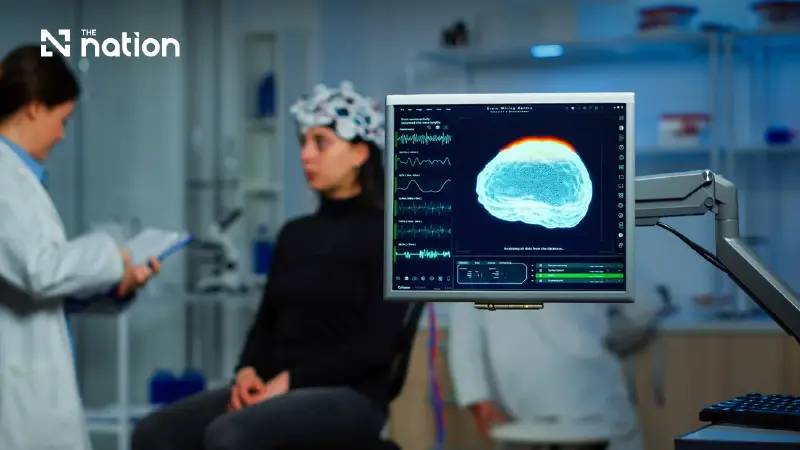


Stroke treatment in Thailand still faces delays and regional gaps, while mobile units, AI and tele-stroke networks offer ways to speed up care.
- Thailand is addressing treatment delays by establishing comprehensive stroke centres every 60-80 kilometres and improving hospital referral systems, particularly outside of Bangkok.
- Mobile Stroke Units, equipped with onboard CT scanners and telemedicine, are being used to enable pre-hospital diagnosis and significantly reduce the critical time before treatment begins.
- The expansion involves developing AI-assisted tele-stroke networks to provide specialist support to doctors in remote hospitals, helping to speed up detection and triage.
- Alongside technological upgrades, the plan includes strengthening training for non-specialist doctors and increasing public awareness of stroke symptoms to ensure faster emergency responses.
Stroke remains a major health concern worldwide, including in Thailand, where getting patients to appropriate medical care quickly continues to be a significant obstacle to effective treatment.
Research from the World Stroke Organisation in 2025 identified stroke as the world’s second-leading cause of death, with more than 12.2 million new cases each year. Globally, one in four adults over the age of 25 is expected to experience a stroke during their lifetime, while about one-third of patients face severe long-term disability.
In Thailand, the Department of Disease Control under the Ministry of Public Health recorded 328,000 stroke patients in 2019 and expects the number to continue rising, particularly as the population ages.
Department data also put the prevalence at 345 cases per 100,000 people. The country’s growing burden is being compounded by an ageing society and continuing disparities in access to specialist treatment between Bangkok and other parts of the country.
Recognising the warning signs of stroke
A stroke occurs when blood flow to the brain is interrupted or bleeding occurs in the brain, depriving brain cells of oxygen and causing them to die.
Recognising symptoms early can therefore make a critical difference. Patients and those around them should watch for several key warning signs:
- Speech difficulties or difficulty understanding others: The patient may become confused, have slurred speech, be unable to speak, or struggle to understand what other people are saying.
- Sudden weakness, paralysis or numbness of the face, arm or leg: This usually affects one side of the body and may be accompanied by facial drooping, slurred speech or an inability to speak.
- Vision problems in one or both eyes: The patient may suddenly experience blurred or double vision.
- Dizziness or severe headache: These may occur alongside difficulty walking, loss of balance, reduced consciousness, light-headedness, nausea or vomiting.
Although stroke was once widely associated with older people, current trends indicate that it is increasingly affecting younger age groups. Lifestyle factors, including stress, unhealthy diets and inadequate exercise, are contributing to higher risks among them.
Obesity, high blood pressure, diabetes and high blood lipid levels are among the major risk factors that need to be controlled.
Rapid treatment can determine a patient’s recovery
Rapid medical attention is central to limiting brain damage and improving the chances of recovery. For every minute that the brain is deprived of blood, more than 1.9 million nerve cells can die.
Anyone showing possible signs should receive medical attention immediately, even when symptoms appear only briefly and then disappear.
The FAST approach provides a simple way to identify common warning signs:
- F – Face: Ask the person to smile and check whether one side of the face droops.
- A – Arm: Ask the person to raise both arms above their head and observe whether one arm falls or appears significantly weaker than the other.
- S – Speech: Ask a simple question and listen for slurred, unclear or abnormal speech.
- T – Time: If any of these signs appear, seek medical attention immediately.
Prompt hospital treatment, followed by intensive rehabilitation once the patient has passed the critical stage, can play an important role in determining long-term quality of life.
Regional gaps continue to delay access to stroke care
Thailand has made significant progress in stroke treatment over the past decade, but access to comprehensive services remains limited outside major cities.
A new Siemens Healthineers report, Strengthening Stroke System Readiness Across ASEAN, draws on insights from seven leading experts in Indonesia, Malaysia, the Philippines, Singapore, Thailand and Vietnam. It identifies travel and patient-transfer times as major barriers.
In some cases, reaching the nearest comprehensive stroke centre can take around one to two hours. Limited public awareness of FAST warning signs can further slow the response.
Other obstacles include delays in activating emergency medical services and shortages of healthcare professionals outside Bangkok, particularly stroke specialists and neuroradiologists.
Doctors without specialist neurological training at referring hospitals may also require additional support.
“The key thing with stroke is time. This is the most critical part,” explained Chris Poray, Managing Director of Siemens Healthineers, noting that every additional minute deprives the brain of vital blood and oxygen.
“So the opportunity in improving the outcome for patients is to reduce that amount of time.”

Siriraj develops an integrated model of stroke care
Siriraj Hospital has developed one of Thailand’s leading comprehensive stroke-care programmes, offering round-the-clock acute treatment, advanced neuroimaging, a dedicated Stroke ICU and rehabilitation delivered by a multidisciplinary team.
Its pre-hospital services have also been strengthened through a Mobile Stroke Unit, known in Thailand as Stroke One Stop (MSU-SOS).
Operating around the clock, the service integrates emergency medical services and telemedicine with AI technology that can help identify and assess symptoms. An onboard computed tomography, or CT, scanner allows diagnostic imaging to begin before the patient reaches hospital.
Poray explained that performing a CT scan early and digitally transmitting the information to the hospital could significantly shorten the time before treatment begins.
“If you have a CT scanner and you are able to make the scan as soon as possible for that patient, you can transfer the information to the hospital through digital means,” he noted, adding that this could reduce delays.
Advance access to the information allows the hospital to prepare before the patient arrives. It can also support an earlier decision to send someone directly to a centre equipped to provide the required treatment, reducing the risk of an unnecessary transfer between hospitals later.
The Mobile Stroke Unit programme began operating in 2018 and has treated more than 2,900 patients.
Its most advanced unit, MSU-8, was developed through collaboration involving the Siriraj Stroke Centre, Mahidol University’s Faculty of Engineering, Siemens Healthineers and RMA Automotive.
Experts believe that expanding this model of pre-hospital diagnosis, together with the longer-term goal of establishing comprehensive stroke centres approximately every 60–80 kilometres and strengthening hospital-to-hospital referral systems, could improve Thailand’s care network.
AI could make stroke care faster and better connected
Artificial intelligence is expected to play a growing role in making Thailand’s system faster and more connected. Experts see potential for AI to support earlier detection, prioritise and triage patients and improve clinical workflows.
Tele-stroke networks could extend specialist expertise to hospitals outside Bangkok, where shortages of medical professionals remain a particular concern.
Technology alone, however, will not be enough. Experts stress that it is most effective when integrated into well-designed patient pathways backed by trained personnel, efficient referral networks and consistent treatment standards.
“A key part of this is technology, but it is also about workforce, having the people available who can diagnose and treat stroke, having the infrastructure in place, so having hospital infrastructure in place but also having pre-hospital infrastructure like mobile stroke units in place,” Poray explained.

Five priorities for stronger stroke readiness in Thailand
Beyond expanding physical infrastructure, experts agree that improving Thailand’s readiness requires coordinated development of healthcare systems, personnel and technology so patients can reach appropriate treatment more quickly.
The report identifies five priorities for strengthening stroke-care systems across the region:
- Comprehensive stroke centres should be established approximately every 60–80 kilometres, supported by more efficient referral systems between hospitals.
- AI-assisted tele-stroke alert and support systems should be developed so referring hospitals can respond quickly when patients show symptoms.
- Clinical decision-support systems could help doctors make treatment decisions more rapidly and reduce delays during triage.
- Training and support should be strengthened for doctors without specialist neurological expertise who work in hospitals responsible for referring patients.
- Emergency medical service activation should be strengthened alongside greater public awareness of FAST warning signs.
Poray emphasised that stroke care depends on a connected sequence of decisions and actions beginning before a patient reaches hospital. “No single organisation or technology can improve the entire process on its own,” he noted.
Mobile stroke units are effective because they bring together expertise and cooperation from multiple sectors, he added. Thailand will need the same kind of collaboration to expand its stroke-centre network and strengthen referral systems nationwide.
