
ESCAP expresses solidarity with flood victims


Play
The top UN official in the Asia-Pacific region today Tuesday expressed grave concern over the unprecedented loss of life and livelihoods caused by heavy monsoon rains and tropical storms in the Southeast Asia.
The UN continued to support to affected countries in improving resilience to natural disasters, said
UN Under Secretary General and Escap’s Executive Secretary Noeleen Heyzer.
“The historical floods continue to cause a humanitarian crisis in the region. Please be assured that the United Nations stands in solidarity with the victims of the catastrophic floods,” Heyzer said.
Throughout the region, more than 700 people have been killed by the disasters with an assessment by the United Nations Office for the Coordination of Humanitarian Affairs (OCHA). As of October 13, the destruction of homes, crops, economic assets and infrastructure had affected over 8 million people across Thailand, Laos, Cambodia, Viet Nam and the Philippines.
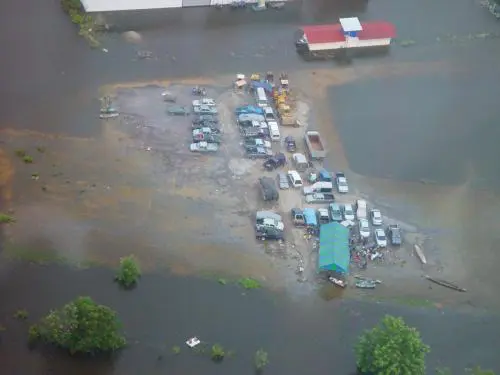
Thailand’s worst floods in half a century have claimed 297 lives and affected 2.4 million people in 25 provinces, according to UN as of October 17. Twelve provinces, including Bangkok remain at high risk of being flooded.
Noting that the Asia-Pacific region experiences more disasters than any other region in the world, Heyzer said that over 20 United Nations agencies under the Regional Coordination Mechanism are working with the Association of Asean to build resilience to natural disasters through a joint Asean-UN Strategic Plan of Cooperation on Disaster Management for the period 2011-2015, as well as a joint Asean -UN Mechanism for Rapid Response to Climate-related and Other Disasters.
“Over the past few months, whilst Pakistan has experienced severe floods, earthquakes have hit Bangladesh, India and Nepal. Disasters pose a significant challenge to the realisation of inclusive and sustainable development in Asia, and make more difficult the efforts of national governments in meeting the Millennium Development Goals by 2015,” Heyzer added.
"With nearly one third of the world’s population living in Asia Pacific, addressing the causes of vulnerability to disasters is critical to protecting peoples of Asia,” the Escap chief added.
