
Poor no longer willing to be told to sacrifice by wealthy: Theerayuth
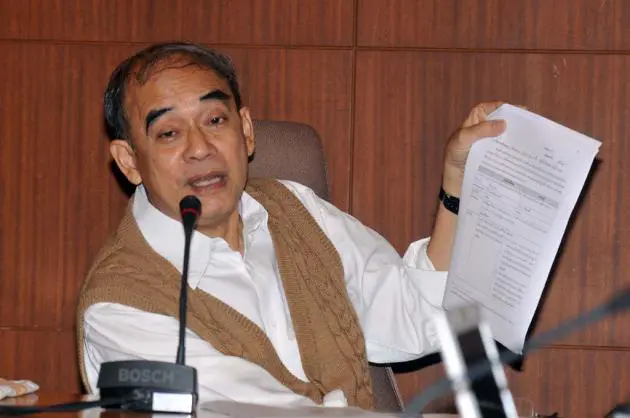


There is no short-term solution to Thailand's ongoing political conflict, but long-term measures could be taken up to arrive at a solution in the future, well-known Thammasat University sociologist Theerayuth Boonme said.
The problem was deep-rooted, he said, and stemmed from a century of political centralisation and socio-economic and political disparity between urban and rural areas. It was also an ideological conflict between well-to-do political conservatives who value centralised controls, morality, law and order, and the poor, who want to see respect for the majority of the electorate, better livelihoods and progress.
A key factor, Theerayuth said, was for people from both sides of the political divide to acknowledge the existence of one another. Yellow shirts were often characterised as being “ultra-nationalists” by red shirts, he said, while yellow shirts regarded red shirts as “fools who are being deceived” by ousted and fugitive former premier Thaksin Shinawatra. He urges both sides of the divide to “adjust” themselves without fear of losing face, and to be fair to one another.
The sociologist, who has long been critical of Thaksin, warned that poor people, most of whom are red shirts, will no longer accept calls to be good people and sacrifice for the common good when they are poor – while those who tell them to sacrifice are well-off. “[They] always call for ordinary folks to be patient, to sacrifice ... When the hegemonic discourse doesn’t work, they resort to staging military coups,” Theerayuth said, adding that he does not support coups despite his failure to oppose the coup in 2006.
Theerayuth, who held a one-man press conference at Thammasat University yesterday, said he feared that if the conflict developed into a regional and cultural divide, things would become even more difficult.
The role of the monarchy in a modern and globalised society must also be debated, Theerayuth said.
What Thailand needed was not just a strong democracy, but also “strong rights, strong freedoms and strong responsibility”. This called for people being willing to question the powers-that-be, including populist policies initiated by Thaksin and now continued by Prime Minister Yingluck Shinawatra, which he insisted were not sustainable and would eventually bankrupt the Treasury, he said.
What was needed was a re-imagining of what Thailand should look like in the future, including what kind of democracy it wants, he said.
While praising Yingluck for her “smart” fashion sense and photogenic quality – he predicted that by year’s end the PM would be named one of the best-dressed female leaders in the world – Theerayuth remains sceptical about Thaksin. He called the influential former premier “more of a marketing man than a man of democracy”.
He said Thaksin and the ruling Pheu Thai Party clung to three strategies: widening the party’s grass-roots base of support; co-opting the checks-and-balances system provided by the courts; and then targeting so-called independent organisations as well as the military.
“For the established conservatives they won’t succeed in expanding the grassroots base of support because they tell [the grass roots] to endure and live self-sufficiently and that won’t cut it, especially when those words come from rich people... This is the problem,” he said.
Theerayuth touched upon other issues of concern that ought to be addressed, including history.
Thai history, he said, was too royal-centric and commoners were not adequately honoured, as they were in foreign countries, with statues, streets and public buildings named after them. “The stress is on a royal historiography. There exists no history of society as a whole. It’s as if people in various professions played no role in building the nation,” said Theerayuth, who blamed bureaucrats for this imbalance, saying they appeared too eager to please royalty.
Pheu Thai MP Pracha Prasopdee strongly attacked Theerayuth yesterday for having an outdated view of politics and blaming Thaksin. He said the current political problems were caused by those who wielded influence from behind the scenes, so Theerayuth should have attacked these influential people instead of criticising Thaksin.
