
Chalerm warns doctors on cold pills


Play
Unusual pseudoephedrine orders being probed, he says
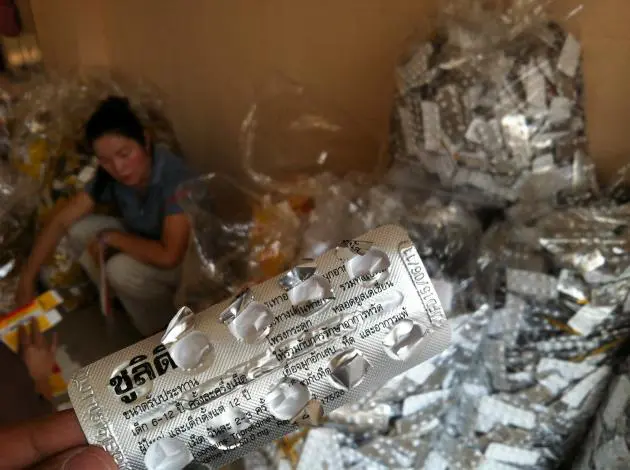
Deputy Prime Minister Chalerm Yoobamrung yesterday implicated unnamed doctors and hospital directors in the sale of pseudoephedrine-based tablets to illicit drug makers, and warned that those who prescribed or distributed large quantities of such medication without naming the recipients would be subject to immediate probes by the Department of Special Investigation.
He said one pseudoephedrine-based tablet could make three amphetamine tablets. “When the pseudoephedrine-based tablets are produced, the Food and Drug Administration still has authority over the tablets, even when they are delivered to the hospitals, but once the tablets are delivered out of the hospitals, I will hold hospital staff or hospital directors responsible for prescriptions or deliveries,” he said.
The Anti-Money Laundering Office (AMLO) said it was tracking the financial transactions of people suspected of involvement in the scheme, including bank accounts of pharmacists and doctors. “It is similar to the inspections of drug traffickers and dealers done by the police and the civilian anti-narcotics agencies, which later provide information to AMLO for subsequent seizure of assets,” said the agency’s secretary-general, Seehanart Prayoonrat.
“There are many such hospitals. Those in Kalasin and Udon Thani are apparent cases, but there are dozens of them across the country,” Chalerm said. Asked if they could be considered to form a syndicate, he said: “Not yet; it’s individual cases of greed.”
The Public Health Ministry has also vowed to take drastic action against staff, pharmacists and directors of government hospitals found to be involved in methamphetamine production using pseudoephedrine-based cold drugs, saying those found responsible for prescription and deliveries of the pseudoephedrine-based drugs would face immediate investigation.
Udon Thani Hospital has submitted the results of an internal investigation to the provincial civil service committee, which is expected to result in a senior official being penalised. The results of internal investigations by Kamalasai Hospital in Kalasin, Thong Saen Khan Hospital in Uttaradit and Doi Lor Hospital in Chiang Mai would be submitted to the respective provincial offices today or tomorrow, said Public Health permanent secretary Phaijit Warachit.
Chalerm said the DSI would soon inspect all government hospitals countrywide. The mMedical Council and the Pharmacy Council had been asked by the ministry to help by encouraging moral responsibility among doctors and pharmacists.
According to Chalerm, the main smuggling route for methamphetamine made from pseudoephedrine has moved from areas along the northern border with Burma – which is the source of mass production – to Laos, then to the Northeast of Thailand, mostly through Thai provinces which border the Mekong, making detection and suppression by Thai police more difficult. A recent bust in Sakon Nakhon netted 762,000 tablets, one of the biggest ever, Chalerm said.
A team of police yesterday raided the Kalasin home of Sodchuen Withojit, a C-6 pharmacist at Kamalasai Hospital. She is a suspect in the disappearance of more than 350,000 pseudoephedrine-based cold tablets from the hospital’s inventory. The search turned up no tablets or any illegal items, but police confiscated her bank account books for further inspection.
Six other hospital staff members are suspected of involvement, including director Dr Suphat Thatiphet, who faces a serious disciplinary investigation upon his return from an overseas trip. A team of DSI agents later searched the hospital and would make a statement regarding their investigation today, officials said.
