
'Tolerate differences, reject violence'
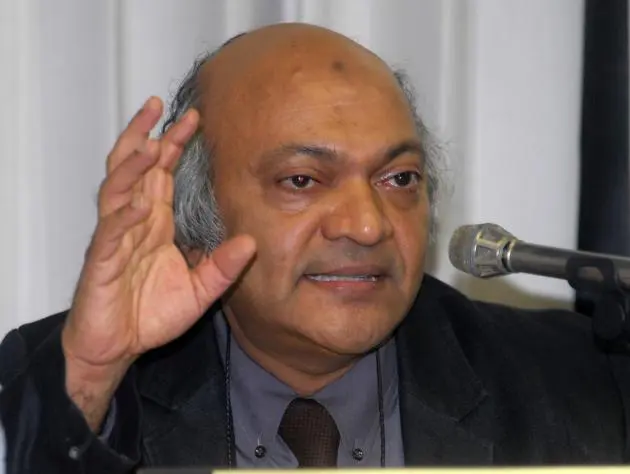


Dr Chaiwat Sathaanand, a lecturer at Thammasat University's Faculty of Political Sciences, and the winner of the Sriburapha Award, believes Thai society can achieve reconciliation by embracing tolerance and shunning hatred.
Q: Thai society is obsessed with the question of whether to allow Thaksin Shinawatra to return. Should we be obsessed by this?
A: No. We cannot say that good or bad things, or any phenomena, are caused by one person. Thaksin did not fall from the sky; society gave birth to him. On the other hand, if we believe that he contributed greatly to society, we must understand that Thaksin is not a god, but appeared during a transitional period in Thailand. If we understand this, we will not be attached to individuals.
Q: How can we live together despite conflicts, differences and hatred?
The differences we witness today are real, but I do not believe we live with hatred. Unity is not what we long for.
We have gone beyond that. The old reconciliation formula based upon faith in or love of something will no longer work.
The question facing Thais concerns differences. When the old formula does not work, the alternatives could bring about hatred, which is dangerous. We must find ways to prevent society from walking down the path of hatred. I propose we develop tolerance, which is an important value that can deal with problems caused by differences.
We should live with love and unity on the basis of tolerance.
For example, when a taxi blocks our way, while we do not accept this practice, we are patient and do not honk the horn or shout at the driver. Thais have that quality.
Q: Isn’t that too simplistic? In reality, when one thinks others are not right, one thinks they must be got rid of.
A: That is not the reality of daily life. Actually, Thais are very patient to a certain level. There is bargaining and negotiation at all levels, but what is not normal is hatred, because that makes negotiation impossible.
Q: One solution proposed is to nullify the legal decisions of the justice system under the coup-installed government, but we disagree over this. What should be done?
We must search for solutions we all agree on. We cannot correct the past, but we can find solutions for the future.
Although it is hard to explain and make the other side feel the same way we do, we can make them understand our point of view. For instance, we explain the reasons that the Assets Examination Committee’s findings are legitimate, and the other side explains the reasons they think the AEC is not legitimate. This will lead to bargaining.
Q: Would nullifying all legal cases after the September 19, 2006 coup bring reconciliation?
A: This approach is often used in countries that have experienced trauma and want to push the “reset” button – such as [Cambodia’s] Khmer Rouge did in 1975. I believe pushing the button is dangerous. Thailand has not reached that point.
To reset the situation, we have to reform those institutions we believe to be the problem or to cause problems.
There are many models of reconciliation. For example, in South Africa between Nelson Mandela and [last apartheid-era president] Frederik Willem de Klerk; the latter agreed to give in conditionally. It is a model of successful reconciliation. One side admitted to committing wrong and the other side forgives and forgoes meting out punishment. In Rwanda, courts in that country could not give a verdict, but an international court did. The media was punished for causing hatred.
Thai society has a way of managing the truth. For example, in the October 6 [1976] incident, we managed the truth, but we hid it. When people discuss political reform, which is very complicated, we choose to shelve it.
Q: Will the charter-amendment issue bring about conflicts soon?
A: We must understand the objective and the process. It is dangerous to use this issue to create hatred by saying, “Are you Thai, if you do that?” Don’t you over-expect that?
Q: But ultimately, issues are decided by elections – and the majority vote always dictates.
A: An election result is a decisive factor, but how do we make the minority vote acceptable? There are many ways. For instance, some countries use multiple elections or double elections.
Q: Will we achieve reconciliation?
A: There are many ways to prevent conflicts from turning violent. South Africa succeeded because they had Mandela and de Klerk as leaders. In some countries you must change the ruling system, such as Argentina. Some countries must reform their institutions, such as the justice system or the military. What’s important is trust and a willingness to take risks, for instance, a hand-shake agreement between two parties. Both sides must feel secure that they will not be double-crossed.
