
Prasong disputes Chavalit's account of 1980s amnesty


Play
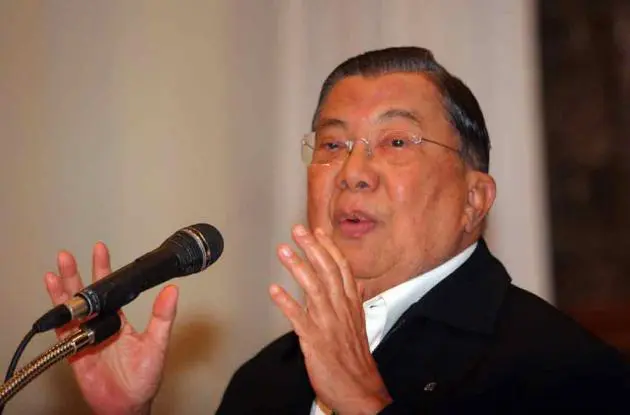
Prasong Soonsiri, once known as a "security czar", warned yesterday that white washing certain people's wrongdoings for the sake of national reconciliation could lead to an even worse political conflict.
He also disputed a claim by former prime minister Chavalit Yongchaiyudh that “unconditional amnesty” granted through prime ministerial directive No 66/2523 resulted in national reconciliation in the 1980s following deadly clashes and armed battles between leftists and rightists.
Prasong, former secretary general of the National Security Council and a staunch critic of fugitive ex-premier Thaksin Shinawatra, said the amnesty issued at that time did not cover offenders in criminal cases, such as those involved in burning state offices and killing officials.
He said the amnesty targeted students and innocent people with no communist ideology who were forced by the political situation to join the Communist Party of Thailand in its armed struggle in the forests. “These people were not considered a security threat to the country, so they were allowed to return to society and help with the country’s development,” Prasong said.
The order was issued in 1980 by the government of then-prime minister General Prem Tinsulanonda, offering amnesty to supporters of the Communist Party of Thailand. The policy was credited for Thailand’s success in stopping the spread of communism.
Chavalit and Prasong were among the key figures behind the famous policy.
“General Chavalit is a smart person and I don’t think he would forget something he took part in,” Prasong said yesterday.
“He may think that by helping certain people [out of legal problems], the country will find a way out. When those people are satisfied, they will force others to reconcile with them,” he said.
“I can tell you that it’s a terribly bad idea. You cannot force reconciliation; it must come from willingness. If you use majority votes to force decisions, the violence will never end,” Prasong warned.
Earlier yesterday, Chavalit postponed a press conference at which he was scheduled to clarify his amnesty push for Thaksin.
“The timing is not right,” his aide General Pirat Sawamiwat said yesterday.
Pirat said Chavalit would meet the press at a later date. He said he did not know if Chavalit would come out of retirement.
“A long time has passed since Chavalit’s exit from politics, but it is possible he could become active once again if the country needs him,” he said.
On Monday, Chavalit circulated an open letter summarising his stand on an amnesty for Thaksin. In the letter, he said the political conflict required a political solution, adding that legal wrangling over Thaksin would add to an already complicated situation if settled in the courts.
He cited prime ministerial directive No 66/2523, which was used to bring about a resolution to the communist insurgency, as a possible model for political amnesty. He also voiced support for the repeal of the Asset Examination Committee’s work targeting Thaksin for graft proceedings.
