
More than votes at stake in Burma poll


Play
Sunday's elections in Burma are more than simple by-elections to fill a few vacant seats in the parliament.
They have great significance for the regime of President Thein Sein, as Western countries have identified them as a criterion for reviewing sanctions.
The European Union said in a statement on Wednesday that the forthcoming by-elections are a key moment in the process of national reconciliation and should allow a substantial review of the EU’s policy on Burma. The EU referred to the country by its official name, Myanmar, rather than the usual “Burma/Myanmar”.
“The [EU’s] High Representative is following the conduct of the campaign closely, and trusts that it will continue to unfold unhindered, allowing the candidates of all political parties to present their programmes to the electorate,” a spokesman for European Commission High Representative and vice president Catherine Ashton said in a statement.
Burma’s general election held in November 2010 was widely viewed as unfair. Opposition leader and Nobel laureate Aung San Suu Kyi’s National League for Democracy (NLD) boycotted it.
The by-elections on Sunday are being held to fill 48 vacant seats following the appointment of members of parliament to cabinet posts and other executive positions.
A total of 157 candidates from 17 political parties will contest the polls. Of these, 129 will contest 37 seats in the Lower House, while 22 candidates will compete for six seats in the Upper House. Six candidates will compete for two seats in regional or state parliaments, according to the Election Commission.
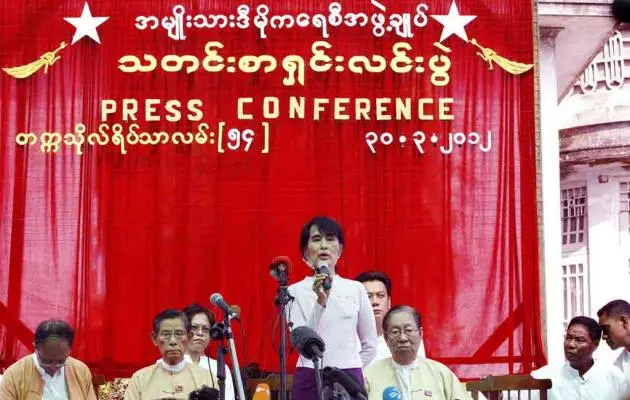
The by-elections take place in the context of political reform championed by President Thein Sein aimed at democratisation and reconciliation. Suu Kyi and her NLD have been allowed to contest in the race after the emergence of a detente between the regime and the opposition.
The government looks likely to lose some – even most – of the 48 contested seats, as Suu Kyi and the NLD have been widely welcomed by voters in constituencies throughout the nation.
The stakes – a number of parliamentary seats – are high for the ruling Union Solidarity and Development Party (USDP). But they do not compare to the international recognition the country would gain if the poll were declared free and fair. As Thein Sein has said, it is a test of the government’s commitment to the ongoing political reforms.
Altogether, 159 international observers from many countries and regional groups, including the EU, the United States, Canada, Australia and Asean, have been invited to monitor the casting of ballots, according to Election Commission chairman Tin Aye.
At a press briefing in Nay Pyi Taw earlier this week, Tin Aye denied allegations of irregularities such as tinkering with advance ballots. The results of the voting would be officially announced within a week of the polling, he said.
Many Western countries have said they will take the process and results of the by-election into account in their decisions on whether to review their policies toward Burma, notably sanctions.
EU foreign ministers will discuss the matter at the Foreign Affairs Council in April. Ashton plans to visit the country shortly after.
US Senator Jim Webb, who has championed for US engagement with Burma, reportedly plans to visit to assess the situation after the by-election, and United Nations chief Ban Ki-moon said earlier that he might also visit.
Many Western countries have clearly demonstrated that they want good relations with Burma. If the result of the by-elections is fair, and if the process is transparent enough, it would make the decision to lift sanctions much easier for them.
