
New model to predict floods


Play
To simulate situations for week after getting weather data
A team of researchers from the Hydro and Agro Infomatics Institute (HAII) is developing a new hydrological model to predict flooding around the Kingdom over any seven day period.
The new model is a combination of weather forecasting and hydrological modelling which will help researchers get a more accurate picture on a flood situation.
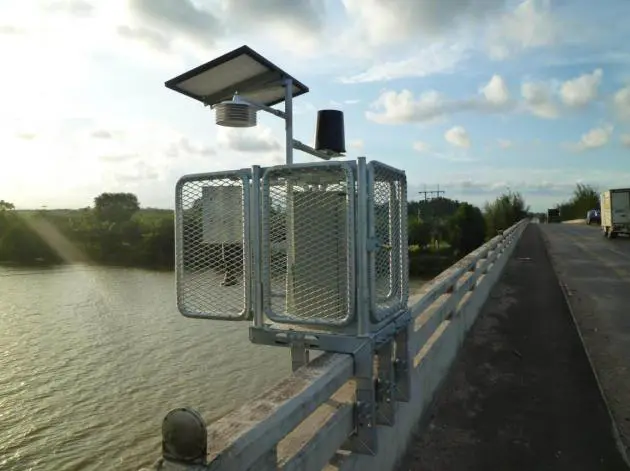
“We could simulate a flood situation for the next seven days within four-and-a-half hours of receiving weather and data from hydrologic telemetry devices that we will install along all channels to fetch actual water levels across the country,” the head of HAII’s hydro modelling section, Surajate Boonya-Aroonnet, told The Nation in a special interview.
Surajate, who led a team of researchers, said the output from this model will serve as key information for the Water, Flood, and Disaster Management Centre to make a plan and decide on how to cope with the flood situation.
“We want this model to be a centre providing reliable and accurate information to predict a flood situation in a short period,” he added.
To date, in Thailand, there are only two models used to predict flood situations – a weather forecast model, used by the Thai Meteorological Department, and a hydrological model, used by the Royal Irrigation Department.
These two models work separately in predicting flood situations.
Now for the first time, two models can work together to predict flood situations more accurately.
In the near future, this model will be able provide all information about water and weather such as runoff, water discharged from dams, the levels of humidity and temperature, and the tidal level affecting water drainage systems from the Chao Phraya river basin to the Gulf of Thailand,” he said.
Information about infrastructures in each area, such as the level of dykes, will be also put into this model to predict the direction of floodwater.
“We will know the exact direction of floodwaters after we get details about the exceeded volume of runoff water in a river. This model will take about 12 hours to calculate the direction of floodwater,” he said.
“It could provide 7-day flood predictions, meaning people will have six days to prepare themselves,” he added.
Surajate said his team expects this model will strengthen the flood prediction system and make more accurate forecasts during the upcoming rainy season.
