
No extra safety measures planned for Krue Se anniversary
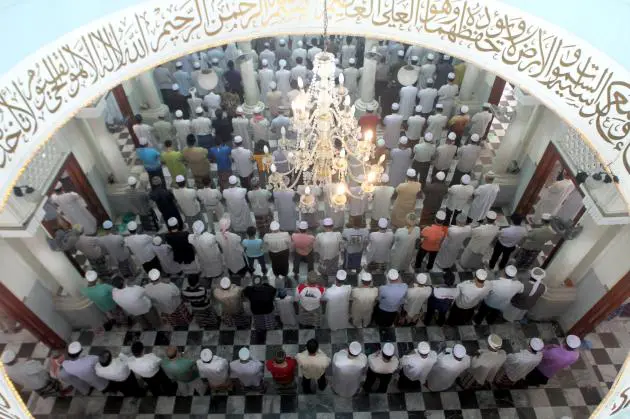


Though security was on alert, no extra safety measures were introduced today in preparation of the 8th anniversary of the Kreu Se incident in which 105 young Muslims were killed in a coordinated attack.
Fourth Army Region Commander Lt-General Udomchai Thammasaroj said he did not see the need for beefing up security today because his troops prepared for incidents every day.
“The media should not make the issue bigger than it is. The military is ready to provide safety for the people. I don’t expect to see any violence on the day because the insurgents have no excuse to create any problems,” he said.
Police chief General Priewpan Damapong said he had instructed his men in Yala to be on alert and prevent any possible violent incidents today.
Pattani provincial police commander Pichet Pitisetthaphan also said that he did not expect any serious incidents today, though local police have been instructed to seal all security loopholes in the area.
On April 28, 2004, young Muslims in Pattani, Yala and Sonkhla simultaneously attacked security outposts in a move to voice their grievances against the government’s rule of the predominantly Muslim region. Of the 105 protesters shot dead on the day, 32 were gunned down after they retreated into the Krue Se Mosque in Pattani.
Meanwhile, Prime Minister Yinluck Shinawatra, together with her deputies Yongyuth Wichaidit and General Yuthasak Sasiprapha, will fly to the deep South tomorrow to look into the situation.
The government will continue with its policy of employing “political means” rather than military might to win the hearts of local residents in the restive region, Yuthasak said.
He explained that political measures meant giving them education, education that is not religious but is secular in order to better their lives, he said.
“The military has been suppressing them enough, so it is time to use political measures,” Yuthasak said, adding that Muslim youths who had completed their studies in the Middle East will be re-educated if they are found to have a misperception of Thai authorities.
“It is a battle of thought. We can change their minds and thoughts about the country,” he said.
Privy Council president Prem Tinsulanonda advised Yingluck in a meeting on Thursday to implant new thoughts about the nation and its justice system in the public, Yuthasak said.
“We want young men there to have new thinking. We want to add new knowledge in the curriculum so it can solve problems in the long run,” the deputy PM added.
