
Temp nurses seek permanent jobs


Play
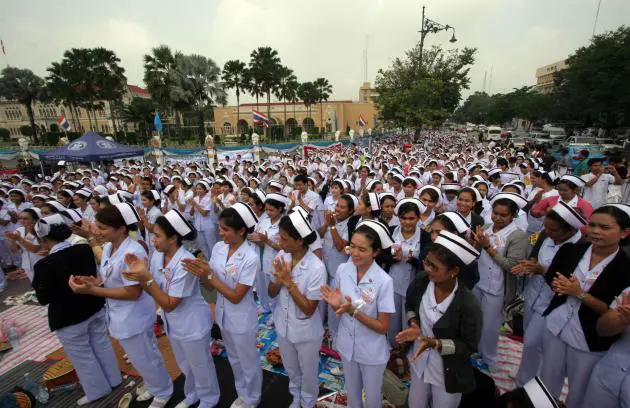
A network of nurses working at state hospitals as temporary employees and the Thailand Nursing and Midwifery Council will today meet Prime Minister Yingluck Shinawatra at Government House, demanding permanent jobs.
The action follows the network’s ‘disappointment’ with the Public Health Ministry’s decision on Friday to list most of the 30,188 contract positions in 21 fields of the medical and public health profession in the civil service over a three-year period.
However, the ministry failed to list the number of civil service positions for nurses who are temporary employees.
“We are not okay with the ministry’s resolution. We need to know the exact number of civil service positions the ministry will provide for nurses working as temporary employees,” Krisada Sawaengdee, the second vice-president of Thailand's Nursing and Midwifery Council, told The Nation.
The network wanted the government to hire all 17,000 temporary employee nurses as civil servants in a bid to resolve the nurse shortage at state hospitals, in particular in rural hospitals.
Tough work conditions and poor job security have caused a nursing shortage at state hospitals across the country. Some are hired on temporary contracts, which must be renewed every year. Some had resigned from the state hospitals over the temporary contracts and job insecurity to get better pay at private hospitals.
“We will meet the PM to make her fully aware of the severe shortage of nurses at state hospitals,” she added.
About 150,000 professional nurses aged up to 60 are registered for licences with the council, but only 130,000 work at hospitals across the country. Some 17,000 have been hired as temporary nurses at state hospitals and about 300 to 400 resign from state hospitals every year.
The network is now threatening to organise a three-day action starting on January 1 if the government is not be able to meet the demands for permanent jobs.
“Actually, we will not strike. All 17,000 of us will just leave on vacation for a few days and this will not affect the medical services at hospitals. [However] it would cause an increased workload for the others,” she said.
