
Clarity needed in Woravat vs scientists row


Play
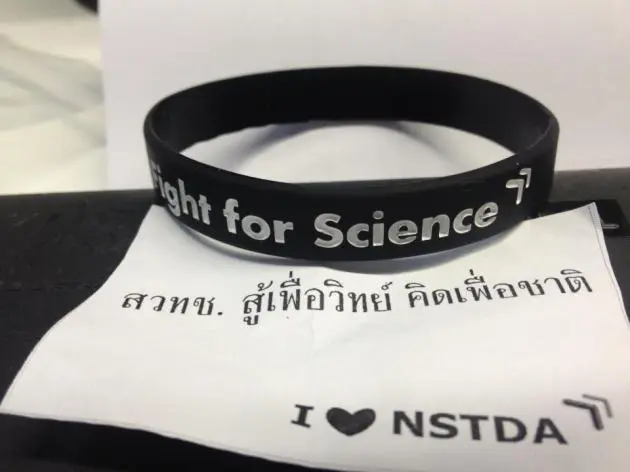
The campaign against Science Minister Woravat Auapinyakul has been rumbling on for a few weeks already under the "Fight for Science" theme.
But to the majority of people, what does science mean in this case? How will it affect their lives and Thailand as a whole?
Indeed, anti-Woravat scientists and researchers must have these two main questions answered before they can see their campaign gain any real momentum.
When rural doctors wore black against Public Health Minister Pradit Sinthawanarong, the public watched the situation closely because they knew if the medical workers went on strike, public-healthcare services would be disrupted and they could be affected. Reacting to this public scrutiny, PM’s secretary-general Suranand Vejjajiva has finally stepped in to arrange a negotiation that ended well last week.
So, if scientists and researchers at the National Science and Technology Development Agency (NSTDA) really want to throw Woravat out for his perceived flaws, they need to explain their points clearly.
To date, the “Fight for Science” campaign has accused Woravat of lacking understanding in science, showing no respect for scientists, interfering in the NSTDA’s work, and lacking good governance.
According to the black-clad scientists who have joined the campaign, Woravat has cut the budget of NSTDA by 25 per cent. This year, NSTDA has received just a Bt3 billion budget despite the fact that Thailand needs to allocate more resources for the development of science and technology.
Woravat was also accused of pushing his own men onto the NSTDA board, which has a say on who should sit on the panel selecting the new NSTDA director.
Moreover, he has changed the rules requiring any procurement valued at more than Bt2 million to be subject to his review first. In the past, such a procurement could be approved by the top executive of each agency under the Science Ministry’s supervision. Due to this new rule, many procurement plans are left pending because there is a long queue for Woravat’s review.
Woravat has not yet appointed the selection panel for the new director of NSTDA, though the current director will complete his term this month. Suspicion has arisen that Woravat wants to install his man at the helm of the NSTDA.
In the eyes of many scientists and those with close ties to NSTDA, Woravat has clearly tried to interfere in the agency’s work.
The anti-Woravat camp is now trying to drum up support for their “Fight for Science” theme. Last Saturday, they held a forum titled “Fight for Science…for What” at the Chulalongkorn University to explain how science has contributed to the country’s development and how political interference in NSTDA research will hurt the country.
However, scientists seem to lack the skills to communicate well with the public.
Most people in the community feel NSTDA is not really relevant to their lives. They don’t see the problem at NSTDA as a public issue.
When scientists blame Woravat for not understanding their work, they’re simply saying the NSTDA research is for establishing good science and a technical foundation for Thailand. But Woravat wants to force them to respond rapidly to the private sector’s needs. For example, he has demanded quick research and answers into longan exports.
Woravat, meanwhile, has responded by accusing the NSTDA protesters of launching the campaign because they just want bigger bonuses.
He has also accused the NSTDA of failing to fulfil performance targets on several indicators.
Shrugging off an accusation about political interference, Woravat has said he needs to field some of his men in the NSTDA board because he needs to monitor the agency’s works.
Woravat has also explained that his decision to check procurement plans worth more than Bt2 million is due to good intent and to prevent any irregularity.
Regardless of Woravat’s performance as the science minister, he has already spoken up against his opponents and his points are clear. So, if scientists and researchers feel Woravat is really unfit for the science minister’s post, they must communicate effectively about Woravat’s flaws and the impact they may have on society.
Only when they effectively get their message across can they put Woravat in hot water, while protecting the country’s huge interest in achieving proper scientific and technological development.
