
Red and yellow figures oppose direct election of PM


Play
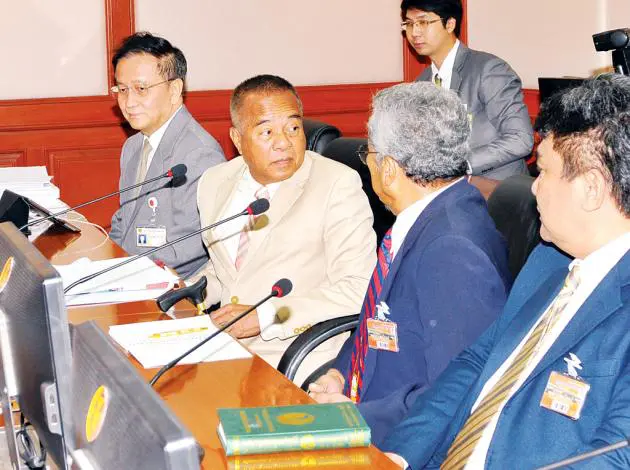
Red-shirt and former yellow-shirt leaders voiced opposition yesterday to the direct election of the prime minister and Cabinet members.
Red-shirt leader Veerakarn Musigapong proposed ideas to the Constitution Drafting Committee on what should be included in the new constitution, although he said he did not represent the whole United Front for Democracy against Dictatorship. He said he would discuss the CDC response to his proposals with the UDD later.
CDC spokesman General Lertrat Ratanavanich said Veerakarn opposed the proposal for a directly elected PM put forward by the National Reform Council’s political-reform panel.
“The direct election [of a prime minister] could affect the presence of the monarchy, and members of Parliament must be members of political parties, as before,” Veerakarn suggested.
The former UDD chairman said that if MPs were not members of political parties they could be used and persuaded during votes on important legislative bills.
He said that in legal and justice matters, every court must be tied to the public. For example, top-ranked court officials should be approved by MPs and senators, and judges should be scrutinised as well.
He urged the CDC to scrutinise independent agencies as he has for the past 10 years, saying these organisations have too much freedom and independence, and never included in the checks-and-balance system under the 1997 and 2007 charters.
Veerakarn later also voiced support for outsiders being a part of a judicial commission office.
He said that if the new charter is accepted, reconciliation might be able to be promoted as well, because the charter might be seen as reconciliatory.
However, he urged charter drafters not to show prejudice, hence the CDC hopes that Veerakarn will be an important player to promote reconciliation among conflicting sides, Lertrat said.
Veerakarn also voiced support for an amnesty given to protesters, but said leaders and political chiefs should not be included in this.
Meanwhile, Suriyasai Katasila, a former leading member of the People’s Alliance for Democracy (PAD), also opposed the direct election of a prime minister via his Facebook page, with an explanation of the negative aspects of the idea.
“How can a directly elected PM actually represent the people?
“Even MPs elected by the people fail in representing their people, and most of them have to obey those who are behind and in control of their actions,” he said.
Suriyasai – now a Thailand Reform Institute director – said direct election of the prime minister could be seen as adding even more power to the centre of government, and that would be in contrast to the idea of decentralisation, which is an important part of the current reforms.
It would create more corruption, by making it easier for candidates to buy votes from citizens, and could ruin the political system, the former PAD man said.
