
Pilot project set to slash school hours


Play
Some 3,500 schools across the country will cut academic hours and offer more extracurricular activities in 2nd semester
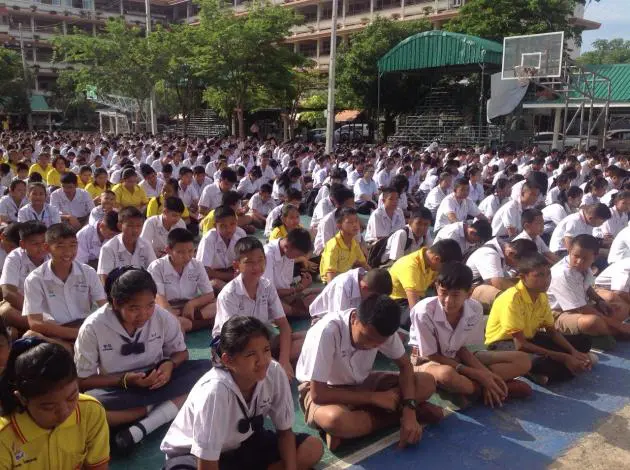
AN INITIAL 3,500 primary and secondary schools in Thailand will start reducing compulsory school hours to about 840 hours per year from the current 1,200 late this year in a pilot scheme to free up more time for extracurricular activities that could better promote students’ learning capability.
Education Minister General Dapong Ratanasuwan said the change would be implemented in the second semester of this academic year or around November when about 10 per cent of all schools nationwide, or about 3,500, would join the programme.
According to the new policy, compulsory classes will finish about an hour and a half earlier or at around 2pm instead of the current 3.30pm. Dapong said the programme was aimed at easing pressure on students, whose current school hours are regarded as too long.
Students will have more time to take part in non-academic activities after classes while others could do their homework at school or go home earlier. The minister said having fewer classroom hours would not affect students’ academic capability as the core subjects will remain unchanged.
Dapong said the change might have some impact on parents, as some of them will not be able to pick up their children from school at 2pm because of work obligations, while others parents might need their children to go home earlier.
“During this pilot project, students may leave school earlier or they may stay at school after the classes. We’re planning extracurricular activities for those who stay on, such as sports, music, or environment preservation work. Alternatively, students could choose to do their homework at school,” he said, adding the ministry will conduct an assessment on the pros and cons after the pilot project is completed.
Kamol Rod-klai, secretary-general of the Office of the Basic Education Commission, said the change would allow students to have more time for practical activities such as arts, music, physical and vocational education.
For example, some schools may have swimming or cooking lessons, while others may offer different activities that utilise local wisdom. He said there should be six or seven formats of these extracurricular activities to choose from at each of the schools to suit their students’ preferences.
Kamol said other countries such as South Korea, Japan, the United States and some European nations had also reduced their academic school hours so as to make available more time for non-academic activities, which are essential for students’ development.
“Our policy is not that students should leave school at 2pm or for their parents to pick them up earlier. We want to organise extra activities to develop students’ non-academic skills, both physical and emotional, in addition to intellectual development. However, if some students need to go home to help their parents, they will be allowed to do so, but that number is likely to be relatively small,” he said.
Meanwhile, Pol Maj-General Charnthep Sesawej, the deputy metropolitan police chief, said the school-hours change might require law-enforcement authorities to come up with a plan to prevent teenage student violence, which has become more serious with the use of deadly weapons such as guns in recent incidents in Bangkok.
