
Students allowed to choose how they spend shortened school days
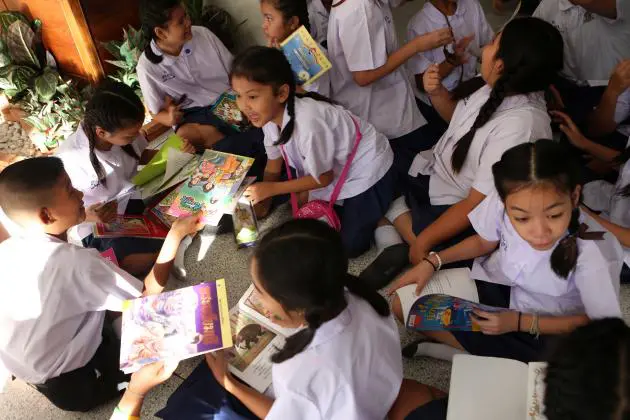


STUDENTS WILL be allowed to leave their classrooms 90 minutes early every day and choose how they would like to fill their afternoons, thanks to a new learning and development initiative devised by the newly-appointed Education Minister.
In response to a policy implemented by Education Minister Dapong Ratanasuwan, 3,500 schools under the supervision the Office of Basic Education Commission (Obec) will significantly reduce the number of hours their primary and junior-secondary students spend in class from the second semester of this year.
Instead of sitting in class until 3.30pm, students at these pivotal schools will be required to stay only until 2pm, said Kamol Rodklai, secretary-general of Obec.
“We will soon start listening to students’ opinions via the Internet,” Kamol said.
Obec has suggested that students should spend the extra time on activities like drawing, sports, dancing, life skills and occupational skills.
“Parents won’t be required to pay extra for these activities,” Kamol said.
Educational service area offices across the country will soon start registering schools that will be ready to experiment with the policy to reduce the number of class hours.
Kamol downplayed concerns that many children would be left unsupervised if they were allowed to leave their classrooms 90 minutes earlier.
“Although class ends sooner, they will still have to participate in activities prepared for them at their schools,” Kamol said. “They will still leave school at the same time as before”.
Kamol was optimistic about the implementation of the new policy.
“It’s going to revolutionise the country’s educational sector. Without any dent on educational quality, students and parents will be happier,” he said.
Channarong Pornrungroj, head of the Office for National Education Standards and Quality Assessment, said the outside-classroom activities should cover both occupational skills and subjects in which the children have an interest.
“Not all schools must arrange the same activities. Each school should be allowed to arrange the activities that suit the local context,” he said.
