
Military boss: charter change after peace


Play
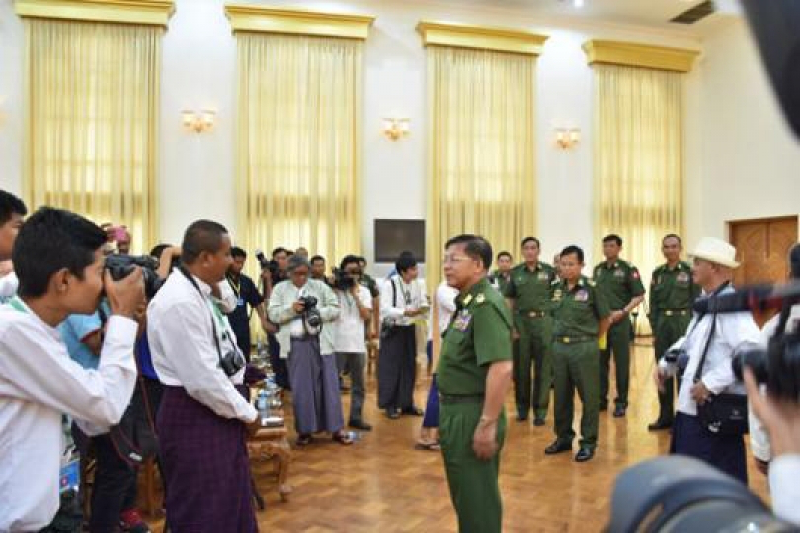
YANGON - The military will work with Aung San Suu Kyi to establish peace in five years, according to the Myanmar's Commander-in-Chief of the Defence Services Senior General Min Aung Hlaing. He told the media he would work for national reconciliation and
Speaking in Nay Pyi Taw with his deputy Lieutenant General Mya Tun Oo, he said the military had agreed to amend the Constitution but only after peace was established. No law was perfect and changes could be made after achieving peace, while adding that the 25 per cent of military representatives in Parliament could also be reassessed.
Min Aung Hlaing warned that the military was not an opposition group in Parliament and if it were pushed aside there would be negative consequences for the country.
He mentioned Suu Kyi's desire for peace and said the military was cooperating with her.
Min Aung Hlaing said the armed forces paid special attention to the media and he called for fair and reasonable coverage.
Min Aung Hlaing also told the press conference that he had no plans to retire.
Responding to the Daily Eleven’s question about his term of office, the senior general said solders were civil servants but the military decided how long they should be employed.
Section 20(b) of the Constitution says: “The defence services have the right to independently administer and adjudicate all affairs of the armed forces.”
The Civil Services Law also says: “The Tatmadaw and police shall not be included although they are civil servants.” Civil servants had to take retirement at 60 but the law did not apply to the military, the Senior General said.
The commander-in-chief’s term was limited, the senior general said, without giving further details.
When asked about the military's objections to the State Counsellor Law, which enabled Aung San Suu Kyi to take on a prime ministerial role, he said the military MPs opposed it because it was unconstitutional. The army’s arguments were strong and Parliament would have to take responsibility for it, he added.
It was the first press conference since the current government came to power with 27 domestic news agencies in attendance.
