
'India can’t become refugee capital of the world'
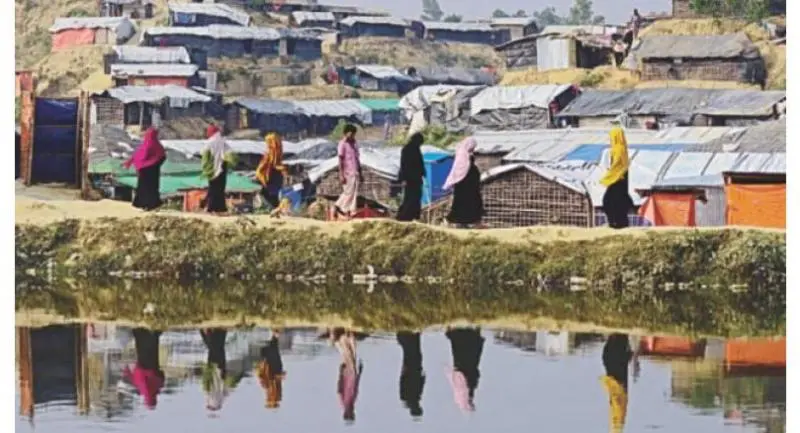


The Indian government has told the Supreme Court, which is hearing a clutch of petitions seeking to restraint the government from deporting 40,000 Rohingyas, that it cannot become the refugee capital of the world.
Around 40,000 Rohingyas have taken shelter in India after being forced out of Myanmar. Rohingyas are an ethnic Muslim group from Rakhine state in the majority Buddhist country.
“We do not want India to become the refugee capital of the world. People from every other country will flood our country,” additional solicitor general Tushar Mehta told a bench headed by Chief Justice of India Dipak Misra on January 31, even as the National Human Rights Commission (NHRC) batted for the rights of the refugees.
Mehta said that the government should be allowed to take a decision and that this was not a matter for the court to intervene in.
The government was responding to a submission made by Rohingya refugees that Border Security Force personnel, the paramilitary force that guards the country's borders, was pushing them back.
Mehta made his submission in response to a fresh application filed by advocate Prashant Bhushan, who complained that Rohinyas were being driven away from the Indian border.
To Bhushan’s contention that India must welcome the refugees due to its international and humanitarian obligations, Justice DY Chandrachud said there was a need to balance national interests with humanitarian concern of the refugees.
The court has directed Mehta to respond to a plea to grant asylum to an additional 8,000 odd Rohingya Muslim refugee by March 7.
The West Bengal government, the northern state that borders Bangladesh, is supporting the plea for refugee status for the Rohingya Muslims.
