
53,000 squatters face eviction in Yangon


Play
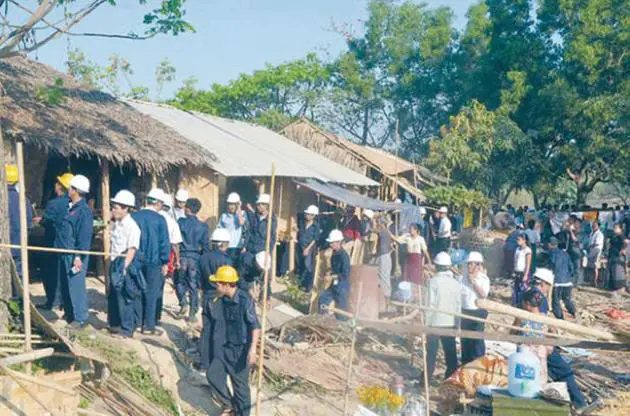
Warnings have been issued to more than 53,000 households in Yangon Region to vacate their land, according to the regional minister for border affairs and security yesterday.
The latest warnings come after families from about 5,000 out of more than 58,000 designated “squatter homes” were evicted in Yangon.
“We are taking action in accordance with the 1898 lower Myanmar town and village act. The action is inevitable,” said Minister Tin Win.
An exact date has not been given for the squatters to be removed from their homes although there have been warnings. There is no plan yet for the regional government to relocate the evicted squatters and those pending eviction.
“There are only a few real squatters. Most have squatted in vacant land after selling off their houses for various reasons. Consequently, the number of squatters has increased. Some try to build houses even though they have no money. The problem will never be solved,” said Tin Win.
Officials from Yangon regional government met with the central government to try and resolve the squatting problem, but no solution has been reached so far.
Meanwhile, farmers began a ploughing land in Mandalay Region’s Madaya Township to claim back the land which the government seized in 1986.
The farmers from seven villages began ploughing in Tangwerthal Village, demanding that the Yaynantha Agriculture Cooperative Society return the 600 acres of ancestral land.
“Our protest is aimed at claiming back our land, which has been encroached on for 28 years,” said local farmer Nay Win, who had 25 acres of land seized. “Over successive years, we have requested the authorities to return our lands. But though I have sent letters of request to the departments which seized our ancestral land, there has been no response. I want to start farm work before the rainy season arrives. We are carrying out ploughing work on this seized land to claim it back.”
Another protester Ko Ko Aung said: “All the seized land is ancestrally owned. Before the land seizure, we had to pay land and water taxes. There was no compensation for the grabbed land.”
