
Telenor dodges black-market virus in Yangon debut


Play
Telenor Myanmar began selling its Ks 1,500 (US$1.50) SIM cards in Yangon yesterday, about a month after launching its service in Mandalay, through a distribution system designed to prevent a black market from forming.
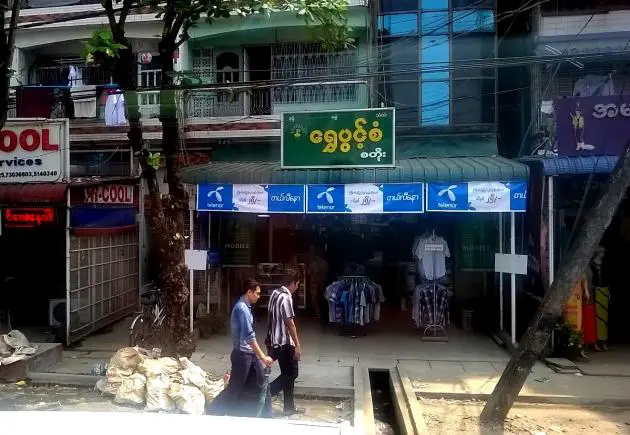
In addition to mobile phone vendors, its SIM cards went on sale at tea shops and convenience stores, with a limit of one per customer.
Customers described the debut as more “systematic” than those of Ooredoo Myanmar, which launched on August 1 in Mandalay, and Myanma Post and Telecommunications (MPT), which began selling Ks 1,500 SIM cards through mobile shops in September. Both launches were accompanied by complaints that the prices quickly shot up due to a lack of supply and restricted distribution, which allowed black markets to form.
Telenor said previously that its aim was to prevent a black market by ensuring a wide distribution network was in place before it launched its SIM cards. They were available at about 8,000 outlets yesterday including its 22 Telenor brand stores, the company said.
It said it had distributed about 1 million SIM cards in 44 townships in the region, and that 348 telecom towers had been installed ahead of the launch.
Telenor Myanmar also said that more than 1 million of its SIM cards had been distributed in Mandalay and Nay Pyi Taw.
The company has been fast as well to pinpoint weaknesses in its infrastructure. CEO Petter Furberg said technicians had noted by yesterday evening that network traffic had reached a level in Pyinmanar area that exceeded its capacity. “We are constructing more towers to deal with the situation,” he said.
Furberg said top-up cards were also sold with SIM cards as another measure to prevent a black market from forming.
Phyo Zeyar Soe, a resident of Lanmadaw Township, said MPT SIM cards were only available on the black market for Ks 20,000 apiece. Phyo Zeyar Soe expressed hope that Telenor would be quick to expand its coverage to rural areas, and praised the company for offering call rates that were half those charged by MPT, which previously monopolised the market.
Deputy Minister of Communications and Information Technology Thaung Tin said consumers would see even greater competition in the future. “Now there are three mobile operators and another local telecom operator will follow,” he said.
Thaung Tin also said more Internet service providers (ISPs) were on the way. The legal framework has been finalised for expansion of ISPs and a regulatory body will be established to oversee them and mobile service providers, he said.
“We will organise a commission to monitor them,” he explained, adding that the ministry would ensure its policies protected consumers’ rights. “The ministry will act as an arbitrator to ensure everyone is treated fairly,” Thaung Tin said.
