
Rice exports to China surge


Play
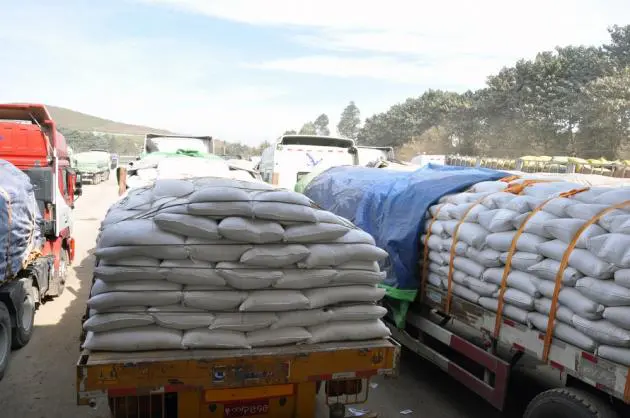
Myanmar rice exports to China through the Muse border crossing have swelled due to increased demand from China and fewer seizures by Chinese authorities, according to merchants from Muse.
“Demand is up. Export is surging,” a merchant said.
On average, about 4,500 tonnes of rice and 1,500 tonnes of broken rice are exported daily through Muse Trade Camp.
“Seizure of Myanmar rice by Chinese authorities has decreased. Trade slumps when seizures occur. More than 800,000 tonnes of rice and broken rice have been exported this fiscal year,” said Chantha Oo, vice chairperson of the Muse Paddy Wholesale Centre.
Myanmar urged China to buy at least one million tonnes of rice in 2015, and three Chinese companies have each agreed to buy 280,000 tonnes, according to the Myanmar Rice Federation.
In order to export rice to China, Myanmar rice exporters need certificates issued by the China Certification and Inspection Company (CCIC) after inspections. The CCIC plans to open its Myanmar office in Yangon this month.
During the 2014-15 fiscal year, border trade between Myanmar and China has increased, with the trade volume reaching a value of more than US$1 billion, according to the Myanmar Commerce Ministry.
Myanmar is now on the mission to improve the rice quality, as it aims to boost rice exports.
Maung Aung, an advisor to the Ministry of Commerce, said last month that the ministry is drafting a plan, which would involve export and manufacturing strategies.
The strategies are meant to make rice exporting more consistent and to maintain the quality of Myanmar rice exports.
Ministry officials are working under the guidance of the Myanmar Rice Federation (MRF) and other relevant organisations.
Dr Min Aung, a senior advisor at the MRF, urged the quick drafting process.
“Some procedures in rice industry need to be relaxed. Rice merchants face difficulties, like losing market demand. On the other hand, the farmers also struggle with price drops and quality control problems. I advised the government to draw a policy that can relieve the anxieties of both farmers and merchants,” Dr Min Aung suggested.
Before falling under the military control, Myanmar was the world’s biggest rice exporter.
Despite its plan to export four million tonnes of rice by 2020, the actual annual rice export has reached only 1.3 million tonnes over the past years.
The World Bank suggested in a report released last year that Myanmar could regain its status if it opens rice mills to direct foreign investment. This will a vital step to take to increase quality and volumes of rice export. Meanwhile, Improving infrastructure and reducing export procedure costs would also boost Myanmar’s export competitiveness.
“More efficient mills and lower exporting/trading costs would trigger changes at farm level, helping to raise agricultural productivity and change farm practices, including the choice of rice varieties, required to match the evolving demands of importers,” the report said.
Conducive agricultural policy is also important to modernise Myanmar rice value chain.
While the production focuses on low-quality rice which can find buyers only in China and Africa, most of the output is now consumed in the country.
“Domestic consumption is the first priority. The livelihoods of farmers, merchants and each and every individual involved in the rice business is the second-most important point,” said Tin Htut Oo, a presidential economic advisor.
The supply chain from the paddy field to the platter should be consistent under a policy, the presidential advisor said.
“But such a policy is not available yet.”
The national export strategy, which is meant to enhance the quality and quantity of exports, is set to be released late this year. It allocates rice, beans, fishery products, wood-based materials and garments as the country’s highest potential export products.
“The [rice] policy is currently being drafted. It is important and also related to the export strategy. Besides export process, domestic consumption and prices are also needed to be considered. It takes a well-built policy to make sure the whole supply chain grows strong,” said Win Myint, the director of Department of Trade Promotion under the Commerce Ministry.
