
Locals worried about Dawei port's halt


Play
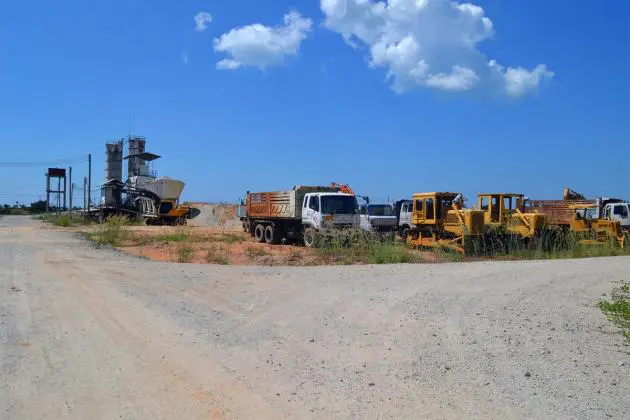
Residents of 16 villages located in the boundaries of Dawei deep-sea port have complained on the hardships brought about by the halt in the project.
They said that the halt has resulted in delays in compensations to the locals affected by the development project. A total of 16 villages, including Htain Kyi, Le Shaung, Paradat, Mayin Kyi and Mudu, are due to be relocated by the project.
“They announced that the project would be starting soon but they have suspended it for some time so we are not confident in the project,” said Aung Moe from Htain Kyi village. “When the project is halted, they stopped the process of giving compensation to locals. They said it could be solved after the project is resumed.”
He said that the villages have planned the construction of schools and basic infrastructure. The projects have to be delayed without the compensation.
“We are falling behind as the schools and basic infrastructure in our area are not included in the government-funding programme,” Aung Moe added.
Italian-Thai Development Plc, the Thai company winning the original decades-long concession, temporarily suspended the project in November 2013 with failure to find development partners. The concession was returned to a special purpose vehicle, jointly owned by the Myanmar and Thai governments. For over a year, both nations have tried to escort Japan’s partnership.
While meeting with Thai Prime Minister Gen Prayut Chan-o-cha in Bangkok on May 11, Hiroto Izumi, special economic adviser to Japanese Prime Minister Shinzo Abe, said Japan also hopes to sign a tripartite agreement in July to develop jointly the Dawei deep-sea port and industrial estate. He said Japan was ready to invest in the special-purpose vehicle to develop the projects with the Myanmar and Thai governments.
He further revealed that the Japanese role will be led by its state agencies, the Japan International Cooperation Agency and Japan Bank for International Cooperation, which have already assigned experts to help both Thailand and Myanmar implement the projects.
Japanese involvement in the projects will boost the scheme's feasibility thanks to its huge financial and other resources needed to build them in a manner similar to the Eastern Seaboard development. The projects are close to Thailand’s Kanchanaburi, so the Kanchanaburi-Bangkok-Sa Kaew railway line has been proposed to serve as a crucial link for industries in Thailand and Myanmar, many of which Japanese companies have invested in.
Earlier this month, the signing of the first contract to kick start construction of the deep-sea port was postponed for the third time to until early June. The signing agreement was delayed twice before; it was first due to be signed in March, and then in April.
Local residents near the project said that Myanmar officials told them that the project would restart in March, but so far there has been no sign of that. With no confidence in the project, local residents are demanding government support.
