
Freedom of expression 'threatened'


Play
Journalists, writers, and politicians have expressed their concerns in freedom of expression, following the Information Ministry's move to file a lawsuit against 17 editors of the Daily Eleven.
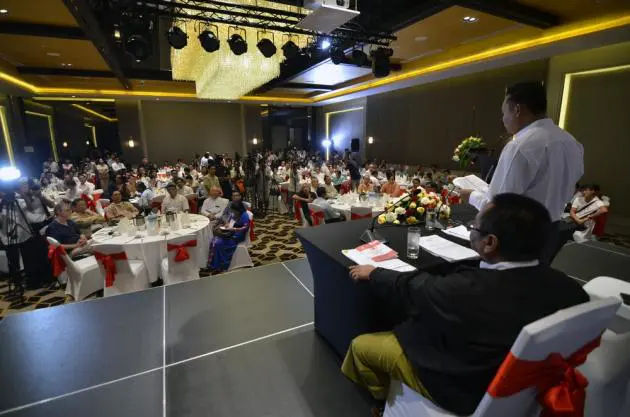
Attending the briefing on the matter on June 20 were leaders of political parties, MPs, some members of parliamentarian committees, political activists, well-known persons from business, social, literary, and entertainment sectors, local and foreign media, and officials from organisations that are working for media freedom attended the press briefing. They included Mya Aye of 88 Peace and Open Society, Gyaw Gun of Kachin Peace Network, veteran journalist Phoe Thauk Kyar, Aye Thar Aung who is a member of the Arakan National Party, members of National League for Democracy - Phyoe Min Thein and Khin San Hlaing, Yangon Region MP Nyo Nyo Thin, lawyer Pho Phyu, and Sayar Thitsar Ni who is the chairperson of Poet Union.
Named in the lawsuit included the publisher of the Daily Eleven newspaper. The ministry alleged them of reporting unfairly on a defamation case.
Ma Thida, chairperson of PEN Myanmar, said: “The freedom of expression is very important. The media freedom is crucial for the country’s development. It should be noted that if the state-owned media attacks and suppresses the private media instead protecting the latter for the sake of transition, it is not good for the country. What the government should do is promoting right to information of citizens; then the public can see clearly about either the government or the media. If the government is continuing the propaganda or suppressing the private media, it is heading to the public blindness. The final result would be the government won’t get the public cooperation or belief. We (PEN Myanmar) know that we have to watch closely this issue.”
Myanmar stands 144 out of 180 countries in the World Press Freedom Index ranked by Reporters Without Borders.
“Currently, media persons are facing the charges by the government. The information ministry charges against 17 editors from the Eleven Media Group at a time when the election is drawing near. It can be said that we have seen a horrible event in the history of news media as well as the current government. I am an official from the media committee of parliament,” said MP Khaing Maung Yi.
“I’m here on behalf of the chairperson of the committee. The government arrests journalists and gives heavy sentences to them. And the journalists were charged with other sections, but not with the media law. We send a message to the President through parliament to give the relaxation for them. But nothing has happened. But now new cases emerge. It amounts to leading to a confrontation. What I want to mean is that the government’s acts would amount to making a challenge to media. The new government should try to get a good reputation and leave a goodwill at a time when the current government handovers its power to the next government. But on the contrary, the government restricts and oppresses media. It amounts to creating problems. Media persons have accused the government of such oppressions. Does the government really oppress journalists as the media said? Our representatives are duty-bound to steer the government. For that, we find out the sectors to be steered and have to observe whether or not the government really oppresses journalists as media said.”
Daily Eleven chief editor Wai Phyo noted that the number of charges against the journalists has been on the rise since after Information Minister Ye Htut became presidential spokesperson and Union Minister for Ministry of Information. Charges also involved those who were not concerned with the report, he said.
“It seems to pose a threat to the journalists so as not to do media profession. No matter how much the information minister says that press is free, the truth can be judged by looking at the cases of journalists being imprisoned and facing trials. It has been known to all that protests cropped up due to the oppression against the journalists. Due to such situations, Rupert Abbott, the Southeast Asia research director of Amnesty International on June 17 point out that the authorities are still relying on the same old tactics - arrests, surveillance, threats and jail time to muzzle those journalists who cover 'inconvenient' topics. According to Amnesty International, the government is using threats, harassment and imprisonment to intimidate the media ahead of the 2015 election,” he said.
