
Tony lobbies for single ownership of AirAsia's regional units


Play
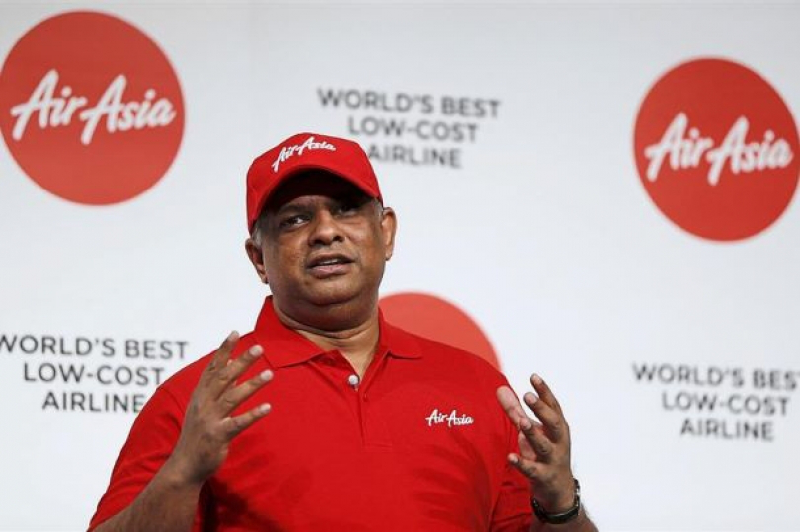
SEPANG - AirAsia Bhd chief executive officer Tan Sri Tony Fernandes is not ruling out consolidation of the low-cost carrier’s regional airline units into an entity.
“This has always been my plan, to consolidate, but we have to talk to many different authorities to do so. There is no timeframe yet,” he said.
“If you compare us with EasyJet or Ryanair, they don’t have an EasyJet Poland, etc. They just have an entity. Because of ownership rules, we have to have the kind of structure that we have today,” he added.
He has been “pushing the proposal” or the idea of owning a 100% of an Asean airline. Fernandes said this proposal remained in the early stages.
Fernandes said this after an EGM where shareholders approved the placement of 559 million shares to Tune Live Sdn Bhd, a company controlled by him and his partner Datuk Kamarudin Meranun.
“The response so far has been quite good. It is our goal to create one holding company eventually. The Asean open skies, which had been reported previously, are finally a reality, as Laos was the last to sign. This is an exciting development for us.
“So the dream of having one Asean airline with one holding company owning Malaysia, Thailand, Indonesia and the Philippines is now possible and we must treat Asean as one place,” Fernandes added.
On the placement, Fernandes said that it had been unanimously approved by shareholders.
“There were questions on our (Fernandes and Kamarudin’s) commitment to the company. But we are putting our money where our mouth is.”
The placement of the 559 million shares at RM1.80 each would increase the stake of the duo in the low-cost carrier from 18.9% to 32.4%.
Meanwhile, Fernandes said there were no new orders for planes and they were not discussed at the board level.
“But we are probably short on planes now. We have been very aggressive in cutting capacity, which was probably the right thing to do, but now things have stabilised around the region and this is something we have to look at, but it is still premature at the moment.
“From the management’s perspective, it is something we are considering, but there is nothing concrete,” he added.
Fernandes said the ringgit’s performance mirrored that of oil prices and that the airline was prepared for currency volatility.
“Whatever happens on this front, we are battle-hardened as we can’t really control the ringgit, but the most important thing is that demand is strong,” he said.
Fernandes also said there should be more low-cost terminals, noting that the key to lower airfares was lower costs.
“This is a volume game, and we are no different from Carrefour, Walmart or Uniqlo. This is the kind of model we are, if costs keep going up, then we are not low-cost anymore,” he said, adding that there was a need for low-cost and simple facilities in airports.
“I was in Scotland the other day and British Airways was using steps – I came off the plane using steps. So, we really need low-cost terminals,” Fernandes added.
